What Ottawa homeowners must do before renovating an older home
If your home was built before 1990, junk removal before home renovation is only part of the picture. Ontario law requires a Designated Substance Survey before any renovation or demolition work begins. Skipping this step isn't just risky — it's illegal.
Here's what the process looks like in practice:
- Commission a Designated Substance Survey (DSS) from a qualified environmental professional to identify asbestos-containing materials (ACM), lead paint, and mould.
- Comply with Ontario Regulation 278/05, which mandates certified assessment, Ministry of Labour notification for Type 2 and 3 work, and licensed removal.
- Hire a contractor holding HCRA certification and asbestos worker training recognised by the Ontario Ministry of Labour.
- Arrange disposal exclusively at OMOECC-approved hazardous waste facilities.
- Obtain a post-abatement clearance certificate from an independent industrial hygienist before renovation resumes.
- Budget separately for abatement — most insurance policies exclude these costs.
- Plan for possible temporary relocation during Type 2 or Type 3 abatement phases.
Table of Contents
- Health risks, legal obligations, and what certified abatement actually involves
- How to notify health and environmental authorities before removal
- Safe disposal options for hazardous materials near Ottawa
- Hmjcontracting: licensed abatement and pre-renovation cleanup in Ottawa
- Key takeaways
Health risks, legal obligations, and what certified abatement actually involves
Asbestos was used widely in Canadian homes built before 1990: popcorn ceilings, vinyl floor tiles, pipe wrap, and joint compound are common sources. Disturbing these materials without proper controls releases fibres that cause mesothelioma, lung cancer, and asbestosis. There is no safe level of exposure.
Ontario Regulation 278/05 classifies abatement into three types based on the volume of material disturbed and the risk involved. Type 1 covers minor work with limited ACM contact. Type 2 involves moderate quantities and requires Ministry of Labour notification. Type 3 is major enclosure work with full PPE, negative air machines, and HEPA filtration — and also requires notification before work begins. Once you hire a contractor, owner exemptions no longer apply, and full occupational health and safety compliance becomes mandatory.
Cost and timeline reference: A DSS survey typically costs $400–$1,200. Type 1 abatement costs $1,000–$3,000 and takes 1–2 days; Type 2 costs $3,000–$8,000 and takes 3–7 days; Type 3 costs $10,000–$25,000+ and takes 5–14 days, with clearance testing ($400–$900) and additional timelines for post-abatement air monitoring.
Violations carry serious consequences. Renovating without a proper DSS and abatement plan can result in Ministry of Labour stop-work orders and fines reaching $1.5 million. Beyond the financial exposure, you carry personal liability for any health harm caused.
When selecting a contractor, confirm they hold HCRA certification, carry liability insurance, and use specialised equipment including glove bags and negative air machines. Ask for an itemised quote and verify their credentials directly with the Ontario Ministry of Labour. Hmjcontracting brings over 25 years of local Ottawa experience to this process, with a 5.0-star rating and a track record of transparent, code-compliant abatement and renovation work.
How to notify health and environmental authorities before removal
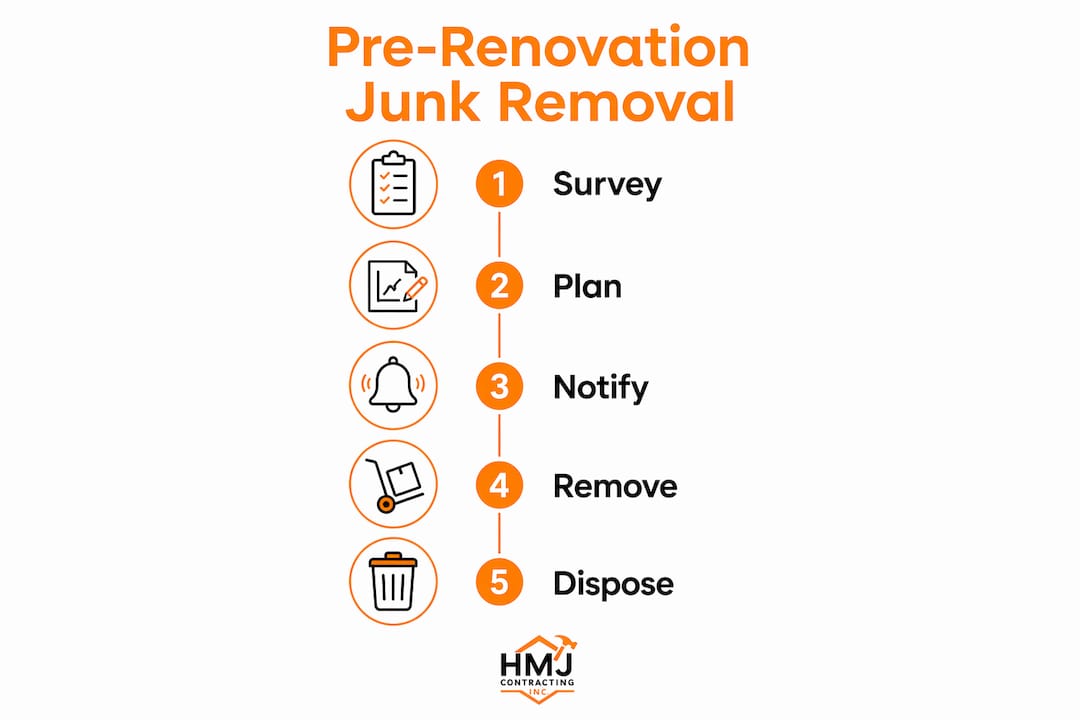
For Type 2 and Type 3 abatement, written notice to the Ontario Ministry of Labour, Training and Skills Development is required before work starts. Your licensed contractor typically handles this submission, but you should confirm it is filed. The notice must include the project address, scope of work, abatement type, start date, and the contractor's credentials.
Ottawa Public Health does not require separate notification for standard residential abatement, but if mould remediation is involved, consult their environmental health unit. Keep copies of all notifications and correspondence — you'll need them when applying for building permits and when the clearance certificate is issued.
Safe disposal options for hazardous materials near Ottawa
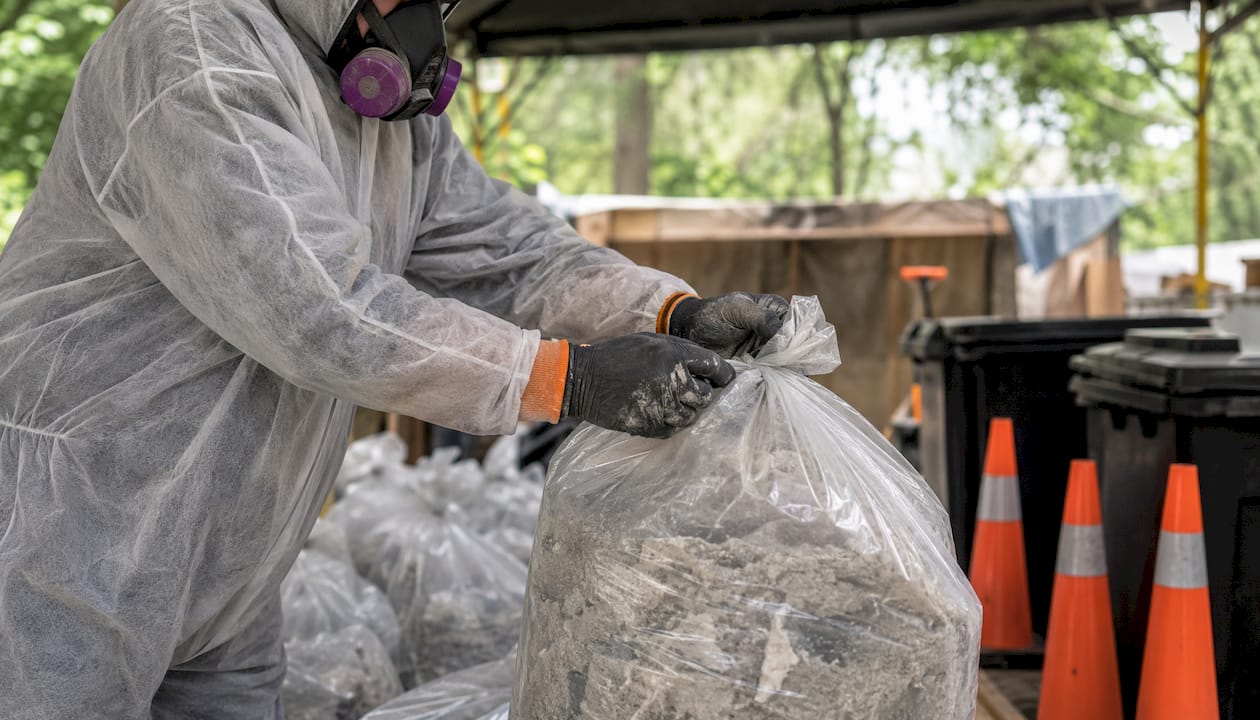
Asbestos waste must be double-bagged in 6-mil polyethylene bags, labelled, and transported to an OMOECC-approved facility. The Trail Road Waste Facility in Ottawa accepts certain hazardous construction materials, but confirm accepted categories before transport. Your abatement contractor is legally responsible for manifesting and transporting ACM waste — this is not a task for a general debris removal service.
For non-hazardous pre-renovation cleanout, professional debris removal services handle bulky items, old fixtures, and construction waste efficiently and keep your site clear for abatement crews.
Hmjcontracting: licensed abatement and pre-renovation cleanup in Ottawa

Hmjcontracting is Ottawa's licensed abatement and full-service renovation contractor, built specifically for homeowners dealing with older properties. Where a general junk hauling company stops at the kerb, Hmjcontracting handles the full scope: certified hazardous material abatement under Ontario Regulation 278/05, coordinated debris removal, and post-abatement renovation work. Every quote is itemised so you know exactly what you're paying for, with no surprises mid-project.
With 25+ years serving Ottawa homeowners and a 5.0-star rating across hundreds of completed projects, the team knows what local inspectors expect and how to keep your renovation on schedule. Contact Hmjcontracting today for a free, detailed quote on certified abatement and pre-renovation cleanup.
Key takeaways
Renovating an older Ottawa home legally requires a Designated Substance Survey, certified abatement under Ontario Regulation 278/05, and a post-clearance certificate before any construction work begins.
| Point | Details |
|---|---|
| DSS is mandatory | Homes built before 1990 require a professional asbestos survey before any renovation or demolition. |
| Abatement costs vary | Type 1 abatement typically costs $1,000–$3,000; Type 2 $3,000–$8,000; and Type 3 $10,000–$25,000 or more, with DSS surveys ($400–$1,200) and clearance testing ($400–$900) extra. |
| Notify the Ministry of Labour | Written notice is required before Type 2 and Type 3 abatement work begins in Ontario. |
| Disposal must be approved | Asbestos waste goes only to OMOECC-approved facilities; standard junk haulers cannot handle it. |
| Hmjcontracting covers the full scope | Licensed abatement, debris removal, and renovation services in Ottawa with itemised quotes and a 5.0-star rating. |