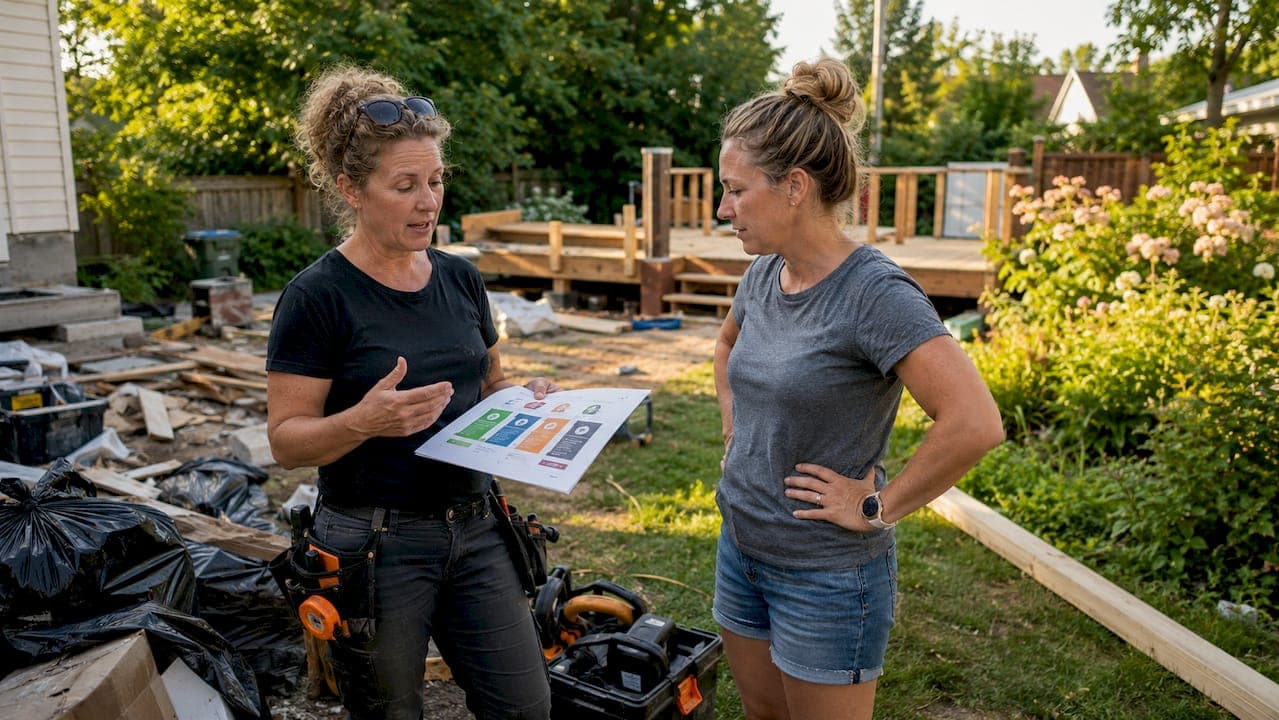
Renovation waste reduction best practices are defined as the planning, sorting, reuse, and recycling strategies that minimise how much debris from a renovation project ends up in a landfill. The construction industry generates about 600 million tons of debris each year, with roughly 76% potentially recoverable nationally, yet some regions recycle as little as 30%. That gap represents real money and real environmental harm. For homeowners and contractors in Canada, closing that gap means following a clear set of practices from the first day of planning to the final load of debris.
1. Renovation waste reduction best practices start with a formal plan
A written waste management plan is the single most effective tool for reducing renovation debris. Without one, material ordering, sorting, and disposal decisions get made on the fly, and that is where waste multiplies.
A strong plan covers four areas:
- Waste reduction targets: Set a goal to cut total waste generated by at least 20%, and aim for a landfill diversion rate of 50–75% by source-separating concrete, metals, and clean wood.
- Material quantities: Calculate exact amounts needed for each trade, then order accordingly.
- Sorting procedures: Identify which bins or areas on site will hold which material types.
- Hauler selection: Confirm your hauler's diversion rate in writing before work begins.
Collaboration between the homeowner and the contractor on these targets drives measurable results. When both parties agree on goals before demolition starts, diversion rates climb because everyone on site knows what to do with each material.
Pro Tip: Ask your contractor to share the waste management plan in writing before signing any contract. If they cannot produce one, that tells you something important about how they run a job site.

2. Source reduction: preventing waste before it occurs
Source reduction is the EPA's highest-priority sustainable practice in construction and demolition waste management. It means preventing waste from being generated in the first place, rather than managing it after the fact.
Practical source reduction strategies include:
- Preserving existing structures: Keeping original framing, flooring, or cabinetry where possible eliminates the need to dispose of those materials entirely.
- Designing for disassembly: Specifying materials that can be unbolted or unscrewed rather than broken apart makes future reuse far more likely.
- Ordering precisely: Reducing your waste allowance from the typical contractor buffer of 10–15% down to about 5% through accurate measurements and supplier return policies cuts landfill costs significantly.
- Choosing durable materials: Products with longer service lives reduce the frequency of replacement and the debris that comes with it.
"Source reduction, such as preserving existing structures and choosing durable materials, is the most impactful waste prevention practice endorsed by the EPA. Preventing waste from being created is always more effective than managing it after the fact."
Partial deconstruction is worth considering before any full demolition. Carefully removing doors, windows, fixtures, and trim by hand takes more time upfront, but it preserves materials for reuse or donation and avoids the tipping fees that come with mixed debris loads.
3. On-site sorting for maximum diversion
Proper on-site sorting is where the difference between a 30% and a 75% diversion rate is made. Source-separating construction materials into dedicated bins dramatically reduces tipping fees and contamination compared to tossing everything into a single mixed debris bin.
Set up clearly labelled collection zones for each material category:
- Clean wood: Dimensional lumber, plywood, and trim free of paint or treatment.
- Metals: Steel studs, copper pipe, aluminium flashing, and electrical conduit.
- Concrete and masonry: Broken concrete, brick, and tile.
- Drywall: Unpainted gypsum board only, kept dry and separate from other debris.
- Hazardous materials: Paints, solvents, adhesives, and any materials flagged during a pre-renovation audit.
Hazardous materials require a separate process entirely. Identifying asbestos and lead paint before demolition prevents contamination of the broader waste stream and avoids costly facility rejections. A pre-renovation hazardous materials audit is not optional in older Canadian homes. It is a legal and financial necessity.
Pro Tip: When booking a waste hauler, ask specifically what percentage of each material type they divert from landfill and request documentation. A hauler who cannot answer that question is likely sending your sorted materials to a mixed-waste facility anyway.
4. What is renovation waste management and why does it matter legally?
Renovation waste management is the organised process of collecting, sorting, transporting, and disposing of or recycling materials generated during a renovation project. In Ontario and many other Canadian municipalities, failing to verify hauling and disposal procedures can result in municipal fines and legal liability for the homeowner, not just the contractor.
Regulatory requirements vary by municipality, but the trend across Canada is toward mandatory diversion documentation. Some cities require proof of diversion rates before issuing final occupancy permits. That means keeping records of where each material went and what percentage was diverted from landfill.
The financial stakes are equally clear. Landfilling mixed renovation debris costs between $150 and $250 per ton in 2026. Source-separated materials like clean metal or concrete carry significantly lower processing fees. A single kitchen renovation generating five tons of mixed debris could cost $750 to $1,250 in tipping fees alone. Sorting that same debris into categories can cut that figure substantially.
5. Recyclable renovation waste materials: what can and cannot be recycled
Not all renovation materials are equal when it comes to recycling. Understanding the recyclable renovation waste materials list for your project prevents costly mistakes at the facility gate.
| Material | Recyclable? | Notes |
|---|---|---|
| Clean concrete | Yes | Crushed into aggregate for road base |
| Steel and aluminium | Yes | High scrap value, widely accepted |
| Untreated wood | Yes | Chipped into mulch or particleboard |
| Clean drywall | Yes | Must be dry and unpainted |
| Asphalt shingles | Yes | Accepted at select facilities |
| Treated wood | Limited | Cannot be recycled; reuse or donate instead |
| Painted drywall | No | Contamination risk; landfill only |
| Asbestos-containing materials | No | Regulated disposal required |
Materials that cannot be recycled through standard channels still have options. Usable cabinets, doors, windows, and fixtures can be donated to organisations like Habitat for Humanity ReStores across Canada. Donation keeps materials out of landfill entirely and may qualify for a charitable tax receipt.
Verifying that your recycler holds the appropriate certifications matters. A facility that accepts clean wood but processes it in a way that contaminates the batch sends the material to landfill anyway. Ask for documentation of their diversion rates and processing methods before committing.
For guidance on managing renovation materials responsibly in Ontario, Green Building Canada provides detailed regulatory and sorting guidance specific to the Canadian context.
6. Cost and regulatory impacts of renovation debris eco disposal
Eco disposal of renovation debris, meaning diverting materials from landfill through recycling, reuse, or donation, carries both financial and legal implications that homeowners often underestimate.
The cost comparison is straightforward. Mixed debris bins attract the highest tipping fees because facilities must sort or landfill the load. Source-separated bins cost less to process because the material has already been prepared for its next use. The savings from sorting can offset the added labour cost of setting up dedicated bins on site, particularly on larger projects.
On the regulatory side, homeowners carry more responsibility than many realise. If a contractor disposes of renovation waste improperly, the municipality can hold the property owner liable. Requesting a waste diversion certificate from your hauler at the end of the project is the simplest way to protect yourself. Pair that with an interior demolition plan that accounts for material separation from the start, and compliance becomes straightforward rather than stressful.
Hazardous waste carries the steepest penalties. Asbestos, lead paint, and certain adhesives require licensed disposal through regulated channels. Mixing these materials with general renovation debris is an offence under provincial environmental legislation and can trigger remediation costs that far exceed the original disposal savings.
7. Junk removal and donation as waste reduction solutions
Junk removal during a renovation is not just about clearing space. Done correctly, it is a waste reduction strategy. Scheduling a junk removal service that separates reusable items from true waste before the bin arrives keeps donation-worthy materials out of the landfill stream.
Furniture, appliances, and fixtures removed during a renovation often have years of useful life remaining. Donating these items before demolition begins is faster and cheaper than disposing of them. Many donation organisations offer pickup services, which removes the logistical barrier entirely.
For materials that cannot be donated, junk removal services that sort and divert materials to appropriate facilities are a practical alternative to a general mixed-waste bin. The key is confirming in advance that the service provider documents diversion rates and does not simply consolidate materials at a transfer station before sending them to landfill.
Cabinet refinishing is one specific area where waste reduction pays off clearly. Refinishing existing cabinetry rather than replacing it eliminates the disposal of the old cabinets entirely and avoids the manufacturing waste associated with new units. The environmental impact of cabinet refinishing compared to full replacement is significant, both in materials diverted and in embodied carbon avoided.
Key takeaways
Effective renovation waste management requires a written plan, on-site source separation, and verified diversion documentation to achieve meaningful cost savings and regulatory compliance.
| Point | Details |
|---|---|
| Plan before you demolish | A written waste management plan with diversion targets of 50–75% drives measurable results. |
| Source reduction comes first | Preserving existing materials and ordering precisely prevents waste before it is created. |
| Sort on site by material type | Separate bins for wood, metal, drywall, and concrete cut tipping fees and contamination. |
| Know your recyclable materials | Treated wood, painted drywall, and hazardous materials require special handling outside standard recycling. |
| Verify diversion in writing | Request a waste diversion certificate from your hauler to protect yourself from legal liability. |
What I have learned from years on renovation sites
The biggest mistake I see homeowners and contractors make is treating waste as an afterthought. They plan the tile layout, the paint colours, and the fixture selections in detail, then assume the debris will sort itself out. It never does.
The projects that achieve the best diversion rates share one trait: the waste plan was written before the first wall came down. When sorting zones are set up on day one and every worker on site knows which bin gets which material, the process becomes automatic. When it is left to the end, everything goes in the same bin because nobody has time to sort a pile of mixed debris.
The other thing I see overlooked consistently is hazardous materials. Homeowners in Ottawa with houses built before 1990 almost always have asbestos or lead paint somewhere in the building. Discovering that mid-demolition, after the material has already been disturbed, is far more expensive and disruptive than a pre-renovation audit. The signs you may need asbestos removal before renovating are often visible if you know what to look for.
My honest advice: choose your waste hauler the same way you choose your contractor. Ask for diversion rate documentation, check their certifications, and get the commitment in writing. The hauler who gives you the lowest quote is often the one sending your sorted materials straight to landfill.
— Jason
Renovation waste support from Hmjcontracting in Ottawa
Hmjcontracting brings certified abatement, full-service demolition, and junk removal together under one team, which means waste planning is built into every project from the start rather than bolted on at the end.

For Ottawa homeowners dealing with older properties, the combination of licensed abatement services and renovation expertise means hazardous materials are identified, removed safely, and documented before any general debris is generated. Hmjcontracting provides itemised quotes, clear diversion documentation, and a 5.0-star track record across hundreds of Ottawa projects. If you want a renovation that meets current waste regulations without the guesswork, contact Hmjcontracting to discuss your project.
FAQ
What is renovation waste management?
Renovation waste management is the process of collecting, sorting, and diverting materials generated during a renovation away from landfill through recycling, reuse, or regulated disposal. In Canada, homeowners are legally responsible for ensuring their contractor follows approved disposal procedures.
Which renovation materials are typically recyclable?
Clean concrete, steel, aluminium, untreated wood, dry unpainted drywall, and asphalt shingles are widely recyclable. Treated wood, painted drywall, and asbestos-containing materials require special handling and cannot enter standard recycling streams.
How much does landfilling renovation debris cost in Canada?
Landfilling mixed renovation debris costs between $150 and $250 per ton in 2026. Source-separating materials before disposal significantly reduces those fees by qualifying loads for lower-cost processing facilities.
Do I need a pre-renovation hazardous materials audit?
Yes, particularly in homes built before 1990. Identifying asbestos and lead paint before demolition prevents contamination of the general waste stream and avoids the fines and remediation costs that come with improper disposal under provincial environmental legislation.
What diversion rate should a good waste hauler achieve?
A reputable hauler should achieve a diversion rate of at least 50–75% for source-separated renovation materials. Always request this figure in writing and ask for a waste diversion certificate at the end of the project to protect yourself from municipal liability.