
Professional guidance is the single most reliable way for first-time renovators to avoid costly mistakes and keep their projects on track. Without it, cost overruns of 30–50% are common, and many homeowners discover structural or safety problems only after they have already committed to cosmetic upgrades. The renovation industry calls this structured professional involvement "project management," and it covers everything from feasibility assessments to contractor vetting. Getting that support early is not a luxury. For first-time renovators in Ottawa and across Canada, it is the difference between a project that builds equity and one that drains it.
Why first-time renovators need guidance before they pick up a hammer
The core reason first-time renovators need guidance is simple: they do not yet know what they do not know. Renovation projects involve layered decisions about structure, systems, safety, and budget, and those decisions interact with each other in ways that are not obvious until something goes wrong.
Professional involvement at early planning stages helps homeowners evaluate options and avoid costly design missteps. A professional brings context that no amount of online research can replicate. They have seen the same problems dozens of times and know which trade-offs matter most.

Experts also recommend budgeting 1–3% of a home's purchase price annually for maintenance and renovations. That figure surprises most first-time buyers, who often underestimate how much upkeep an older property demands. Starting a renovation without that baseline understanding leads to underfunded projects and mid-stream compromises.
What are the common renovation mistakes first-time homeowners make?
First-time renovators consistently repeat a short list of expensive errors. Recognising them before you start is the fastest way to avoid them.
- Underestimating total costs. Project costs are underestimated by 30–50% on first renovations. That gap usually appears when hidden problems, like outdated wiring or water damage behind walls, surface mid-project.
- Starting with cosmetics. Painting and flooring feel rewarding, but they should come last. Fixing a leaky roof or upgrading an electrical panel first protects every cosmetic dollar you spend afterward.
- Skipping a professional home inspection. A thorough inspection before purchase or before breaking ground reveals structural and safety issues that change the entire project scope. Skipping it is the most expensive shortcut a first-time renovator can take.
- Choosing the lowest bid. Choosing contractors solely on lowest bids leads to renovation failure. A low number on a quote often means missing scope, unlicensed labour, or materials that will need replacing within a few years.
- Ignoring hazardous materials. Older Ottawa homes frequently contain asbestos, lead paint, or mould. Disturbing those materials without certified abatement creates serious health risks and legal liability.
These mistakes share a common root: first-time renovators make decisions without enough information. That is exactly the gap professional guidance fills.
Pro Tip: Before signing any contract, ask every contractor for their licence number, proof of liability insurance, and a written scope of work. A contractor who hesitates on any of those three items is a contractor worth skipping.
How does early professional involvement improve renovation outcomes?
Getting a professional involved before you finalise your plans produces better results than bringing one in to fix problems after they appear. Upfront costs for design and project management often pay for themselves by preventing expensive rework. That is the core financial argument for hiring an expert early.
The practical benefits follow a clear sequence:
- Feasibility assessment. A professional reviews your property, your budget, and your goals together. They identify conflicts early, before you have committed money to a direction that will not work.
- Phased planning. The industry-standard sequence is Safety first, then Function, then Comfort, then Cosmetic. A professional helps you stick to that order even when the temptation to paint the kitchen is strong.
- Trade co-ordination. Plumbers, electricians, and carpenters need to work in a specific order. A project manager or experienced contractor keeps that schedule on track and prevents one trade from undoing another's work.
- Decision support. Research and online inspiration cannot replace professional experience needed to navigate trade-offs and lock in decisions. A professional helps you choose between options with full knowledge of the downstream consequences.
- Budget control. Professionals know where contingency money is most likely to be needed. They build realistic buffers into the plan rather than discovering the need for them mid-project.
Experts recommend involving design and renovation professionals early, as their advice prevents stress and costly mistakes later. The earlier you bring them in, the more options remain open and the lower the cost of changing course.
Pro Tip: If your budget is tight, prioritise hiring a professional for the planning and inspection phases. Those two stages produce the highest return on expert fees because they shape every decision that follows.
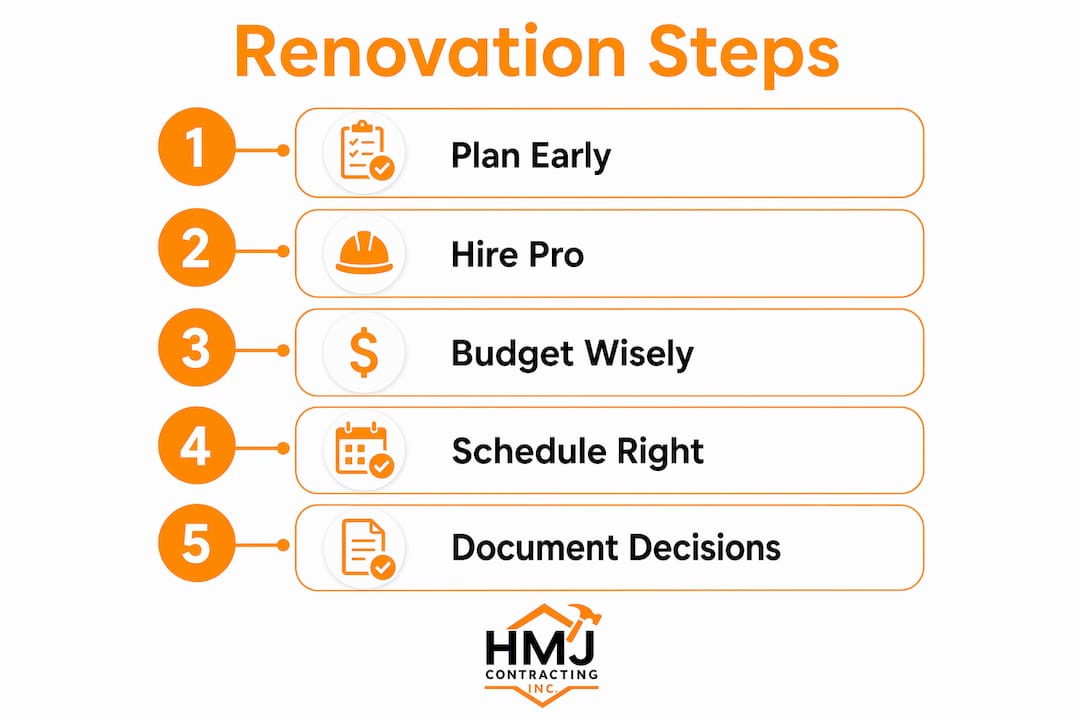
What practical steps can first-time renovators take to get expert guidance?
Knowing you need professional guidance is one thing. Acting on it is another. These steps give you a clear path forward.
- Schedule a home inspection before you plan anything. A licensed inspector identifies structural issues, outdated systems, and potential hazardous materials. That report becomes the foundation of your renovation plan, not an afterthought.
- Check for hazardous materials in older homes. Ottawa properties built before 1990 commonly contain asbestos or lead. Review the signs you may need asbestos removal before any demolition work begins. Certified abatement must happen before renovation trades enter the space.
- Vet contractors thoroughly. Licence, insurance, and a detailed written scope are non-negotiable. Read the full guide on how to choose the right contractor to understand what questions to ask and what red flags to watch for.
- Add buffer to every timeline. Homeowners should add 20% to contractor timelines to accommodate delays. Trades run behind, materials arrive late, and inspections take longer than expected. Build that buffer in from the start.
- Consider living in the property before major cosmetic work. Spending time in your home before finalising finishes reveals practical needs you would not have anticipated from a floor plan. You learn where the light falls, which rooms feel cramped, and what the traffic patterns actually are.
The table below shows how two approaches to contractor selection compare on the factors that matter most.
| Evaluation factor | Vetting by credentials and scope | Selecting by lowest bid only |
|---|---|---|
| Licence and insurance verified | Yes | Often not confirmed |
| Written scope of work | Detailed and itemised | Frequently vague |
| Risk of mid-project surprises | Low | High |
| Long-term cost outcome | Predictable | Often higher due to rework |
| Accountability | Clear | Difficult to enforce |
How does renovation sequencing reduce stress and cost overruns?
The order in which you make decisions matters as much as the decisions themselves. Decision fatigue often affects first-time renovators who fixate on cosmetic details before foundational decisions are made. Choosing tile colours before you have confirmed the bathroom layout is a classic example. If the layout changes, the tile choice may be irrelevant.
Mid-project design changes become exponentially more expensive than early conceptual decisions. Changing a wall location after framing has started costs far more than changing it on paper. Locking structural and system decisions first protects your budget at every stage that follows.
Renovation confidence grows as foundational decisions get locked down. Cosmetic decisions should remain flexible until later to avoid expensive changes. This is counterintuitive for most first-time renovators, who want to visualise the finished result immediately. A professional helps you stay comfortable with that uncertainty by showing you the logic behind the sequence.
Phased priorities include safety fixes first, then system repairs, comfort upgrades, and cosmetic updates last. Following that sequence also protects your investment. A new hardwood floor installed before a plumbing repair is a floor that may need to come up again. Getting the sequence right the first time is one of the clearest financial benefits of working with an experienced professional.
Pro Tip: Create a simple decision log at the start of your project. Record every confirmed decision with a date. When a contractor or supplier suggests a change mid-project, check the log first. Unplanned changes to locked decisions are where budgets collapse.
Key takeaways
First-time renovators who engage professional guidance early consistently spend less, finish faster, and avoid the safety risks that derail unprepared projects.
| Point | Details |
|---|---|
| Cost overruns are predictable | First-time renovators underestimate costs by 30–50%; professional planning closes that gap. |
| Sequence determines success | Follow Safety, Function, Comfort, then Cosmetic to protect every dollar you spend. |
| Contractor vetting is non-negotiable | Licence, insurance, and a written scope matter more than the lowest price on a quote. |
| Early professional input pays for itself | Design and project management fees prevent rework that costs far more than the original fee. |
| Hazardous materials require certified abatement | Older Ottawa homes need inspection for asbestos, lead, and mould before any renovation work begins. |
What I have learned from watching first-time renovators get it right and wrong
After years of working on renovation and abatement projects in Ottawa, the pattern I see most clearly is this: the homeowners who struggle are not the ones with the smallest budgets. They are the ones who made big decisions too early or too late.
I have watched homeowners spend weeks agonising over cabinet hardware while their contractor waited on a structural decision that was holding up three other trades. That kind of sequencing error does not come from a lack of effort. It comes from not having someone in your corner who has managed that process before.
The homeowners who come out ahead are the ones who treat professional fees as an investment in clarity. They hire an inspector before they plan anything. They bring in a project manager or experienced contractor before they commit to a layout. They ask hard questions about hazardous materials before demolition begins. Those decisions feel like extra steps at the start. They feel like savings by the end.
The other thing I would tell any first-time renovator is this: your confidence will fluctuate throughout the project. That is normal. The goal of professional guidance is not to eliminate uncertainty. It is to make sure the decisions you lock in early are the right ones, so the uncertainty that remains is manageable. That is a much better position to be in than discovering a foundational problem after you have already committed to a direction.
— Jason
Renovation support for first-time homeowners in Ottawa
Hmjcontracting works with first-time renovators across Ottawa to make sure projects start on solid ground. From certified hazardous material inspections to full project management, the team brings the kind of structured experience that prevents the mistakes covered in this article.

If your property was built before 1990, the first step is confirming whether asbestos, lead, or mould is present before any demolition begins. Hmjcontracting's abatement services are fully licensed and compliant with all Ontario safety regulations. For a broader look at what the team offers, the full range of renovation and abatement services covers everything from initial inspection through to project completion. Every quote is detailed and itemised, so you know exactly what you are paying for before work begins.
FAQ
Why do first-time renovators go over budget so often?
First-time renovators underestimate total costs by 30–50% because hidden problems like outdated wiring or water damage only surface once work begins. Professional inspections and realistic contingency budgets are the most reliable way to close that gap.
When should I involve a professional in my renovation?
Involving professionals at the early planning stage produces the best outcomes because it keeps the most options open at the lowest cost. Waiting until problems appear mid-project means paying to undo work that was already done.
Is it safe to renovate an older Ottawa home without an inspection?
Older Ottawa homes frequently contain asbestos, lead paint, or mould. Disturbing those materials without certified abatement creates health risks and violates Ontario safety regulations. A professional inspection before demolition is required, not optional.
How do I choose a contractor I can trust?
Verify the contractor's licence number, confirm liability insurance and Workers' Compensation coverage, and require a detailed written scope of work before signing anything. Choosing contractors solely on lowest bids is one of the most documented causes of renovation failure.
What is the right order to tackle renovation work?
The industry-standard sequence is Safety first, then Function, then Comfort, then Cosmetic. Following phased priorities protects your investment by making sure no cosmetic work is undone by a structural or system repair that should have come first.