Last Tuesday, a homeowner in Westboro pulled back a single sheet of lath and plaster only to find grey, pebble-like vermiculite insulation. This moment often triggers immediate anxiety about family health and the potential for C$5,000 or more in unplanned remediation costs. Professional asbestos removal ottawa is the only way to transform that uncertainty into a safe, meticulous path forward for your property.
You likely believe that your home should be a sanctuary, free from the invisible risks of legacy building materials. We'll help you manage the strict requirements of Ontario Regulation 278/05 so you can protect your family while maintaining your renovation timeline. You'll learn how to identify hazardous materials, coordinate with professional abatement teams, and ensure your home's value remains intact. This guide outlines the exact steps to achieve a certified-clean environment, ensuring your project meets all Ottawa building permit standards for a seamless, stress-free transformation.
Key Takeaways
- Identify high-risk zones within Ottawa’s historic neighborhoods and learn why construction from the late 1980s or earlier requires a professional eye.
- Navigate the complexities of Ontario Regulation 278/05 to understand the specific safety classifications required for your home’s remediation.
- Protect your property’s value and your family’s health by choosing professional asbestos removal ottawa over high-risk DIY methods.
- Prepare for your project with a clear breakdown of the typical 2-to-5-day timeline and the logistical factors that influence local abatement costs.
- Discover the advantage of a partner who provides a seamless transition from hazardous material abatement to high-quality structural restoration.
The Reality of Asbestos in Ottawa Homes: Risk and Recognition
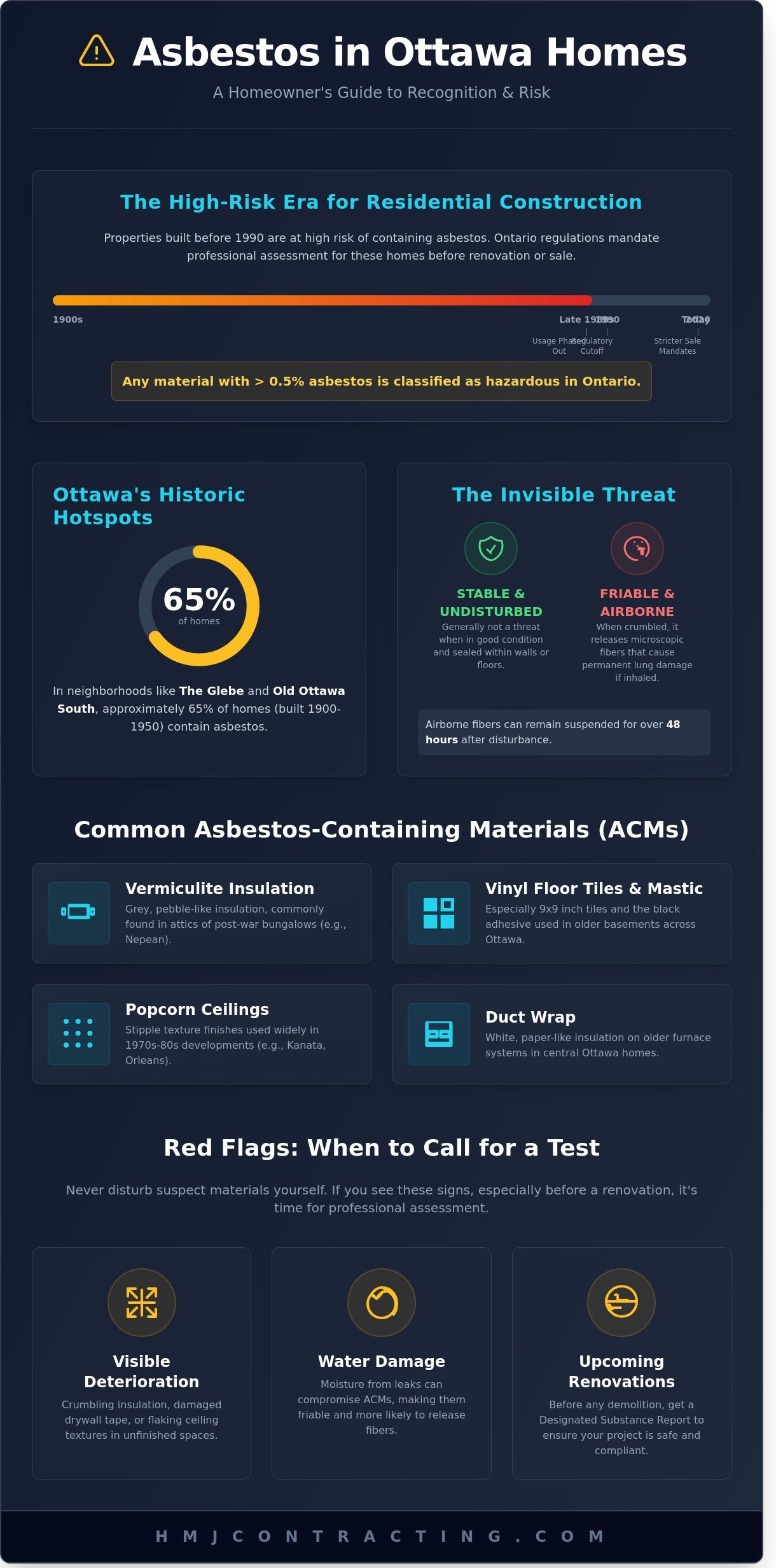
Asbestos is a naturally occurring silicate mineral that builders prized for its heat resistance and extreme durability. Developers across the National Capital Region relied on it heavily for insulation and fireproofing until the late 1980s. Understanding The Reality of Asbestos starts with recognizing that age is the primary risk factor for any property. In Ontario, construction materials containing more than 0.5% asbestos are classified as hazardous, and these substances don't simply disappear over time. They remain embedded in the bones of the house until they're professionally managed.
Ottawa's historic neighborhoods are the most common sites for these materials. Areas like The Glebe and Old Ottawa South feature a high concentration of homes built between 1900 and 1950. Approximately 65% of the residential stock in these zones contains some form of asbestos, often hidden in original lath and plaster or wrapped around old boiler pipes. While these materials provided excellent insulation for decades, their age now makes them a liability for modern families.
The health risk is often described as a dormant danger. Asbestos isn't typically a threat when it's in good condition and left undisturbed. The danger arises when the material becomes friable. This means the substance can be crumbled or reduced to powder by hand pressure, releasing microscopic fibers into the air. Once inhaled, these fibers can cause permanent lung damage. This is why asbestos removal ottawa specialists focus on containment during any structural changes. You can't see the fibers, but the risk is real if you're living in a home built before 1990.
As of 2026, Ontario has implemented stricter standards for real estate transactions. Home inspections now require a mandatory "Hazardous Material Assessment" for any residential property constructed before 1990. This regulation ensures that buyers aren't blindsided by hidden mitigation costs. It also forces a higher level of transparency in the Ottawa housing market, making professional testing a standard part of the selling process.
Common Asbestos-Containing Materials (ACMs) in Local Architecture
- Vermiculite insulation: Frequently found in the attics of post-war Nepean bungalows, often containing traces of amphibole asbestos.
- Vinyl floor tiles: Specifically 9x9 inch tiles and the dark adhesive mastics used in older basements across the city.
- Popcorn ceilings: Stipple finishes were used extensively in Kanata and Orleans developments throughout the 1970s and 80s.
- Duct wrap: White, paper-like insulation found on gravity-fed furnace systems in older central Ottawa homes.
When to Test: The Red Flags for Ottawa Homeowners
If you notice visible crumbling insulation or deteriorating drywall tape in unfinished spaces, it's time to call a professional. You should never start a demolition for a kitchen renovation without first confirming the safety of your walls and flooring. Water damage is another critical trigger. When a pipe bursts or a roof leaks, the moisture can compromise the structural integrity of ACMs, making them friable. If building materials are wet and deteriorating, they're much more likely to release fibers. Professional asbestos removal ottawa services provide the testing and peace of mind needed to ensure your home remains a safe environment for your family.
Understanding Ontario’s Asbestos Abatement Classifications
Ontario Regulation 278/05 is the legal backbone for every asbestos removal ottawa project. It isn't just a set of suggestions; it's a strict provincial law that dictates how hazardous materials must be handled to protect residents and workers alike. The Ministry of Labour enforces these regulations with rigorous oversight, ensuring that contractors don't take shortcuts that could jeopardize public safety. Before any renovation begins in a home built before 1990, the law requires a Designated Substance Report (DSR). This document is a comprehensive audit that identifies 11 specific hazardous materials, including lead, mercury, and silica, though asbestos remains the primary concern for most homeowners.
Understanding the Health Risks of Asbestos is the first step in appreciating why these classifications exist. When asbestos-containing materials (ACMs) are disturbed, they release microscopic fibers that can remain suspended in the air for more than 48 hours. Because these fibers are invisible to the naked eye, the province uses a tiered classification system to determine the level of protection required. This system is based on the "friability" of the material, which refers to how easily it can be crumbled or pulverized by hand pressure.
Type 1, 2, and 3 Operations: What’s the Difference?
Type 1 operations are low-risk and involve non-friable materials like vinyl floor tiles or gaskets, provided the work area is under one square metre. Technicians use basic personal protective equipment and wet-wiping methods to keep dust down. Type 2 is medium-risk, covering the removal of one to 10 square metres of non-friable material or minor work with friable insulation. This requires specialized HEPA-filtered vacuums and polyethylene drop cloths. Type 3 operations are high-risk, involving large-scale removals or any work with highly friable materials like vermiculite. These projects demand full-scale enclosures and professional air monitoring to ensure the environment remains safe.
The Science of Containment and Air Filtration
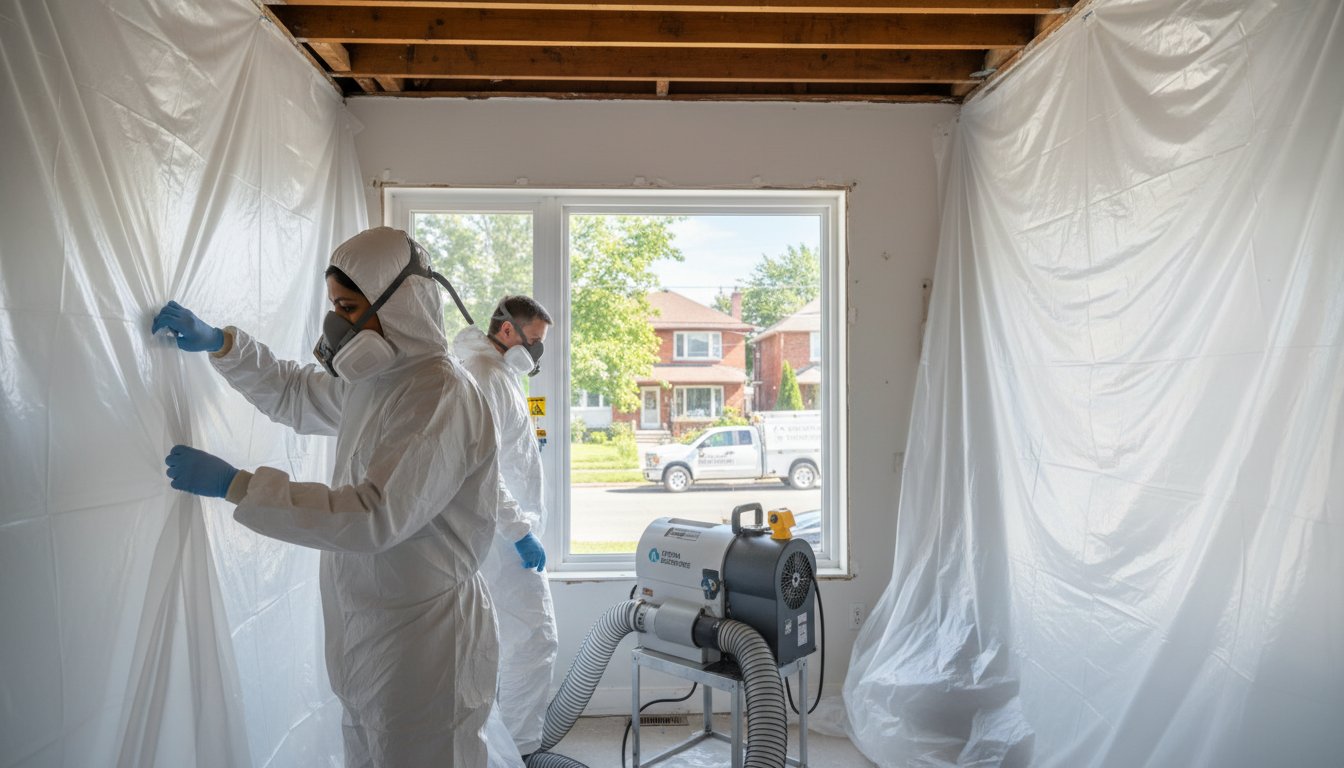
Containment is the most critical element of a successful asbestos removal ottawa project. For high-risk sites, we build airtight enclosures using 6-mil reinforced polyethylene sheeting and tension poles. Negative air pressure is a vacuum-like state that pulls air into the work zone and exhausts it through filters. This ensures that even if there's a small tear in the plastic, air flows inward rather than leaking contaminants into the rest of your home. We use industrial-grade HEPA machines that scrub the air constantly, capturing 99.97% of particles as small as 0.3 microns.
On Type 3 sites, the setup includes a three-stage decontamination facility. Workers must pass through a "dirty room," a shower room, and a "clean room" every time they exit the work area. This meticulous process prevents "track-out," where microscopic fibers are accidentally carried on skin or clothing into living spaces. If you're planning a project and aren't sure which classification your home falls under, our team can help you assess your home's safety needs to ensure your renovation is fully compliant with provincial standards. We prioritize these technical details so you don't have to worry about the long-term integrity of your indoor air quality.
Professional Removal vs. DIY: Evaluating the Real Risks
A common misconception among Ottawa homeowners is that a standard N95 mask and a spray bottle of water provide sufficient protection for asbestos removal. This approach is dangerous. Asbestos fibers are microscopic, often measuring between 0.1 and 10 microns in width. They easily bypass the seal of a retail-grade mask. Professional asbestos removal ottawa teams use P100 HEPA filtration and industrial-grade negative air pressure machines to ensure these invisible threats don't migrate into your living room or bedrooms.
Choosing the DIY route creates significant legal and financial liabilities under Ontario Regulation 278/05. If you accidentally contaminate your property, you're legally obligated to disclose this during a home sale. Uncertified work often results in a 10% to 15% reduction in property value because buyers view the home as a structural liability. Professionals provide the meticulous documentation needed to preserve your investment and ensure your family's safety.
Secondary exposure is a silent threat that many homeowners overlook. When you disturb asbestos-containing materials like popcorn ceilings or floor tiles without a sealed containment zone, fibers enter the HVAC system. These particles then circulate through every vent in the house for months. This puts every occupant at risk long after the physical project ends. Professional abatement involves sealing all ductwork and using high-volume air scrubbers to prevent this systemic contamination.
The Hidden Costs of Improper Handling
Botched DIY projects are expensive mistakes. If a homeowner spreads dust throughout the house, a specialized decontamination cleaning can cost upwards of C$20,000. This is roughly 3 times the cost of a standard professional removal project. You also face significant disposal hurdles. The Trail Road Landfill in Ottawa strictly prohibits asbestos waste from residential vehicles without an Environmental Compliance Approval (ECA) and a completed Waste Manifest. Additionally, most Ontario home insurance providers will refuse coverage for damages or health claims resulting from non-certified hazardous material work, leaving you to pay every cent out of pocket.
How Professionals Verify a Clean Status
We believe in absolute transparency. A reputable contractor will never test their own work because it creates a conflict of interest. Instead, we coordinate with third-party environmental consultants to perform air clearance testing. This process involves two primary scientific methods:
- Phase Contrast Microscopy (PCM): This is the standard industry test. It counts the total number of fibers in the air to ensure they fall below the 0.01 fibers per cubic centimetre (f/cc) limit.
- Transmission Electron Microscopy (TEM): This more advanced analysis can distinguish asbestos fibers from other dust particles, providing a definitive scientific profile of your air quality.
Once the lab results confirm the area is safe, you receive a formal Clearance Letter. This document is a vital asset for your home's permanent records. It proves to future buyers, real estate agents, and insurance adjusters that your asbestos removal ottawa project was completed to the highest provincial standards. This peace of mind is the ultimate return on your investment.
Planning Your Remediation: Costs, Permits, and Logistics
Planning a remediation project requires more than just a contractor; it requires a strategic partner. Most residential asbestos removal ottawa projects follow a predictable timeline of 2 to 5 days. Small jobs like removing a few linear feet of pipe wrap might take 24 hours. Full attic remediations require the full 5-day window to ensure air quality standards meet Ontario's 2026 safety benchmarks. We manage every hour of that schedule to ensure your home returns to a safe state without unnecessary delays.
Logistics shift significantly during Type 3 operations. These high-risk projects involve friable materials or large surface areas. You must vacate the premises during this phase. We seal the work zone with heavy-duty polyethylene barriers and maintain negative air pressure using industrial HEPA units. This ensures no microscopic fibers escape into your living areas. It also means your HVAC system stays off to prevent cross-contamination. Planning for a short stay at a local hotel or with family prevents unnecessary stress. Our team coordinates these windows carefully to minimize your time away from your property.
Coordination with local authorities is a critical step for any significant structural change. While the removal itself is a specialized trade, it often precedes a larger renovation or remodeling project. You should verify your Ottawa building permit requirements early in the design phase. The City of Ottawa requires specific documentation when structural changes follow hazardous material removal. Our team handles the technical coordination to ensure your project remains compliant from the first day of setup to the final air clearance inspection.
Estimating Asbestos Removal Costs in Ottawa
Precision in budgeting protects your financial investment. For minor tasks like register vent removal or small sections of drywall, expect costs between C$850 and C$1,600. Larger attic jobs involving vermiculite often range from C$9,000 to C$19,500 depending on the square footage and the depth of the existing insulation. We avoid "per square foot" pricing because it often ignores the fixed costs of decontamination units and specialized filtration setup. Accessibility plays a major role in the final quote. A cramped 24-inch crawlspace increases labor fees by roughly 30% compared to an open basement project because of the physical toll on technicians and the complexity of the containment.
Disposal and Documentation
Ontario law dictates a strict paper trail for all hazardous waste. Every kilogram of material must be tracked through the manifest system from your curb to a certified Ontario landfill, such as the Trail Road Waste Facility. We provide you with copies of these manifests along with your third-party air clearance results. Keep these documents in your permanent home records for at least 7 years. They're essential for future property sales, insurance renewals, and verifying the safety of your indoor environment to potential buyers.
Currently, federal incentives like the Canada Greener Homes Loan provide up to C$40,000 in interest-free financing for retrofits that include insulation upgrades. While these programs don't always cover removal as a standalone line item, they frequently support the high-performance re-insulation phase that follows a professional abatement. This allows you to offset the total project cost while significantly improving your home's thermal performance and long-term energy efficiency.
The HMJ Advantage: Seamless Abatement and Restoration
HMJ Contracting has served the Ottawa community for over 25 years. We've seen how hazardous material discovery can derail a project if handled poorly. Choosing a partner for asbestos removal in Ottawa requires more than just a technician with a vacuum. It demands a builder who understands how your home stands up. We approach every site with the quiet confidence of a seasoned general contractor. Our team ensures that transparency isn't just a buzzword; it's our standard operating procedure. We provide clear timelines and fixed-price estimates so you aren't left guessing about the final bill.
The biggest risk with niche abatement firms is the "rip and run" mentality. They remove the hazard but leave your home in a state of ruin. HMJ bridges that gap. We envision the final result before the first piece of containment tape is applied. This allows us to transition your property from a hazardous site to a meticulously renovated space without the friction of hiring multiple subcontractors. We treat your home as an investment that deserves longevity and craftsmanship.
Our experience spans across Ottawa's diverse architectural landscape, from century-old homes in the Glebe to mid-century bungalows in Nepean. We understand the specific materials used in these eras, which allows us to pinpoint risks faster than a generalist firm. This localized expertise means we don't just follow a checklist; we apply decades of site-specific knowledge to protect your family and your property's value. We ensure your asbestos removal ottawa project is handled with precision, care, and a focus on the future of your living space.
Why a General Contractor is Safer than a Niche Abatement Firm
Niche firms often lack the architectural depth to recognize structural load-bearing elements. Our background in full-scale construction means we identify these risks before demolition starts, preventing costly sagging or collapses. We provide integrated project management that keeps your timeline moving. If we find asbestos during a kitchen remodel, we adjust the abatement schedule so your cabinetry installation isn't delayed for weeks. This efficiency saves homeowners an average of 15 percent in total project time compared to managing separate contractors. HMJ Contracting provides certified disposal and full regulatory compliance for every project.
Your Next Steps to a Safer Home
Restoring your peace of mind starts with a professional assessment. When you book a walkthrough, clear the areas around suspected materials like floor tiles or pipe insulation to give our experts full access. We handle the technical burden so you can focus on the vision for your new space. Dealing with hazardous materials is stressful, but our methodical process removes the guesswork. We guide you through every phase, from the initial air quality test to the final coat of paint. Our goal is to make the transition feel like a natural progression of your home's evolution rather than a crisis.
Request a professional asbestos assessment from HMJ Contracting today and take the first step toward a healthier, more beautiful living environment.
Protect Your Home with Expert Precision
Discovering hazardous materials in your property shouldn't derail your renovation plans or your peace of mind. You've learned that Ontario’s strict abatement regulations exist to keep your family safe; attempting a DIY removal often results in microscopic contamination that can cost upwards of C$15,000 to remediate properly. By choosing professional asbestos removal ottawa services, you ensure the job meets every legal standard while protecting your property's long term value. Our team brings 25+ years of Ottawa construction experience to every project, handling the complex logistics of permits and disposal so you don't have to.
At HMJ Contracting, we believe in quality without compromise. Our certified hazardous material technicians are fully insured and WSIB compliant, providing a layer of stability and accountability that smaller outfits simply can't match. We don't just clear the air; we provide a meticulous path forward for your home’s next chapter. It's time to replace uncertainty with the quiet confidence of a job done right the first time. Your home is your most significant investment, and it deserves the care of seasoned experts who value craftsmanship as much as safety.
Get a Professional Asbestos Removal Quote in Ottawa
We're ready to help you build a safer, healthier future for your household.
Frequently Asked Questions
How do I know if the insulation in my Ottawa attic contains asbestos?
You can only confirm the presence of asbestos through professional laboratory testing of a physical sample. In Ottawa homes built before 1990, attic insulation often consists of vermiculite, which has a 75% chance of containing amphibole asbestos fibers if sourced from the Libby mine. We recommend hiring a certified technician to collect samples safely; disturbing the material releases microscopic fibers into your breathing zone immediately.
Can I sell a house in Ontario if it has known asbestos?
Yes, you can sell a property with known asbestos in Ontario, but you must legally disclose its presence to potential buyers. Failure to mention known asbestos can lead to lawsuits under the Real Estate and Business Brokers Act. Many sellers choose to complete asbestos removal ottawa services before listing to protect the property value and ensure a seamless closing process for the new owners.
What is the average cost of asbestos removal in a standard Ottawa bungalow?
For a standard 1,200 square foot Ottawa bungalow, professional attic insulation removal typically costs between C$8,000 and C$15,000. If you're dealing with smaller projects like 500 square feet of vinyl floor tiles, costs usually range from C$1,500 to C$3,000. These figures include setup, specialized HEPA filtration, and disposal fees at an approved Ontario hazardous waste facility. Every project requires a bespoke quote based on the material's condition.
Do I need to leave my house while the asbestos is being removed?
You should vacate the premises during high-risk Type 3 removals to ensure your total safety. While we use airtight polyethylene barriers and negative air pressure machines, leaving the home for the 2 to 4 days required for the project eliminates any risk of accidental exposure. Our team manages the entire containment process so you can return to a certified clean environment without any lingering concerns or health risks.
How long does the air testing process take after the removal is finished?
Air clearance testing typically takes 24 to 48 hours to provide definitive results from the laboratory. Once the removal is complete, an independent third-party consultant collects air samples to ensure fiber counts are below 0.01 fibers per cubic centimeter. This meticulous verification step is essential for your peace of mind before we dismantle the containment barriers and hand back your keys for the next phase of your renovation.
Is asbestos removal covered by standard home insurance in Ottawa?
Standard Ontario home insurance policies rarely cover asbestos removal because it's considered a maintenance issue or a pre-existing condition. However, if a pipe bursts and damages asbestos-containing drywall, your insurer might cover the remediation costs as part of the water damage claim. We suggest reviewing your specific policy or speaking with your broker to see if you have a C$5,000 or C$10,000 rider for hazardous materials.
What happens if asbestos is found during a renovation project already in progress?
You must stop all construction work immediately and seal off the affected area to prevent dust from spreading through your HVAC system. Under Ontario Regulation 278/05, the site must be assessed by a professional before any further activity occurs. We quickly pivot our strategy to include asbestos removal ottawa protocols, ensuring your renovation stays on track without compromising the health of your family or the tradespeople on site.
Does all asbestos have to be removed, or can it be "encapsulated"?
Asbestos doesn't always require removal if the material is in good condition and won't be disturbed. Encapsulation involves sealing the material with a specialized bridging agent to prevent fiber release, which is common for pipe insulation or exterior siding. However, if you're planning a transformative interior remodel, full removal is the superior choice for long-term safety. This ensures your home remains a stable investment for generations to come.