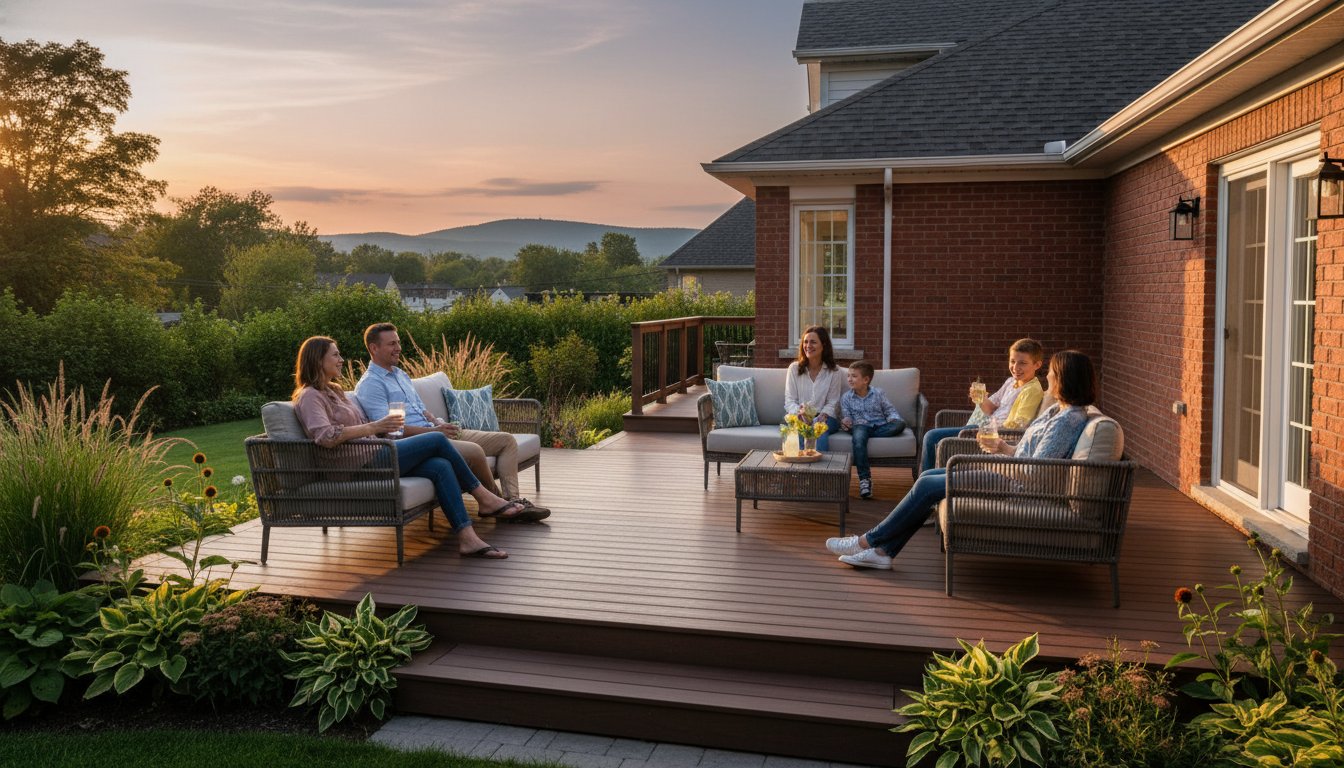
Choosing the traditional beauty of cedar for your backyard project might actually be the most expensive mistake an Ottawa homeowner can make in 2026. You likely want a space for summer hosting, but the reality of local maintenance often means spending your weekends sanding and staining instead of relaxing. We understand the frustration of watching a significant investment fade and splinter under the pressure of Ontario's harsh freeze-thaw cycles. High-quality composite lumber decking solves these issues by providing a resilient surface that thrives in our unique climate without the annual labor.
This guide will demonstrate why these advanced materials are the definitive choice for those seeking a maintenance-free lifestyle and a structure that survives both -30°C winters and +30°C summers. At HMJ Contracting, we believe in quality without compromise. We'll help you navigate the various tiers of materials and the specific Ottawa building permits required for your deck renovation. You'll learn how to select a bespoke solution that increases your property value while ensuring your investment remains as meticulous as the day it was installed. We'll compare the top brands and installation techniques to ensure your vision comes to life with absolute stability.
Key Takeaways
- Understand how modern composite materials are engineered to endure Ottawa’s extreme -30°C freeze-thaw cycles without the warping or cracking seen in traditional wood.
- Learn to navigate the "Good, Better, Best" tiers of composite lumber decking to ensure your backyard investment balances aesthetics with long-term durability.
- Discover why advanced capping technology is a non-negotiable feature for preventing moisture damage and UV "grey-out" in Eastern Ontario’s climate.
- Identify the 2026 City of Ottawa building permit requirements to ensure your deck project remains compliant with local safety regulations.
- Explore the benefits of a professional, end-to-end renovation process that manages everything from demolition to the final meticulous walkthrough.
The Evolution of Composite Lumber Decking for Ottawa Backyards
Modern composite lumber decking has transitioned from a niche luxury into the primary choice for Ottawa residents seeking longevity. By 2026, the adoption rate for synthetic materials in Eastern Ontario is expected to outpace traditional wood for the first time in the local renovation market. These products, often categorized as Wood-plastic composites (WPCs), rely on a sophisticated blend of recycled wood fibers and high-density polymers. Composite lumber represents a definitive fusion of durability and aesthetics.
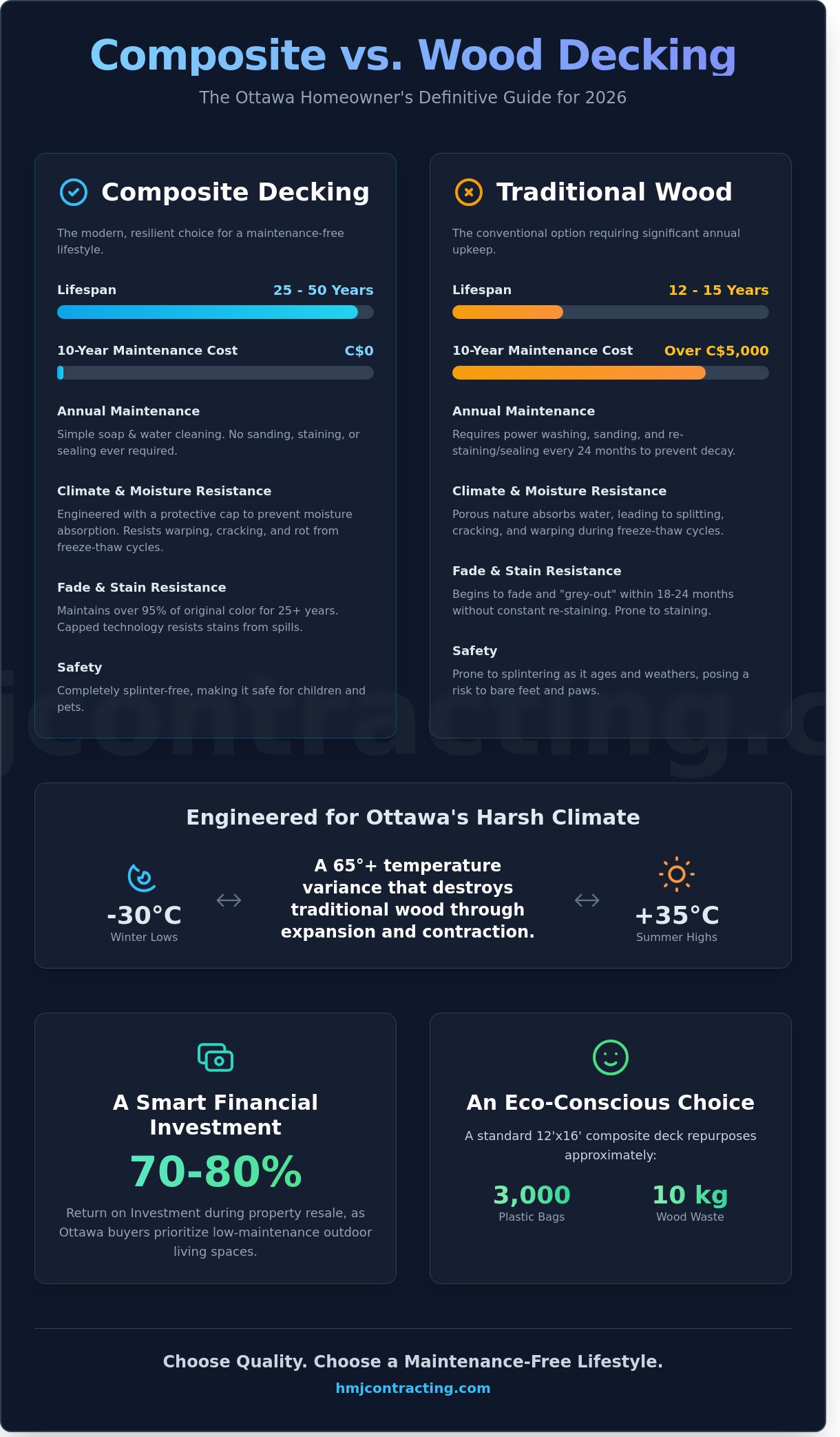
At HMJ Contracting, we prioritize solutions that respect both the client's vision and the environment. A standard 12x16 foot deck built with composite materials can repurpose approximately 3,000 plastic bags and 10 kilograms of wood waste that would otherwise sit in Ontario landfills. While the initial investment is higher than cedar, the long-term value in the Ottawa real estate market remains strong. Local properties featuring professional composite deck installations often see a 70% to 80% return on investment during resale, as buyers increasingly value low-maintenance outdoor spaces.
Wood vs. Composite: The 10-Year Maintenance Reality
- Zero Staining: No need for annual chemical applications.
- Fade Resistance: Modern caps protect the board color for decades.
- Moisture Protection: Boards won't swell or warp during spring thaws.
Why Ottawa Homeowners are Moving Away from Pressure-Treated Wood
Pressure-treated lumber is increasingly viewed as an outdated solution for high-end renovations. While it's cheaper at the checkout, the aesthetic limitations become obvious as the wood begins to grey and check within just 36 months of installation. Families with young children or pets frequently cite the "splinter factor" as their main reason for choosing composite materials. Safety is a major driver for the 35% increase in composite inquiries we've seen recently.
Longevity comparisons further highlight the gap between these materials. A traditional wood deck in our freeze-thaw climate typically reaches its structural limit within 12 to 15 years. High-performance composite systems are rated to last 25 to 50 years. This durability makes them a more stable investment for local property managers and homeowners who want a permanent solution. You can find more insights on local building trends at our renovation blog.
Performance Comparison: Composite vs. Traditional Wood in Ontario’s Climate
Ottawa homeowners face one of the most demanding climates in North America. Temperatures fluctuate from -30°C in January to +35°C in July. This 65-degree variance destroys traditional wood decks through constant expansion and contraction. While cedar and pressure-treated lumber remain popular, they require annual maintenance to survive these shifts. Composite lumber decking offers a transformative alternative by utilizing advanced polymer chemistry to withstand the local freeze-thaw cycle.
Moisture management is the primary differentiator. Traditional wood is porous; it absorbs snowmelt and spring rain. When that water freezes inside the wood fibers, it creates internal pressure that leads to splitting. Modern capped composites utilize a non-porous protective shell. This barrier ensures that moisture never reaches the core of the board, preventing the rot and structural failure often seen in older Ottawa renovations.
- UV Resistance: Traditional cedar begins to "grey-out" within 18 to 24 months without expensive staining. Capped composites maintain 95% of their original color for over 25 years.
- Safety and Grip: Multi-level designs or poolside decks require high slip resistance. 2026 composite models feature embossed wood-grain textures that provide superior traction even when wet.
- Meticulous Engineering: High-quality boards prevent the splintering that makes older wood decks hazardous for bare feet and pets.
When designing these high-performance poolside or spa-adjacent decks, it's also important to consider the longevity of your accessories. For homeowners in the Ottawa Valley, Northern Hot Tub Covers offers custom-fit replacement covers that provide the same level of UV protection and moisture resistance as your new composite deck.
The Freeze-Thaw Resilience Factor
The spring melt in Nepean and Kanata is the true test of a deck's integrity. As snow turns to water and refreezes overnight, wood boards often warp or pull away from their joists. High-quality composite lumber decking uses stable polymers that minimize internal movement. We utilize hidden fastener systems to allow for natural thermal expansion. These clips hold the boards securely while providing enough "play" to prevent the buckling that occurs when boards are face-screwed too tightly. This professional approach ensures your outdoor space remains level and flush for decades.
Heat Mitigation Technology in 2026
Older generations of composite were known for getting hot under the summer sun. In 2026, heat mitigation technology has significantly closed the gap. Products like Trex Transcend now incorporate infrared-reflective pigments. These pigments can reduce surface temperatures by up to 20% compared to standard dark-colored composites. For south-facing Ottawa backyards, choosing lighter "cool-deck" shades ensures the surface stays comfortable for bare feet during August heatwaves. Our team focuses on bespoke design choices that balance aesthetic vision with these practical thermal requirements.
Building a deck that lasts requires a deep understanding of local structural demands. You can explore more about our meticulous approach to outdoor living on our renovation and deck planning blog. We prioritize craftsmanship that stands up to the Canadian elements without compromise.
Understanding Composite Tiers: From Budget-Friendly to Luxury
Major manufacturers like Trex and TimberTech categorize their composite lumber decking into "Good, Better, Best" tiers to help homeowners match performance with their budget. In Ottawa, the climate dictates which tier is actually viable. Our local weather swings from humid 30°C summers to -30°C winters. This expansion and contraction cycle makes capping non-negotiable. We strictly recommend capped products where a durable polymer shell protects the wood-plastic core. Three-sided capping works for most elevated decks, but four-sided capping is the gold standard for ground-level projects where moisture trapped underneath can cause issues.
- Good: Single-color, embossed textures with a 25-year warranty.
- Better: Multi-tonal colors and enhanced scratch resistance with 35-year coverage.
- Best: Advanced heat-dissipating technology and 50-year warranties.
The visual difference between these tiers is striking. Entry-level boards often have a repetitive, stamped grain pattern. Luxury tiers feature variegated colors with realistic streaks that mimic natural timber. These high-end options use advanced pigments to stay up to 30 percent cooler than traditional composites. This is a vital feature for south-facing Ottawa backyards that bake in the July sun.
The Budget-Conscious Choice: Scalloped vs. Solid Boards
Entry-level composite lines often feature scalloped boards. These have a grooved underside that uses less material, making them lighter and more affordable. A scalloped board weighs approximately 25 percent less than a solid one. This makes installation faster but requires careful planning. We prioritize solid boards for stair treads and "picture frame" borders. This ensures your deck looks finished and professional from every angle. Solid boards also provide the structural density needed for high-traffic areas near your back door. Using scalloped boards for the main field and solid boards for the perimeter is a smart way to manage costs without sacrificing the final look.
Luxury Tiers: The Engineered Hardwood Aesthetic
Luxury composite lumber decking mimics the look of authentic Ipe or Tropical hardwoods without the maintenance. These premium boards feature variegated colors, meaning no two planks look identical. Manufacturers use complex grain patterns that aren't just stamped on; they're engineered into the cap. These lines offer the highest scratch resistance for homeowners with large dogs or heavy patio furniture. A 50-year warranty ensures your investment remains a permanent asset to your property. You can find more maintenance tips and renovation insights at https://bloghmjcontracting.blog/ as you plan your project. We find that Ottawa clients who choose these tiers rarely regret the upfront investment because the boards look identical to the day they were installed even after a decade of snow and ice.
Planning and Permits: Navigating Ottawa’s 2026 Deck Regulations
Building a deck in the Ottawa Valley requires more than just a vision; it demands strict adherence to local safety standards. Most homeowners don't realize that a City of Ottawa building permit is mandatory for any composite lumber decking project higher than 60 centimetres (24 inches) above the ground. If your project is part of a larger home renovation, coordinating these permits early prevents costly construction delays. Our team ensures every design respects the 1.5-metre (5-foot) frost-depth requirement. This depth is non-negotiable in Ottawa to prevent the freeze-thaw cycle from shifting your footings and damaging your investment.
The 2026 Ottawa Zoning Update
The new 2026 by-laws introduced specific changes for secondary dwellings and lot coverage limits. In over 80 percent of Ottawa’s residential zones, total lot coverage remains a critical metric. A large deck can quickly consume your remaining 5 percent to 10 percent of allowable space. For complex, multi-level structures, we partner with BCIN-certified designers to ensure your plans meet the Ontario Building Code requirements for structural integrity. This professional oversight guarantees that setbacks from property lines and height restrictions are handled correctly before the first board is laid.
Structural Framing for Composite Loads
While traditional wood decks often use 16-inch joist spacing, high-quality composite lumber decking requires a tighter 12-inch on-center spacing to prevent sagging. This provides a firmer walking surface and maintains the manufacturer’s warranty. In areas with heavy clay soil like Orleans or Stittsville, we often recommend helical piles over traditional concrete sonotubes. These steel anchors reach deep into stable soil to provide a rock-solid foundation. We also apply joist flashing tape to every frame; this simple step prevents moisture from rotting the pressure-treated lumber underneath your premium boards.
Secure your project's future by booking a professional deck consultation with our expert team today.
The HMJ Contracting Approach: Custom Composite Deck Excellence
HMJ Contracting brings over 25 years of hands-on experience to every backyard project in the capital region. We've established ourselves as expert deck builders in Ottawa by focusing on longevity and structural integrity. Our team manages the entire lifecycle of your renovation. This starts with the professional demolition of your existing structure and ends only after a meticulous final walkthrough. We don't believe in cutting corners. Our transparent pricing ensures you know exactly where your investment goes, from the first screw to the last board.
Renovating older properties in neighborhoods like Westboro or the Glebe requires a specialized eye. We prioritize site safety by identifying potential hazards, such as asbestos, which is often found in older exterior materials or adjacent structures. If we find a risk, we handle it according to Ontario safety regulations before construction continues. This proactive approach protects your family and our crew, ensuring the project stays on schedule and remains compliant with local health standards.
Bespoke Design and Professional Installation
We design outdoor spaces that act as a natural extension of your home. By creating seamless transitions between your kitchen and your new deck, we maximize your usable living area. Our team consists of certified installers for major composite brands. This certification is vital because it protects your manufacturer warranty. We take the stress out of the process by managing all municipal permits and heavy lifting. You can focus on choosing your colors while we handle the technical details of your composite lumber decking installation.
Why Local Expertise Matters
Ottawa’s geography presents unique challenges for deck footings. We understand how to build on Leda clay and the hard rock of the Canadian Shield. These conditions can cause shifting if the builder isn't prepared. Our local knowledge ensures your composite lumber decking stays level for decades. We've built our reputation on being a reliable partner for homeowners who value craftsmanship and local accountability. HMJ Contracting is the proactive partner you need to bring your 2026 deck vision to life with precision and care.
Elevate Your Outdoor Living with a Permanent Solution
Investing in your home requires a partner who understands the unique demands of the Ottawa Valley. Choosing composite lumber decking ensures your outdoor space survives the harsh freeze-thaw cycles of Ontario winters while maintaining its aesthetic appeal for decades. We've explored how 2026 regulations prioritize structural integrity and how selecting the right material tier impacts your long-term property value.
HMJ Contracting brings over 25 years of local experience to every project. As certified composite deck installers, we manage the entire process from initial design and permit applications to the final demolition of your old structure. Our full-service approach removes the stress of renovation, providing you with a seamless transition to a bespoke outdoor retreat. You don't have to navigate complex building codes or material selections alone. Our team provides the technical expertise and meticulous craftsmanship needed to bring your vision to life.
Ready to transform your backyard? Get a free quote for your custom composite deck today.
We look forward to building something lasting together for your Ottawa home.
Frequently Asked Questions
Does composite lumber decking fade in the sun?
Modern composite lumber decking is engineered to resist UV degradation and maintains its color within 5 Delta E units over 25 years. While first-generation products often faded to a dull grey, current capped technology shields the core from Ottawa’s intense summer sun. You'll see a slight mellowing of the tone during the first 12 weeks of exposure, but the finish remains stable for decades without the need for staining.
How do I clean and maintain a composite deck in Ottawa?
Cleaning a composite deck requires only a soft-bristle brush and warm, soapy water twice per year. In Ottawa, we recommend a thorough wash in April to remove winter salt and again in October to clear organic debris. You don't need to sand, seal, or stain the surface. For stubborn spots, a pressure washer below 3100 psi is safe if you maintain a 12-inch distance from the boards.
Can I install composite decking over my old wood frame?
You can install new boards over an existing frame if the substructure is level and free of rot. Most composite lumber decking requires joist spacing of 16 inches on center, or 12 inches for diagonal patterns. During our deck renovations, we inspect every joist for structural integrity. If the frame is older than 10 years, we often recommend a full replacement to ensure the foundation lasts as long as the boards.
Is composite decking slippery when wet or covered in snow?
High-quality composite boards feature embossed wood-grain textures that provide traction exceeding the ADA slip-resistance standards. While any surface becomes slick when covered in Ottawa's freezing rain, the synthetic surface doesn't absorb moisture like wood does. You can safely use calcium chloride or rock salt to melt ice without damaging the capped finish. Just avoid using metal shovels that might scratch the surface during winter maintenance.
How much more does composite cost compared to cedar in 2026?
In the 2026 Ottawa market, premium composite materials typically cost C$15 to C$22 per square foot, while Western Red Cedar averages C$8 to C$12 per square foot. This represents a 40 percent to 50 percent higher upfront investment for the material alone. However, homeowners save an average of C$600 annually on maintenance costs because they eliminate the need for professional power washing and staining every two years.
Do composite decks get too hot to walk on in the summer?
Composite materials retain more heat than natural wood, but modern heat-reflective technologies reduce surface temperatures by up to 30 percent. Darker shades like mocha or charcoal can reach 65 degrees Celsius on a 30-degree Ottawa afternoon. We suggest choosing lighter colors like sand or light grey if your backyard faces south. These lighter options stay comfortable for bare feet even during the peak of July heatwaves.
What is the lifespan of a high-quality composite deck in Ontario?
A professionally installed composite deck in Ontario lasts between 25 and 50 years. Unlike wood, these materials don't rot, warp, or suffer from insect infestations common in the Ottawa Valley. Most manufacturers back their products with a 25-year limited residential warranty against structural defects. When HMJ Contracting handles the installation, we ensure the drainage and ventilation are optimized to maximize this lifespan and protect your investment.
Do I need a permit for a deck if it is not attached to my house?
The City of Ottawa requires a building permit for any deck that is more than 24 inches above grade or larger than 10 square metres, regardless of whether it's attached to the house. Even a floating deck must comply with the Ontario Building Code and local zoning bylaws regarding setbacks from property lines. Our team manages the entire permit application process for our clients to ensure every renovation meets legal safety standards.