If you're peeling back the wallpaper in a Westboro or Glebe home built before 1991, that layer of chipped paint isn't just an eyesore; it's a potential health risk. Health Canada reports that lead was a common ingredient in interior paints for decades, and disturbing these surfaces during a renovation can release toxic dust into your living space. You've likely felt that sudden spike of worry about your children's safety or felt stuck between the high stakes of DIY work and the perceived cost of professional lead paint removal.
We understand that your home is your most significant investment. You deserve a renovation process that prioritizes your family's well-being without sacrificing the vision you have for your space. This guide provides the technical roadmap to identify lead hazards and manage them with total confidence. You'll learn the exact steps for professional abatement in Ottawa, how to vet a reliable local contractor for demolition and renovations, and how to move from a hazardous site to a meticulously finished home. We'll show you how to ensure your 2026 remodel is handled with the craftsmanship and integrity your property deserves.
Key Takeaways
- Identify if your Ottawa property is at high risk based on its construction era and specific visual cues like "alligatoring" paint layers.
- Understand the limitations of DIY testing and how professional containment zones ensure a safe environment during your home renovation.
- Learn the technical requirements for professional lead paint removal, including the use of HEPA-filtered vacuums and negative air pressure.
- Discover how to strategically sequence your project to ensure hazardous material remediation is completed before structural remodeling begins.
- Gain peace of mind by choosing a local partner committed to "Quality Without Compromise" for a stress-free and meticulous remediation experience.
Understanding Lead Paint Risks in Ottawa’s Historic Neighborhoods
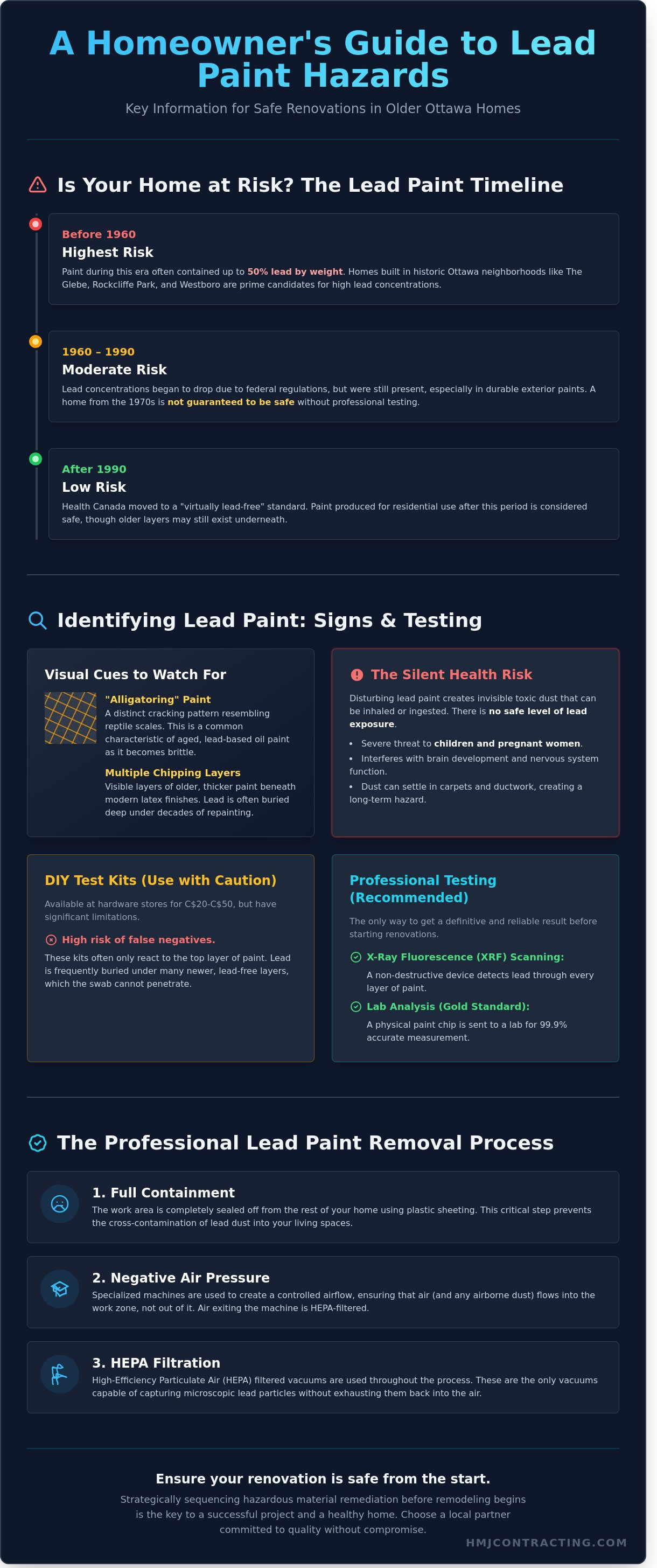
Lead-based paint was the industry standard for Canadian residential construction for decades. Builders prized it for its durability and fast drying times. In Ottawa, homes built before 1960 present the highest risk. During this era, paint often contained up to 50% lead by weight. This legacy remains hidden beneath layers of modern latex in thousands of local properties. It stays dormant until a renovation project disturbs the surface.
If you live in The Glebe, Rockcliffe Park, Westboro, or Old Ottawa South, your home likely contains these hazardous materials. These areas are defined by their architectural heritage, but that same history requires a specialized approach to maintenance. When you start a project involving sanding or structural changes, lead paint removal is not just a cosmetic choice; it's a safety requirement. Dust created during demolition can settle into carpets and ductwork, creating a long-term hazard for your family.
- Lead was used in primers, exterior trim, and interior window sills.
- Ottawa's older housing stock often has 10 or more layers of paint.
- Sanding lead paint creates microscopic particles that stay airborne for hours.
The 1960 to 1990 Timeline in Ontario
Between 1960 and 1990, lead concentrations in paint began to drop due to evolving federal regulations. However, exterior paints often maintained higher lead levels for weather resistance compared to interior finishes. Health Canada eventually moved to a "virtually lead-free" standard in 1990. For homeowners planning house renovations, identifying these layers is vital. You can't assume a home from the 1970s is safe without professional testing. We see many cases where mid-century homes still harbor dangerous concentrations in the base layers.
Lead Poisoning: A Silent Risk for Ottawa Families
Lead dust is often invisible. It enters the body through inhalation or accidental ingestion during the demolition phase. This poses a severe threat to children and pregnant women. Lead interferes with brain development and nervous system function even at low levels. Modern medical standards confirm there is no safe level of lead exposure. Our team treats every lead paint removal project with the meticulous care required to keep your family protected. We focus on containment and HEPA filtration to ensure your living space remains a healthy environment.
Safe contracting is about more than just the final look. It's about the integrity of the process. Whether you're planning a kitchen remodel or a full interior demolition, understanding these risks is the first step toward a successful home transformation. We provide the technical authority and local expertise needed to handle these challenges with composure.
Identifying Lead-Based Paint: Testing and Detection Methods
Determining if your home contains lead isn't a matter of guesswork. It requires a systematic approach to ensure safety before any demolition or renovation begins. Visual cues often provide the first warning. Look for "alligatoring" patterns; this is a specific type of cracking that resembles reptilian scales. It's a common characteristic of aged, lead-based oil paint. You might also notice distinct layers of chipping paint where older, thicker coats are visible beneath modern latex finishes. If you see these patterns, avoid sanding or scraping the area until you've confirmed the contents.
While hardware stores sell DIY lead testing kits for roughly C$20 to C$50, these tools have significant limitations. They often produce false negatives because they only react to the top layer of paint. Lead is frequently buried under five or six layers of modern, safe paint. Professional lead paint removal experts use X-ray fluorescence (XRF) scanning for a more accurate assessment. This non-destructive method uses a handheld device to detect lead through every layer of paint down to the substrate. For definitive proof, laboratory analysis of a physical paint chip sample remains the gold standard in Ontario. This process involves sending samples to an accredited lab to measure lead content with 99.9% accuracy.
When to Test Your Property
Testing is a mandatory first step before starting any kitchen renovation in an older home. Disturbing walls or cabinetry can release toxic dust into your living space. If you're purchasing an older property in established Ottawa neighbourhoods like Nepean or Kanata, testing provides peace of mind before you sign the final papers. Many homes in these areas built before 1970 still contain original lead layers. Commercial property managers also rely on these audits to meet provincial health and safety regulations, ensuring a safe environment for tenants and employees alike.
Interpreting Your Results
Test results usually arrive in two formats: milligrams per square centimetre (mg/cm²) or percentage by weight. In Canada, a concentration of 0.5% lead by weight or 1.0 mg/cm² is the threshold for lead-based paint. It's also vital to distinguish between "intact" and "deteriorated" paint. Intact paint is generally safe if left undisturbed, but deteriorated paint requires immediate attention. Once you have your report, consult with a specialist to build a remediation roadmap. HMJ Contracting can help you interpret these technical findings to ensure your lead paint removal strategy is both safe and efficient. For a project that prioritizes your family's health, consider reaching out to a professional general contractor in Ottawa to discuss your next steps.
The Professional Lead Paint Removal Process
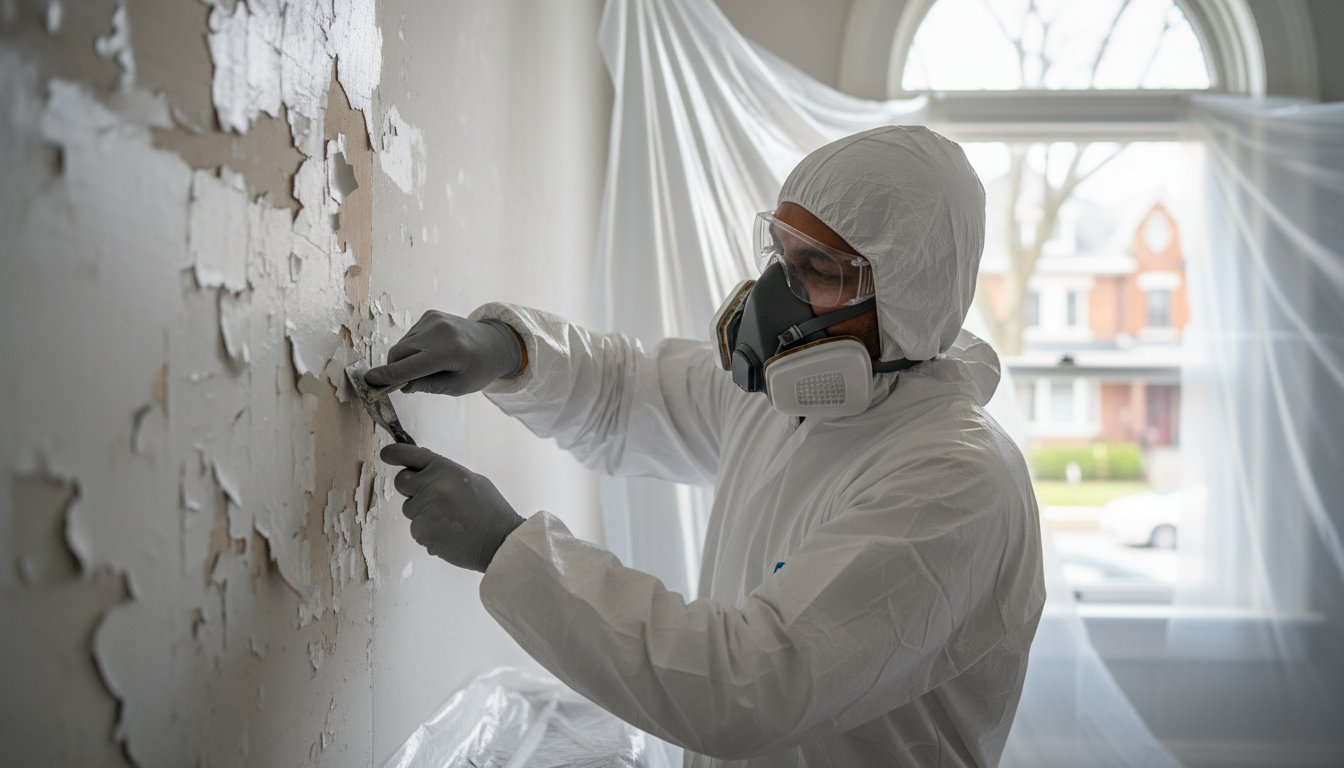
Lead paint removal requires a methodical approach that prioritizes containment over speed. At HMJ Contracting, our process begins with the establishment of a rigorous containment zone. We use 6-mil heavy-duty polyethylene sheeting to seal off the work area entirely. This prevents lead-contaminated dust from migrating to other parts of your Ottawa home during the project. We secure all vents, doors, and windows within the zone to ensure a total seal.
Our teams utilize HEPA-filtered vacuum systems to maintain negative air pressure. This technology pulls air through a high-efficiency particulate air filter, trapping 99.97% of particles as small as 0.3 microns. By keeping the work area under negative pressure, we ensure that any disturbed dust remains inside the containment zone. We rely on wet sanding and scraping techniques rather than dry methods. Applying a fine mist of water to the surface prevents lead dust from becoming airborne, which is a critical safety measure for any high-quality renovation.
The final phase involves a multi-stage decontamination. We perform a HEPA vacuuming of all surfaces followed by a specialized wet-wash. We don't consider a job finished until we conduct clearance testing. This verification process ensures lead levels are well below provincial safety thresholds before your family returns to the space.
Specialized Equipment and PPE
Safety on a lead remediation site isn't optional. Our technicians wear N100 or P100 respirators at all times. These are the only filters capable of protecting workers from microscopic lead fumes and dust. Homeowners should understand that a standard shop-vac is a significant hazard in this environment. Standard vacuums lack the filtration required to trap lead; they often exhaust fine dust back into the room, making the contamination worse. We also utilize specialized chemical strippers that break down paint bonds. These products allow for removal with minimal physical agitation, further reducing the risk of airborne toxins.
Waste Disposal in the Ottawa Region
Disposing of lead-contaminated debris in Ontario is governed by strict environmental laws, specifically O. Reg. 347. This material isn't the same as the debris from a standard kitchen renovation or a simple junk removal job. It's classified as hazardous waste. HMJ Contracting manages the entire chain of custody for these materials. We package all waste in double-layered, 6-mil bags and transport them to a licensed hazardous waste facility near Ottawa. This ensures your project stays compliant with provincial regulations and protects the local environment from heavy metal contamination. Whether we're performing asbestos removal or general contracting, our commitment to proper waste management remains a cornerstone of our service.
Integrating Lead Remediation into Your Home Renovation
Successful renovations in Ottawa's historic neighborhoods like Westboro or Rockcliffe Park depend on a clean start. Lead paint removal isn't just a safety checkbox; it's the critical first phase of any interior remodel. Attempting to demo walls or strip trim without a remediation plan risks spreading toxic dust throughout your ventilation system. This contamination can stall a project for weeks and increase costs significantly. By prioritizing lead removal, you protect the health of your family and the integrity of your new finishes.
Managing the transition from hazard removal to structural renovation requires meticulous planning. You need a team that bridges the gap between hazardous material handling and high-end craftsmanship. Ensuring professional lead paint removal is completed before structural changes begin is the only way to guarantee a truly safe living environment. A lead-free foundation ensures that your investment in premium paints and custom millwork won't be compromised by underlying toxins. Working with a single, integrated team prevents the communication gaps that often happen between separate remediation and construction crews.
Lead Removal During Kitchen and Bathroom Demos
Kitchens and bathrooms in pre-1970s Ottawa homes often hide lead in layers of cabinetry paint and old plumbing solder. Coordinating with experienced Ottawa general contractors allows for a seamless workflow where demolition and lead abatement happen simultaneously under strict containment. If your remodel involves moving load-bearing walls, ensure your BCIN requirements are met during the planning phase to avoid delays. Clear permits and safe demolition go hand in hand for a stress-free experience.
Exterior Lead Management for Decks and Fences
Lead isn't limited to interior walls. Many older outdoor structures in the Ottawa Valley feature lead-based stains or primers. Before installing new custom decks in Ottawa, you must address the existing lead presence. Scraping old paint without ground cover can contaminate your soil for decades. We use specialized HEPA-shrouded tools to capture debris at the source. This protects your garden and the local environment from toxic runoff during the spring thaw, ensuring your outdoor living space is safe for children and pets.
Planning a renovation for your heritage home? Visit the HMJ Contracting blog to learn more about our integrated approach to safe demolition and remodeling.
Why Ottawa Homeowners Trust HMJ Contracting for Safe Removal
HMJ Contracting has spent over 25 years protecting the structural integrity and safety of homes across the Ottawa region. We've built our reputation on a simple promise: Quality Without Compromise. When you deal with hazardous materials like lead, there's no room for shortcuts or "good enough" solutions. Our team approaches lead paint removal as a critical technical operation, combining decades of field experience with the latest remediation technologies available in 2026.
We believe in absolute transparency. You'll never find hidden fees or vague estimates in our proposals. We provide clear, itemized pricing and maintain open lines of communication from our initial site assessment through to the final walkthrough. This grounded approach has made us the preferred partner for homeowners, property managers, and local businesses from Kanata to Orléans. We don't just act as a subcontractor; we serve as your professional guide through the complexities of home safety and restoration.
Our Reassuring Approach to Hazardous Materials
Managing a household is stressful enough without the added worry of environmental hazards. We design our removal processes to minimize disruption to your family's daily life. By utilizing high-efficiency particulate air (HEPA) filtration and state-of-the-art containment barriers, we ensure the rest of your home remains pristine while we work. Our technicians are fully certified, bringing a level of technical authority that only comes from a quarter-century of hands-on service in the Ottawa community.
Beyond immediate safety, our work protects your long-term investment. We provide comprehensive documentation for every project, creating a clear paper trail that confirms your home is lead-free. This is an essential asset for future resale value, as modern buyers in the Ontario market prioritize health-certified properties. You can rest easy knowing that your lead paint removal was performed to the highest industry standards, backed by a team that values local pride and accountability.
Get Started on Your Stress-Free Renovation
Starting your home transformation is a straightforward process. It begins with a specialized assessment where we identify the specific needs of your property. Whether you require a detailed inspection or expert asbestos removal, our staff provides the clarity you need to move forward. We'll walk you through exactly how to prepare your home before our expert team arrives, ensuring a seamless transition from the planning phase to active remediation.
HMJ Contracting is your full-service resource for more than just hazard mitigation. Once your home is safe, we're ready to help with the next chapter of your renovation. From professional demolition and junk removal to the construction of bespoke decks and fencing, we handle the heavy lifting. We're committed to bringing your vision to life with the same meticulous craftsmanship we apply to our safety services. Book your consultation today and take the first step toward a safer, more beautiful home with Ottawa's trusted general contracting experts.
Protect Your Ottawa Home and Legacy
Investing in an older property in neighborhoods like the Glebe or Rockcliffe Park requires a commitment to safety and meticulous craftsmanship. You've learned that identifying risks through professional testing is the first step toward a successful renovation. Safe lead paint removal isn't just about meeting 2026 safety standards; it's about protecting your family and ensuring your home’s longevity. Professional remediation prevents the spread of toxic dust and ensures your property remains a healthy environment for years to come.
HMJ Contracting brings over 25 years of local Ottawa experience to every project. As certified hazardous material remediation specialists, we handle the technical complexities of lead and asbestos so you don't have to. We provide full-service general contracting that moves seamlessly from hazardous material safety to high-end finishing. Our team manages every detail with the quiet confidence you expect from a seasoned partner. We turn your architectural vision into a secure, beautiful reality through a process that's transparent and stress-free.
Secure your home and start your renovation with a professional lead assessment from HMJ Contracting
Your home deserves the highest standard of care and a foundation built to last for generations.
Frequently Asked Questions About Lead Paint Removal
How can I tell if the paint in my Ottawa home contains lead?
Homes built before 1960 almost certainly contain lead-based paint, while those constructed as recently as 1991 may still have it on exterior surfaces or trim. You can use a 3M LeadCheck swab for an initial test, but a laboratory analysis of a paint chip provides the most reliable data. In Ottawa neighborhoods like the Glebe or Sandy Hill, we recommend professional testing before starting any major renovations to ensure your family's safety.
Is it legal to remove lead paint myself in Ontario?
It's legal for Ontario homeowners to remove lead paint themselves, but it's a high-risk activity that requires strict adherence to safety protocols. While the Ministry of Labour regulates professional contractors, private residents aren't bound by the same occupational laws. However, you must follow Ottawa waste management bylaws, which require lead-contaminated debris to be handled as hazardous waste rather than standard construction junk removal.
What is the safest method for lead paint removal in a residential setting?
Wet scraping and HEPA-filtered vacuum sanding are the safest methods because they prevent toxic dust from becoming airborne. Chemical stripping is another meticulous option for preserving original woodwork in heritage homes. We avoid using heat guns or dry sanding, as these techniques release lead fumes and fine particles that settle into your home’s carpets and ventilation systems, creating long-term health hazards.
Does lead paint removal add to the cost of a home renovation?
Lead paint removal typically increases a total renovation budget by 10% to 25% depending on the project's complexity. This covers the specialized containment materials, HEPA vacuums, and the extra labor hours required for a clean worksite. While it's an added investment, professional remediation ensures your property remains a safe environment, which is a critical factor for the long-term value of your Ottawa home.
How long does the lead paint remediation process typically take?
A standard 150-square-foot room usually takes 2 to 4 days to complete, including the initial setup and final decontamination. Larger whole-home projects in the Ottawa area can extend to 14 days or more. Our team follows a steady, methodical rhythm to ensure every microscopic particle is captured, as rushing the process can lead to accidental contamination of clean living spaces.
Can I stay in my home while lead paint is being removed?
You can often stay in your home if the work area is completely sealed with 6-mil polyethylene sheeting and heavy-duty tape. However, if the project involves high-traffic hallways or your home's HVAC system, we suggest vacating the premises for 48 hours. This proactive approach gives our general contracting team the space to perform a thorough final cleaning and air filtration before you return to the space.
What should I do if I find lead paint during a DIY renovation?
Stop your work immediately and mist the area with water to prevent any dust from spreading through the house. Cover the exposed paint with plastic sheeting and turn off your furnace or air conditioner to stop air circulation. It's best to call a specialist for a lead paint removal assessment before you continue, as disturbing lead without proper containment can contaminate your entire property within minutes.
How does lead paint removal differ from asbestos removal?
Lead paint removal focuses on preventing the ingestion and inhalation of heavy metal dust, while asbestos removal targets microscopic mineral fibers found in insulation or floor tiles. Both processes require specialized HEPA filtration and airtight containment zones. While lead is often found on surface coatings, asbestos is frequently hidden within structural materials, making professional inspection a vital step for any Ottawa demolition project.