Last Tuesday, a homeowner in Westboro realized that even with the TV at full volume, they could still hear every footstep from the kitchen above their new basement suite. It's a common frustration when soundproofing basement ceiling Ottawa homes. You likely agree that a renovation only feels complete when it offers true privacy and a break from the household's daily rhythm. Standard insulation often fails to block the heavy thud of impact noise, leaving your home office or guest bedroom feeling exposed.
This 2026 guide provides the professional techniques and materials needed to eliminate noise transfer and transform your space. You'll learn how to meet the latest Ontario Building Code requirements for secondary suites while significantly increasing your property's value. We'll walk through the specific combination of resilient channels, mineral wool, and acoustic sealants that create a silent, high-quality living environment.
Key Takeaways
- Identify the critical differences between airborne and impact noise to understand why standard thermal insulation fails to provide adequate acoustic privacy.
- Discover the high-performance materials, such as mineral wool and 5/8" Type X drywall, that serve as the industry standard for superior sound absorption.
- Learn the professional installation steps for soundproofing basement ceiling Ottawa homes, ensuring every air leak and mechanical vibration is meticulously addressed.
- Navigate the Ontario Building Code (OBC) requirements to ensure your basement renovation meets legal standards for secondary suites while maximizing property resale value.
- Avoid common DIY mistakes by leveraging professional craftsmanship to achieve a seamless, transformative result that guarantees long-term quiet and comfort.
Understanding Sound Transmission in Ottawa Basements
Converting a basement into a functional living space or a quiet home office requires more than just new drywall. When homeowners begin soundproofing basement ceiling Ottawa projects, they often discover that sound behaves differently than heat. While your current insulation might keep the space warm, it likely does little to stop the sound of footsteps or a muffled television from the floor above. Effectively managing noise requires a professional approach to both airborne and structural vibrations.
Airborne vs. Impact Noise: Identifying Your Problem
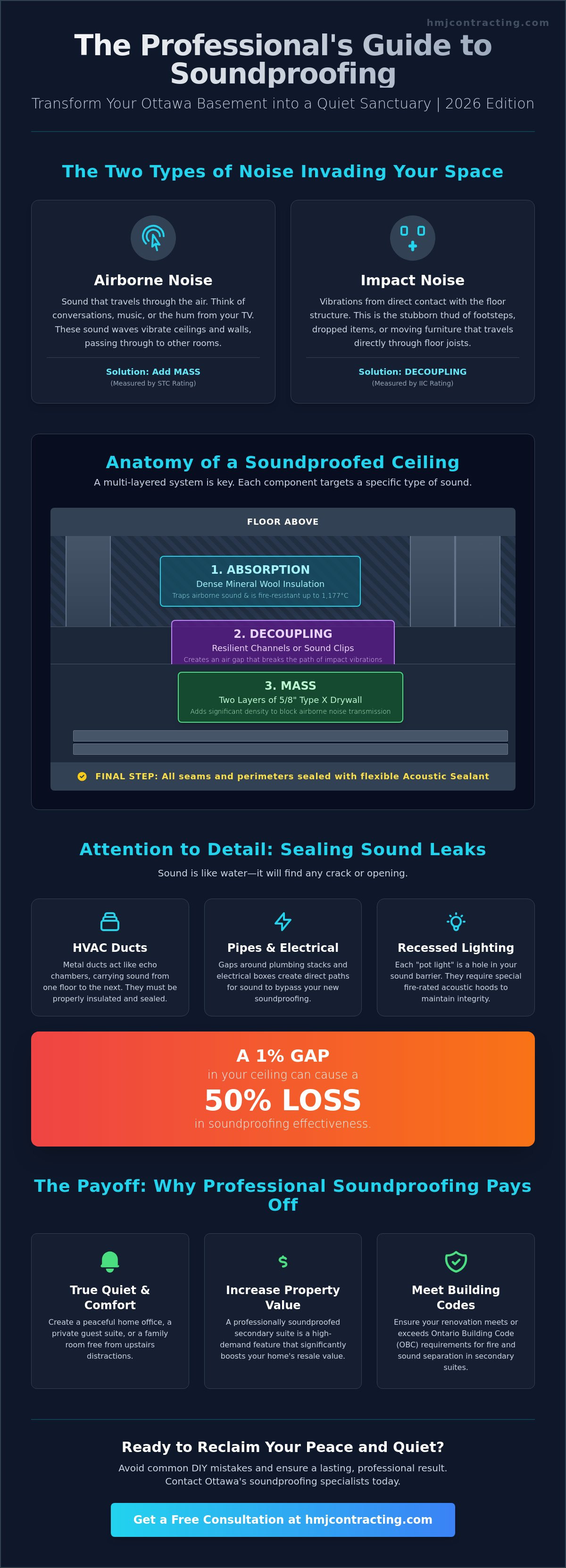
Sound travels through your home in two distinct ways. Airborne noise includes things like voices, music, or the hum of a furnace. These sound waves move through the air until they hit a surface, vibrating the ceiling material and passing into the room below. Impact noise is more stubborn. It occurs when an object hits the floor upstairs, sending vibrations directly through the floor joists. Understanding Sound Transmission helps us realize that thick insulation batts alone can't stop impact noise; they lack the density to absorb these mechanical vibrations. Effective solutions require structural decoupling to break the physical connection between the upstairs floor and your basement ceiling.
- Airborne noise: Blocked by adding mass, such as extra layers of specialized drywall or mass-loaded vinyl.
- Impact noise: Mitigated by using resilient channels or sound clips to separate materials and break the vibration path.
Sound Transmission Class (STC) measures how effectively a wall or ceiling blocks airborne sound, while Impact Insulation Class (IIC) quantifies the reduction of structural vibrations like footsteps on a floor.
In historic Ottawa neighborhoods like The Glebe and Old Ottawa South, many homes built between 1890 and 1950 feature thick timber joists. While these structures are incredibly durable, they act as perfect conductors for sound. Unlike modern engineered I-joists, these solid wood beams transmit vibrations across the entire width of the house. We focus on bespoke solutions that respect the integrity of these older builds while providing a transformative acoustic experience for the lower level.
Common Sound Leaks in Basement Ceilings
Identifying "flanking paths" is a critical part of our meticulous process. These are the indirect routes sound takes to bypass your soundproofing efforts. HVAC ducts are the most common offenders in Ottawa homes; they act as metal echo chambers that carry sound from the kitchen directly into a basement bedroom. Plumbing stacks and electrical boxes also create gaps in your acoustic barrier. If you leave a 1% gap in your ceiling, you can lose up to 50% of your soundproofing effectiveness.
Ottawa’s seasonal humidity shifts are another factor we manage. Our local climate sees humidity levels swing from 20% in the winter to over 80% in the summer. These changes cause wood joists to expand and contract by several millimeters annually. We use high-grade acoustic sealants that remain flexible to ensure your sound barrier doesn't crack as the house breathes. For more insights on maintaining your home's integrity during a renovation, visit our latest guides at https://bloghmjcontracting.blog/.
Sealing recessed lighting is equally vital. Each pot light acts as a hole in your "sound bucket." We utilize fire-rated acoustic hoods to wrap these fixtures, ensuring your soundproofing basement ceiling Ottawa investment isn't undermined by small design choices. Our goal is to provide a seamless, stress-free experience that turns a noisy basement into a quiet sanctuary built to last for generations.
Top Soundproofing Materials and Systems for 2026
Successful soundproofing basement ceiling Ottawa projects require more than just stuffing insulation into joists. In 2026, homeowners prioritize systems that address both airborne noise, like voices, and impact noise, like footsteps. The right combination of materials creates a barrier that transforms a basement into a truly private suite or a quiet home office. We focus on a three-pillar approach: absorption, mass, and decoupling.
Absorption: Choosing the Right Insulation
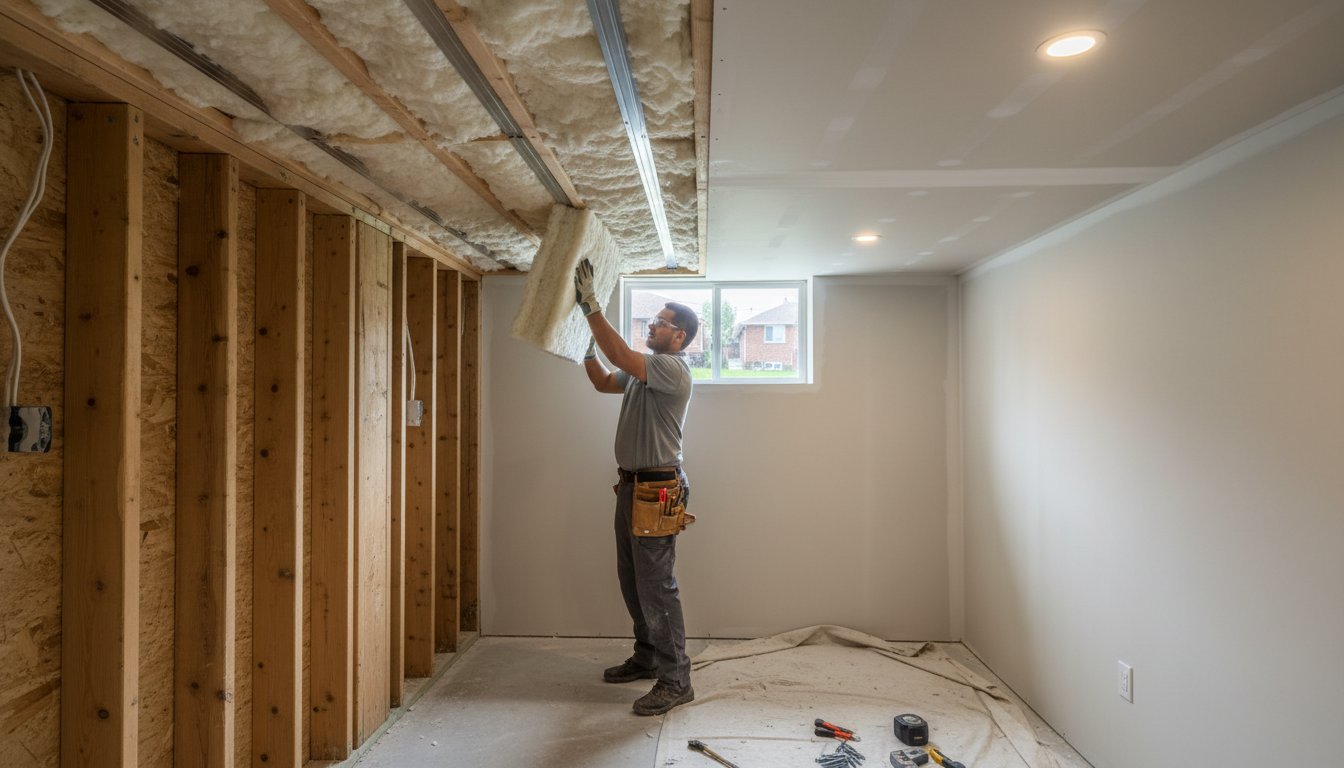
Mineral wool, specifically ROCKWOOL Safe'n'Sound, remains the gold standard for Ottawa renovations. It's significantly denser than traditional pink fiberglass. This density allows it to trap sound waves effectively within its stone fiber structure. Beyond acoustics, mineral wool provides a fire-resistant barrier that can withstand temperatures up to 1,177°C. This is a vital safety feature for basement apartments in Ontario. Our team ensures a meticulous friction-fit installation. We leave no gaps around electrical boxes or plumbing, as even a 1% gap can let 50% of the sound through. This precision is what separates a DIY attempt from a professional result.
Isolation and Mass: Decoupling the Ceiling
Adding mass is the next step in the process. We use 5/8 inch Type X drywall because it's significantly denser and heavier than standard 1/2 inch boards. For maximum silence, we recommend a double-layer approach with Green Glue damping compound sandwiched between the sheets. This setup converts sound energy into heat through molecular friction. Decoupling is equally important. Resilient channels or sound isolation clips break the physical connection between the floor joists and the drywall. This "break" stops vibrations from traveling through the wood frame. A professional renovation for noise reduction ensures these channels are installed correctly to avoid "short-circuiting" the system with misplaced screws.
In Ontario, Sonopan panels have become a local favorite for their effectiveness and eco-friendly profile. These 3/4 inch wood fiber panels are made from 100% recycled materials and offer a high Sound Transmission Class (STC) rating. They work exceptionally well in low-profile basements where every inch of ceiling height matters. By combining Sonopan with 5/8 inch drywall, we can achieve superior results without sacrificing your overhead clearance. When you're ready to start your project, we can help you design a custom soundproofing plan that fits your home's specific layout and your family's needs.
- Mineral Wool: High-density stone fiber for maximum acoustic absorption.
- Type X Drywall: Provides the heavy mass needed to block low-frequency sounds.
- Resilient Channels: Decouples the ceiling to stop impact noise from upstairs.
- Sonopan: An Ontario-made solution that adds density without excessive thickness.
Every Ottawa home has unique structural challenges, from ductwork placement to uneven joists. Choosing the right materials is only half the battle; the craftsmanship behind the installation determines the final performance. Our approach ensures that your investment provides lasting peace and quiet for years to come.
The Step-by-Step Soundproofing Installation Process
A successful installation begins with a rigorous site assessment. We identify mechanical noise sources, such as vibration from HVAC units or the rattle of loose ductwork, before any materials arrive. For a professional soundproofing basement ceiling Ottawa project, we focus on the "Acoustic Sandwich" method. This involves a calculated layering of high-density mineral wool, isolation hardware, and specialized drywall to create a barrier that stops both airborne and impact noise.
Preparation and Mechanical Damping
We start by addressing the hidden noise makers inside your joist cavities. Standard PVC drain pipes are notorious for "water rushing" sounds; we wrap these in mass-loaded vinyl or specialized foam to dampen the vibration. We also apply fire-rated putty pads to the back of all electrical boxes. This prevents sound from leaking through the cutouts in your ceiling. Before installing any hardware, our team ensures the ceiling joists are level. If the structure is uneven, the isolation system won't perform correctly, leading to potential contact points that bridge sound across the gap. Using the right Top Soundproofing Materials during this phase ensures the mechanical systems don't undermine your investment.
Hanging the Soundproof Assembly
The core of the system relies on decoupling. We install resilient channels or isolation clips perpendicular to the joists. Proper spacing is critical here. If a screw accidentally hits a wooden joist instead of the metal channel, it creates a "short-circuit" that allows sound to bypass the system entirely. We typically use 5/8" Type X drywall for its superior mass. It's significantly heavier than standard boards, so we use specialized lifts to ensure a precise fit without straining the isolation hardware.
We always leave a 1/4 inch gap around the entire perimeter of the ceiling. This prevents the new ceiling from touching the walls, which would otherwise transfer vibrations. We fill this gap with non-hardening acoustic sealant. This step is often overlooked by DIYers, but it's vital for long-term performance. It allows the structure to shift slightly without cracking the seal. Our methodical process ensures that your soundproofing basement ceiling Ottawa installation provides the quiet, private environment you expect from a professional renovation.
Legal and Financial Benefits of Soundproofing Your Ottawa Basement
Investing in your home requires a clear understanding of both legal obligations and long term returns. When you prioritize soundproofing basement ceiling Ottawa projects, you aren't just buying peace and quiet. You're building equity and ensuring your property meets strict municipal standards. Professional acoustic work transforms a basement from a simple storage area into a high value asset that stands up to scrutiny from inspectors and buyers alike.
Ottawa Secondary Suite Requirements
To legally rent out a basement in Ottawa, you must comply with the Ontario Building Code (OBC). Section 9.11 of the code mandates a minimum Sound Transmission Class (STC) rating of 50 for assemblies separating residential units. This isn't a suggestion; it's a requirement for passing municipal inspections. A BCIN-certified plan typically specifies materials like resilient channels and specialized mineral wool insulation to hit this 50 STC mark. Without these specific soundproofing specs, your secondary suite could be deemed illegal. This leads to costly retrofits or the inability to properly insure your property. For a deeper look at local standards, check out Home Renovation Ottawa: The Homeowner’s Comprehensive 2026 Guide.
ROI: Why Quality Soundproofing Pays Off
Professional acoustic work directly impacts your bottom line. High quality tenants often prioritize privacy and are willing to pay a premium for a unit where they don't hear every footstep from above. This reduces turnover, which is the biggest hidden cost for Ottawa landlords. Beyond rental income, soundproofing acts as an insurance against future noise disputes that could lead to Landlord and Tenant Board hearings. From a resale perspective, a soundproofed basement adds tangible value. Buyers in 2026 view a quiet, multi-functional basement as a premium feature rather than a luxury. Our meticulous approach ensures these upgrades last for generations, protecting your financial commitment.
There's also a significant overlap between acoustic insulation and thermal performance. Dense materials used in soundproofing basement ceiling Ottawa homes help retain heat in the winter, potentially lowering energy bills by 10% to 15% in basement spaces. This dual benefit makes acoustic upgrades one of the most efficient renovations you can choose. You get a warmer, quieter home while reducing your monthly overhead.
Why Professional Renovation is Key to Noise Reduction
Achieving a high Sound Transmission Class (STC) rating requires more than just buying the right insulation. It demands a technical understanding of how vibrations move through a building's skeleton. Many Ottawa homeowners attempt DIY soundproofing only to find that footfalls and voices still bleed through the floor joists. Common errors include over-compressing mineral wool or failing to decouple the drywall with resilient channels. These small installation mistakes can drop a ceiling's noise reduction effectiveness by 15 points or more. When you lose that much performance, the money spent on materials is essentially wasted.
Professional installation ensures that every gap is sealed and every material performs at its peak. We treat every soundproofing basement ceiling Ottawa project as a precision engineering task. Our team identifies flanking paths where sound travels through ductwork, plumbing stacks, and electrical outlets. By addressing these hidden leaks, we create a truly quiet environment that a DIY approach rarely achieves. We integrate these technical solutions into your broader renovation vision, ensuring the final result looks as good as it sounds.
The HMJ Contracting Difference
With over 25 years of experience in the Ottawa renovation market, we've refined a no-compromise policy on craftsmanship. We don't use subpar materials that lose their shape or effectiveness over time. Our team applies meticulous attention to detail, from the placement of acoustic caulking to the installation of heavy-duty 5/8-inch Type X drywall. This dedication to quality ensures your investment lasts for decades. We understand the local building codes in Ontario and ensure every renovation is fully compliant. If you're looking for more design inspiration, check out these Basement Renovation Ideas for Ottawa Homes to see how we blend functionality with style.
Ready for a Quieter Home?
Our process is designed to be stress-free and transparent. It begins with a professional assessment where we evaluate your home's unique structural needs. We provide a fixed-price quote, so you know exactly what to expect before the first hammer swings. Our methodical workflow covers every stage of the project from start to finish. We handle the heavy lifting so you can focus on enjoying your new space. Our phases include:
- Controlled demolition and removal of existing ceiling materials.
- Installation of specialized acoustic insulation and decoupling hardware.
- Precision drywall hanging and multi-stage taping for a seamless finish.
- Final walkthrough to ensure the space meets our rigorous standards.
We take pride in our reputation as a reliable local expert. Your peace of mind is our priority throughout the entire transformation. Schedule your Ottawa basement consultation with HMJ Contracting to get started on your project today.
Transform Your Quiet Vision into a Lasting Ottawa Investment
Effective noise reduction requires more than just thick insulation. It relies on advanced decoupling techniques and high-density materials that stop both airborne and impact noise at the source. By following the 2026 standards for soundproofing basement ceiling Ottawa projects, you ensure your lower level remains a functional, peaceful space for years. This meticulous approach doesn't just block unwanted sound; it builds significant equity into your property while meeting modern local building codes.
HMJ Contracting brings over 25 years of local Ottawa experience to every residential project. Our team includes certified asbestos and mold remediation specialists, ensuring your home's structural integrity and air quality are protected throughout the renovation. We prioritize your peace of mind by providing transparent, fixed-price renovation contracts that eliminate financial surprises. It's time to reclaim your quiet and enjoy the full potential of your home's square footage. We're ready to handle the technical hurdles so you can simply enjoy your new, serene environment.
Book Your Professional Ottawa Basement Renovation Today
Frequently Asked Questions
How much ceiling height will I lose when soundproofing my basement?
You will typically lose between 1 and 3 inches of ceiling height depending on the chosen assembly. A standard installation using resilient channels and a single layer of 5/8 inch Type X drywall adds approximately 1.5 inches to the existing structure. If your project requires maximum isolation through a staggered stud or double drywall approach, expect a 3 inch reduction. We prioritize maintaining your vision while meeting Ontario Building Code requirements for head clearance.
Is mineral wool better than spray foam for soundproofing a basement ceiling?
Mineral wool outperforms spray foam for acoustic insulation because its high density absorbs mid and high frequency sound waves. While closed cell spray foam offers an R-value of 6.5 per inch for thermal retention, it's too rigid to dampen vibrations effectively. Products like Rockwool Safe'n'Sound provide a 0.95 Noise Reduction Coefficient rating. This makes it the technical choice for homeowners seeking a quiet, transformative living space.
Do I need a permit to soundproof my basement ceiling in Ottawa?
You don't need a building permit from the City of Ottawa for adding insulation or changing drywall finishes. However, if your soundproofing project involves moving load-bearing walls or altering mechanical systems, a permit is mandatory under the Ontario Building Code. We handle the technical details to ensure your renovation stays compliant. Always verify your specific scope with our team to avoid local zoning complications.
Can I soundproof my ceiling without removing the existing drywall?
You can soundproof without demolition by applying a layer of noiseproofing compound and a second layer of 5/8 inch drywall over the existing ceiling. This method adds significant mass to block airborne noise without the mess of a full tear out. It's a meticulous way to improve your home's acoustics while keeping the project timeline short. This approach is common for Ottawa property managers looking for efficient upgrades.
How much does soundproofing a basement ceiling cost in Ottawa?
Professional soundproofing basement ceiling Ottawa projects typically range from C$15 to C$30 per square foot for labor and high end materials. According to 2024 Canadian renovation cost guides, a standard 500 square foot basement ceiling requires an investment between C$7,500 and C$15,000 for a professional installation. These figures include premium acoustic materials like mass loaded vinyl and resilient clips. We focus on quality without compromise to ensure your investment lasts for generations.
What is the best way to stop the sound of footsteps from upstairs?
Decoupling is the most effective method to eliminate impact noise like footsteps. By installing resilient sound isolation clips and hat channels, you break the direct vibration path between the upstairs floor and your basement ceiling. This creates a seamless barrier that stops 80 percent of structure-borne noise. It's a sophisticated engineering solution that transforms a noisy basement into a peaceful retreat or a bespoke home office.
Does soundproofing also help with basement fire safety?
Soundproofing improves fire safety because materials like mineral wool and Type X drywall are naturally fire-resistant. Mineral wool can withstand temperatures over 1,000 degrees Celsius, which provides extra time for evacuation during an emergency. Using these meticulous construction standards ensures your basement isn't just quiet, but also safer for your family. This dual-purpose benefit adds long term value and stability to your Ottawa property.
How long does a typical basement soundproofing project take?
A standard basement soundproofing project takes between 3 and 7 business days to complete from start to finish. This timeline covers the initial site preparation, insulation install, drywall hanging, and professional taping. Larger spaces over 1,000 square feet may require up to 10 days for a meticulous finish. Our methodical process ensures we respect your time while delivering a high quality, stress-free renovation experience.