
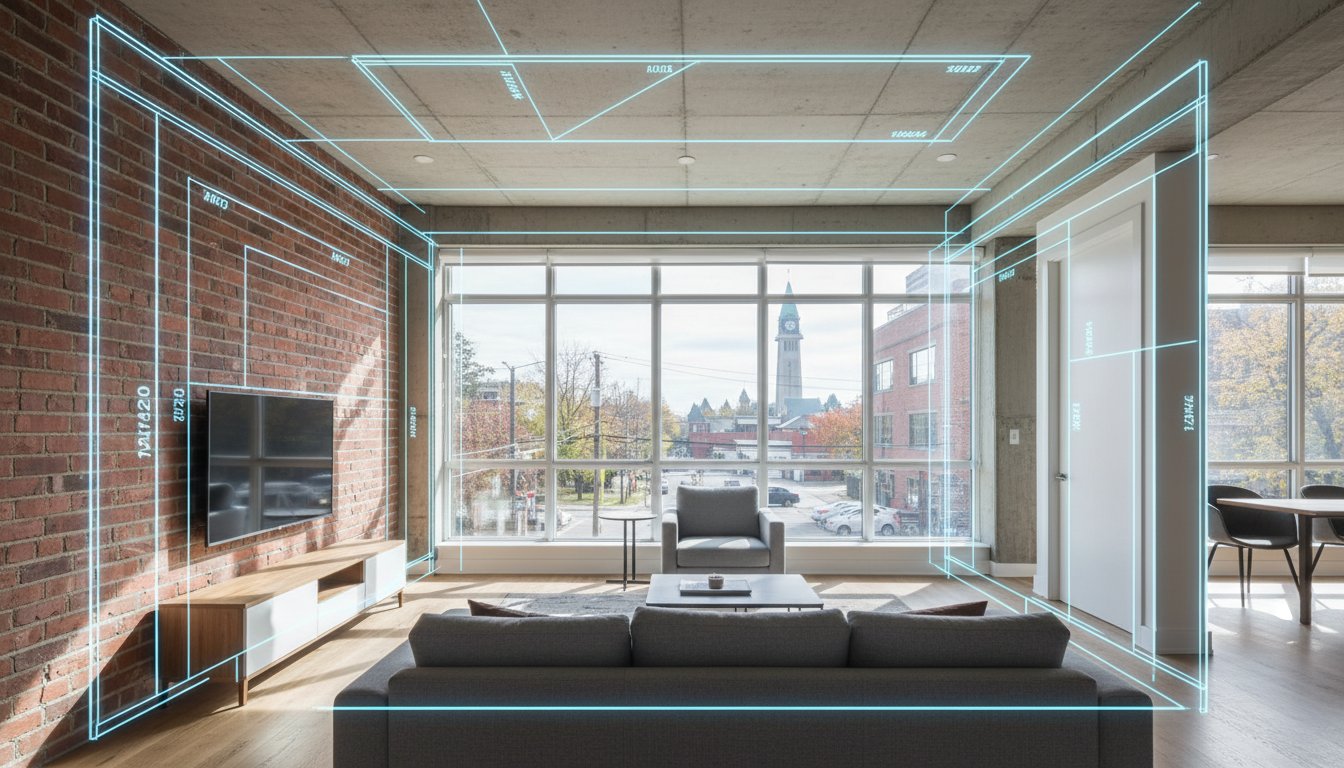
Your dream home addition in Westboro could be halted by a single missing five digit number before the first hammer even swings. You have likely spent months curating Pinterest boards and selecting the perfect bespoke finishes for your renovation; the last thing you want is for the City of Ottawa to reject your permit application due to a technicality. This guide will clarify exactly why a bcin, or Building Code Identification Number, is the key to unlocking your project's legal status and ensuring your structural plans meet the latest Ontario Building Code standards.
We understand that dealing with municipal requirements feels like a hurdle when you are eager to begin your transformation. You deserve a process that is as meticulous as the craftsmanship in your home. By the end of this article, you will know exactly when this qualification is mandatory and how it distinguishes a qualified designer from a general drafter. We will provide a clear roadmap to ensure your 2026 renovation project moves from the drawing board to a finished reality without the stress of permit delays.
Key Takeaways
- Understand why a bcin is legally mandatory for residential design drawings to ensure your Ottawa building permit is approved without delays.
- Identify which structural projects, from Kanata additions to Nepean wall removals, require the expertise of a qualified designer to stay code-compliant.
- Compare the roles of designers, architects, and engineers to choose the most cost-effective professional for your specific home renovation.
- Learn how to verify provincial credentials and use the QuARTS registry to protect your property investment from unqualified or fraudulent contractors.
- Discover how meticulous design drawings help HMJ Contracting spot hidden risks like asbestos before demolition starts, ensuring a seamless project.
Understanding BCIN: The Key to Legal Renovations in Ottawa
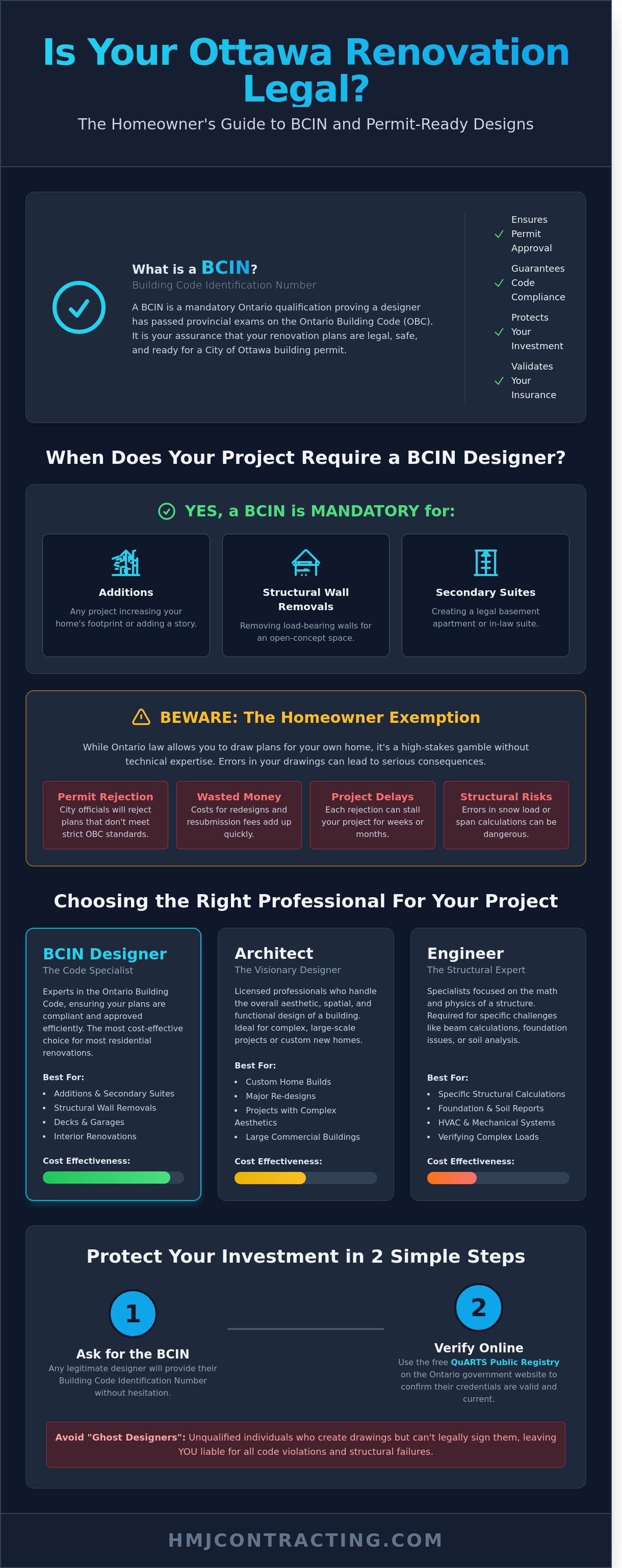
Starting a major home project in Ottawa requires more than just a vision and a budget; it requires legal authorization. BCIN stands for Building Code Identification Number, a unique identifier issued by the Ontario Ministry of Municipal Affairs and Housing (MMAH). BCIN is the mandatory qualification for anyone in Ontario who provides design services to the public for a fee. When you hire a designer or a firm for your renovations, this number proves they've passed the provincial technical exams required to understand the law. Without it, the City of Ottawa will likely reject your building permit application, stalling your project before the first hammer swings.
Homeowners often fall victim to 'ghost designers.' These are individuals who create beautiful drawings but lack the legal credentials to sign off on them. This leaves you, the property owner, liable for any structural failures or code violations. At HMJ Contracting, we prioritize transparency. We ensure every project we touch, from asbestos removal to complex structural demolition, aligns with provincial regulations. Securing a designer with a valid bcin protects your C$100,000 investment from future legal disputes and ensures your insurance remains valid if you ever need to file a claim.
The Ontario Building Code (OBC) Connection
The building code serves as the baseline for safety in our community. It dictates the minimum standards for fire protection, structural integrity, and energy efficiency. As we approach the 2026 standards, the requirements for Ottawa homes are becoming more stringent. A qualified designer uses their credentials to certify that your plans meet these evolving 2026 safety benchmarks. You can find more details on how we maintain these high standards during general contracting projects by visiting HMJ Contracting's blog. Our team stays current on local bylaws to ensure your fencing or decks don't just look great but are built to last for decades.
Is a BCIN Mandatory for Every Project?
Ontario law includes a 'Homeowner Exception' that allows you to draw your own plans for your own residence. While this might seem like a way to save a few thousand Canadian dollars, it's a high-stakes gamble. Most homeowners lack the technical expertise to calculate snow loads or structural spans for Ottawa's harsh winters. If your plans fail to meet provincial standards, the city will reject your permit, costing you time and money. Professional design is non-negotiable for projects that exceed 600 square feet or involve structural changes. Common Ottawa projects that always require professional oversight include:
- Secondary suites: Converting a basement into a legal rental unit requires meticulous attention to fire separations and egress.
- Structural wall removals: Creating an open-concept living space often involves demolition that requires engineered beams.
- Additions: Any increase to the footprint of your home changes the structural load and requires a certified design.
Whether you're clearing out a site with junk removal or planning a transformative home addition, starting with a bcin-qualified professional is the only way to ensure a stress-free experience. It's the difference between a project that adds value and one that creates a permanent headache for your property management goals.
When Does Your Ottawa Project Require a BCIN Designer?
Every renovation project begins with a vision, but in Ontario, that vision must align with the provincial building code. For many Ottawa homeowners, the realization that they need a professional designer comes when they plan to alter the house's structure. If you own a 1970s split-level in Nepean or a detached home in Kanata, moving a single wall to create an open-concept kitchen often involves more than just a sledgehammer. Because these walls frequently support the weight of the roof or the floor above, the City of Ottawa requires a permit backed by a bcin designer to ensure the structural integrity remains intact.
New additions and "pop-tops" also fall under this mandatory requirement. When you increase the footprint of your residence or add a second story, you're changing the load distribution of the entire foundation. This isn't a task for a simple sketch on a napkin. A registered building practitioner must prepare the technical drawings to prove the new structure can withstand local snow loads and wind pressures. In Ottawa, permit review times for residential additions can take 15 business days; having the right stamps on your paperwork prevents costly delays and immediate rejections at the city desk.
Secondary suites and basement apartments represent another area where professional design is non-negotiable. Ottawa's zoning and fire safety bylaws are strict about ceiling heights, which must generally hit a 2.1-meter minimum, and fire separations between units. We often see homeowners attempt these conversions without a bcin, only to face expensive remediation orders later. A qualified designer ensures your egress windows and fire-rated drywall meet the 45-minute protection standards required for legal occupancy.
Residential Renovations and Additions
Large-scale remodels often involve complex changes to plumbing and HVAC systems. If you're relocating a bathroom or installing a new high-efficiency furnace that requires fresh venting through exterior walls, the city needs to see the mechanical plans. HMJ Contracting works directly with experienced designers to coordinate these details. This collaborative approach ensures your home renovation remains compliant from the initial demolition to the final inspection, providing a seamless transition between the design and build phases.
Decks, Fences, and Outdoor Structures
Outdoor projects frequently cross the legal line into permit territory without the owner realizing it. In Ottawa, any deck higher than 24 inches (60 cm) above the finished grade requires a building permit. If your design includes a roof or exceeds 108 square feet, a designer must sign off on the structural footings and guardrail specifications. While a standard fence rarely needs a permit, custom privacy screens that exceed the height limits in the city's permanent fence bylaw often require a more formal review. We focus on building these structures to last for decades, ensuring they're as safe as they're beautiful.
BCIN vs. Architect vs. Engineer: Choosing the Right Professional
Selecting the right professional for your Ottawa renovation project depends on the scale, budget, and structural complexity of the work. For most residential projects, a designer with a bcin is the most practical choice. Architects typically charge between 8% and 15% of the total construction cost. On a C$150,000 kitchen and living room remodel, those fees can reach C$22,500. In contrast, a qualified designer often provides the necessary permit drawings for a flat fee ranging from C$2,000 to C$5,000. This price gap makes BCIN designers the primary choice for homeowners in neighborhoods like Westboro or the Glebe who want high-quality results without the architectural firm price tag.
While all Architects can do residential design, not all BCIN designers can do large commercial buildings. This distinction is vital for property managers and business owners to understand. If your project involves a high-rise or a complex assembly building, the law requires an Architect's seal. However, for a standard home addition or a basement suite, the bcin qualification provides exactly what the City of Ottawa needs to issue a permit. It ensures the designer has passed provincial exams regarding the Ontario Building Code and carries the required liability insurance to protect your investment.
The Scope of a BCIN Designer
The Ministry of Municipal Affairs and Housing categorizes qualifications into specific streams. Most residential renovations in Orleans or Kanata fall under the 'House' category. This allows the designer to work on detached homes, semis, and townhouses that do not exceed three stories in height or 600 square meters in total area. The Ontario Building Officials Association maintains that these professionals are essential for maintaining safety standards across the province. If your vision involves a massive 7,000-square-foot luxury estate or a multi-unit apartment complex, the project complexity will likely trigger the legal requirement for an Architect.
- House Category: Covers most single-family dwellings and small additions.
- Small Buildings: Allows for commercial fit-ups and larger residential structures under 600m².
- Cost Efficiency: Reduces upfront soft costs by thousands of dollars compared to architectural firms.
- Permit Success: Focuses specifically on Ontario Building Code compliance for faster approvals.
When an Engineer is Non-Negotiable
There are moments during a renovation when a designer must step back and let a Professional Engineer (P.Eng) take the lead. This usually happens when the structural design falls outside the "prescriptive" requirements of the building code. If you want to remove a load-bearing wall to create a 25-foot open-concept span, a designer will require an engineer to calculate the load and specify a steel I-beam or a heavy-duty LVL header. These calculations ensure your home won't sag or shift under Ottawa's heavy snow loads, which can exceed 2.4 kPa in a typical winter.
Ottawa's unique geography also plays a role in this professional hierarchy. In parts of Orleans, we deal with sensitive Leda clay that requires specific foundation reinforcement. In Kanata, we often hit solid limestone just inches below the surface. A BCIN designer will collaborate with a structural or geotechnical engineer to provide a combined drawing set. Your contractor needs to see both stamps on the blueprints before they start demolition. This collaborative approach ensures your bespoke renovation is both beautiful and structurally sound for decades to come.
How to Verify a BCIN and Navigate the Ottawa Permit Process
Confirming a contractor's credentials is the most critical step before you sign a renovation contract. You shouldn't take a designer's word at face value when your home's structural integrity is on the line. Verification protects your investment and ensures your project complies with the Ontario Building Code. The process is straightforward, but it requires a diligent eye for detail and a basic understanding of provincial registries.
Using the QuARTS Public Search Registry
The Qualification and Registration Tracking System (QuARTS) is a public database managed by the Ministry of Municipal Affairs and Housing. To verify a professional, you'll need their full name or their 5-digit bcin. Once you enter these details, the registry displays their current status. It's vital to confirm the status is "Active." An "Inactive" or "Suspended" status means the individual cannot legally take responsibility for your design drawings.
Check the specific categories listed under their profile. A designer might be qualified in "Plumbing - All Buildings" but lack the "House" qualification required for a structural home addition. You must also confirm they carry Professional Liability Insurance. This insurance is a legal requirement for registered firms. It provides a safety net if errors in the drawings lead to construction issues or financial loss. If a contractor cannot prove they're insured, you're assuming a massive personal risk.
Dealing with the City of Ottawa Building Department
The City of Ottawa manages thousands of permit applications annually. For 2026, the Building Code Services branch has set a target of 10 to 15 business days for initial reviews of residential projects like decks or basement renovations. However, incomplete applications are the primary reason for delays. Your submission must include the stamped drawings, a site plan, and a completed Schedule 1 form that lists the designer's registration information.
Local zoning bylaws are just as important as the building code itself. A perfectly designed kitchen renovation won't matter if your plans violate setback requirements or lot coverage limits. Working with a contractor who understands Ottawa's specific sub-neighborhood bylaws, from Westboro to Cumberland, prevents costly revisions. You can submit your application online through the building permit portal or visit a Client Service Centre in person.
- Downtown: 110 Laurier Avenue West
- Kanata: 580 Terry Fox Drive
- Orléans: 255 Centrum Boulevard
The permit fee is a fixed cost based on the value of the work, typically starting at a minimum charge of C$98 for small projects. Ensuring your paperwork is flawless the first time saves you from the frustration of a "Request for Information" letter, which resets your 15-day waiting period. Our team handles these logistics daily, ensuring your vision moves from the drawing board to the construction phase without bureaucratic hurdles.
If you're ready to start your project with a team that prioritizes compliance and craftsmanship, contact our professional Ottawa renovation team today for a consultation.
Why HMJ Contracting Prioritizes Qualified Design for Ottawa Homes
HMJ Contracting brings 25 years of local experience to every residential and commercial project in the capital region. We don't just swing hammers or tear down walls. We partner with certified design professionals to ensure every renovation starts with a solid, legal foundation. A bcin is more than a registration number; it's your guarantee that the person designing your structural changes understands the Ontario Building Code inside and out. This technical oversight prevents structural failures and ensures the City of Ottawa approves your permits without the frustration of repeated rejections.
Our team takes a proactive stance on every job site. We've seen how poorly planned renovations can spiral into financial nightmares. By prioritizing qualified design, we eliminate the guesswork. We handle the heavy lifting of the permit process, from the initial site measurements to the final inspection. This allows you to focus on the exciting parts of your home transformation while we manage the complex regulatory requirements. Our goal is to provide a stable, predictable path from your initial vision to the finished product.
Integrating BCIN Drawings with Asbestos and Remediation
Many older Ottawa neighborhoods, such as the Glebe, Westboro, and Alta Vista, feature beautiful homes built before 1990. These properties often harbor hidden risks like asbestos in drywall compound, floor tiles, or pipe insulation. We integrate asbestos testing directly into our design and demolition phase. By identifying these materials on your bcin approved plans, we can coordinate safe, legal asbestos removal before any structural work begins. You can find detailed guides on our safety protocols at HMJ Contracting's blog. This integrated approach ensures that your demolition is handled by professionals who prioritize the health of your family and the integrity of your property.
From Design to Finish: The Reliable Expert Advantage
We operate with a strict design-build mentality. This means we verify that every structural change drawn on paper is physically and financially viable for your specific home. This alignment between design and general contracting eliminates the "surprise" change orders that often plague 35% of renovation projects in Ontario. Professional drawings provide our crew with a precise roadmap. They allow us to provide transparent, fixed pricing that respects your budget. Whether we are building custom decks, installing new fencing, or finishing a basement, our accountability remains the same.
Trust in the Ottawa community is built through consistent craftsmanship and honest communication. We don't believe in cutting corners or bypassing the permit office. Our process includes everything from junk removal after a gut job to the final meticulous trim work. We take pride in being a full-service partner for property managers and homeowners alike. By choosing a team that values qualified design, you're investing in the longevity and safety of your home. We stand behind our work because it's built on a foundation of professional expertise and local pride.
Ready to start your next project with a team that values precision and local expertise? Contact HMJ Contracting for your Ottawa renovation and permit needs today. Let's turn your vision into a reality with the reliability you deserve.
Secure Your Ottawa Home Investment Today
Your home deserves a transformation that combines your unique vision with absolute structural integrity. Navigating the 2026 Ontario Building Code shouldn't be a source of stress for your next property improvement. A qualified bcin designer is your best defense against permit delays and structural errors in the City of Ottawa. By choosing a professional who understands local bylaws, you ensure your project moves from blueprint to reality without the headache of municipal rejections. HMJ Contracting has served the Nepean community as a local family-owned business for over 25 years. We provide certified asbestos and hazardous material remediation alongside expert general contracting services that prioritize your safety. Our team manages the technical requirements of renovations and demolition so you don't have to. We believe in craftsmanship that stands the test of time and builds real equity. Let's turn your vision into a seamless, high-quality reality that respects both your budget and your timeline.
Ready to start your stress-free Ottawa renovation? Get a quote from HMJ Contracting today!
We're ready to bring your next project to life with the care and expertise it deserves.
Frequently Asked Questions
Can I draw my own plans for a building permit in Ottawa?
You can legally draw your own plans for a building permit in Ottawa if you own and reside in the detached, semi-detached, or townhouse dwelling. Under the Ontario Building Code, homeowners are exempt from the bcin requirement for certain residential projects on their own property. However, your drawings must still meet 100% of the technical standards required by the City of Ottawa. We find that DIY plans often face rejection during the first review, leading to 21-day delays in your project timeline.
How much does it cost to hire a BCIN designer in Ottawa?
Hiring a BCIN designer in Ottawa typically costs between C$1,500 and C$5,500 for standard residential renovations. For a basic basement layout, you might pay C$1,200, while a complex structural addition often exceeds C$4,800. These fees ensure your project complies with the 2024 Ontario Building Code standards. Investing in professional drawings prevents costly demolition errors that can waste 15% of your total construction budget later on.
Does a BCIN designer need insurance?
Yes, every registered BCIN designer in Ontario must carry professional liability insurance to maintain their registration. This insurance protects you if the design contains structural errors or fails to meet provincial safety codes. At HMJ Contracting, we only partner with designers who provide proof of current coverage. This standard practice safeguards your C$60,000 renovation investment against design-related failures or municipal legal disputes during the build.
What happens if I renovate my Ottawa home without a permit or BCIN?
Renovating without a permit in Ottawa can result in fines up to C$50,000 and mandatory stop-work orders from city officials. Inspectors have the authority to force you to uncover completed work, like drywall or flooring, to inspect the underlying structure or plumbing. This adds 4 weeks to your timeline and can decrease your property value by 10% during a future home inspection. It's always safer to secure a bcin stamped plan before the first hammer swings.
How long does it take for the City of Ottawa to approve BCIN drawings?
The City of Ottawa typically takes 10 to 15 business days to review residential building permit applications for small projects. For larger additions or complex commercial renovations, the wait time often extends to 30 business days or more. Providing complete, accurate drawings from the start is the best way to avoid a "Request for Information" that restarts your waiting period. Our team coordinates this process to keep your project moving toward the construction phase.
Is a BCIN the same as a building permit?
No, a BCIN is a qualification number for a designer, while a building permit is the legal authorization to start construction. The Building Code Identification Number proves the designer passed provincial exams and is registered with the Ministry of Municipal Affairs and Housing. You need these qualified drawings to apply for the actual permit from the city. Think of the BCIN as the designer's professional license and the permit as the city's final green light.
Do I need a BCIN for a basement renovation in Ottawa?
You need a BCIN designer for a basement renovation if you're adding a secondary suite, changing structural supports, or installing new plumbing systems. Simple cosmetic updates like painting or replacing trim don't require permits, but 90% of Ottawa basement projects involve structural or safety elements that do. Ensuring your basement meets fire separation codes protects your family and your home's long-term resale value in the local market.
Can a BCIN designer sign off on structural steel beams?
A BCIN designer cannot sign off on complex structural steel beams; this requires the seal of a Professional Engineer (P.Eng.). While designers handle most residential layouts and wood-frame calculations, the Ontario Building Code mandates an engineer's stamp for specific heavy-load steel calculations. If your renovation involves removing a major load-bearing wall to create an open-concept space, we coordinate with both a designer and an engineer to ensure your home's structural integrity is never compromised.