The blueprint you used for your last home improvement project is now obsolete. With the City of Ottawa transitioning from By-law 2008-250 to the new 2026-50 framework, your property's potential is being redefined. Mastering the current state of zoning ottawa is the only way to protect your home from C$10,000 non-compliance fines or administrative delays that can stall a project for months. We know that the shift feels overwhelming, especially when you're making a significant financial and emotional investment in your living space.
You deserve the confidence that comes with technical authority and meticulous planning. It's natural to feel anxious about setbacks or lot coverage rules that seem to change overnight. This guide will help you master these complexities to ensure your renovation is legal, safe, and built to last for generations. We'll explore the specific requirements of the 2026-50 by-law and explain how a professional partner can handle the red tape so you can focus on your vision.
Key Takeaways
- Navigate the transition from the old 2008-250 regulations to the new 2026-50 By-law to protect your investment and ensure long-term compliance.
- Master the technicalities of setbacks and lot coverage to maximize your property’s potential while respecting city-mandated boundaries.
- Unlock the potential for secondary suites and bespoke outdoor living spaces by understanding current permit requirements and zoning incentives.
- Streamline your project timeline by leveraging tools like geoOttawa and expert consultations to clear municipal red tape before construction begins.
- Discover how professional guidance simplifies the complexities of zoning ottawa, allowing you to focus on the vision of your meticulously crafted home.
Understanding Zoning in Ottawa: Why the 2026-50 By-law Matters Now
Ottawa is currently undergoing its most significant legislative shift in land use management in nearly two decades. Before you break ground on a new deck or addition, you must understand how zoning ottawa regulations dictate the size, height, and location of your project. Understanding Zoning is essential because it acts as the blueprint for our city's growth, ensuring that residential hubs like Kanata and Orleans maintain their community character and property values. These rules prevent oversized structures from encroaching on neighbors, which preserves the sunlight and privacy that make suburban living desirable.
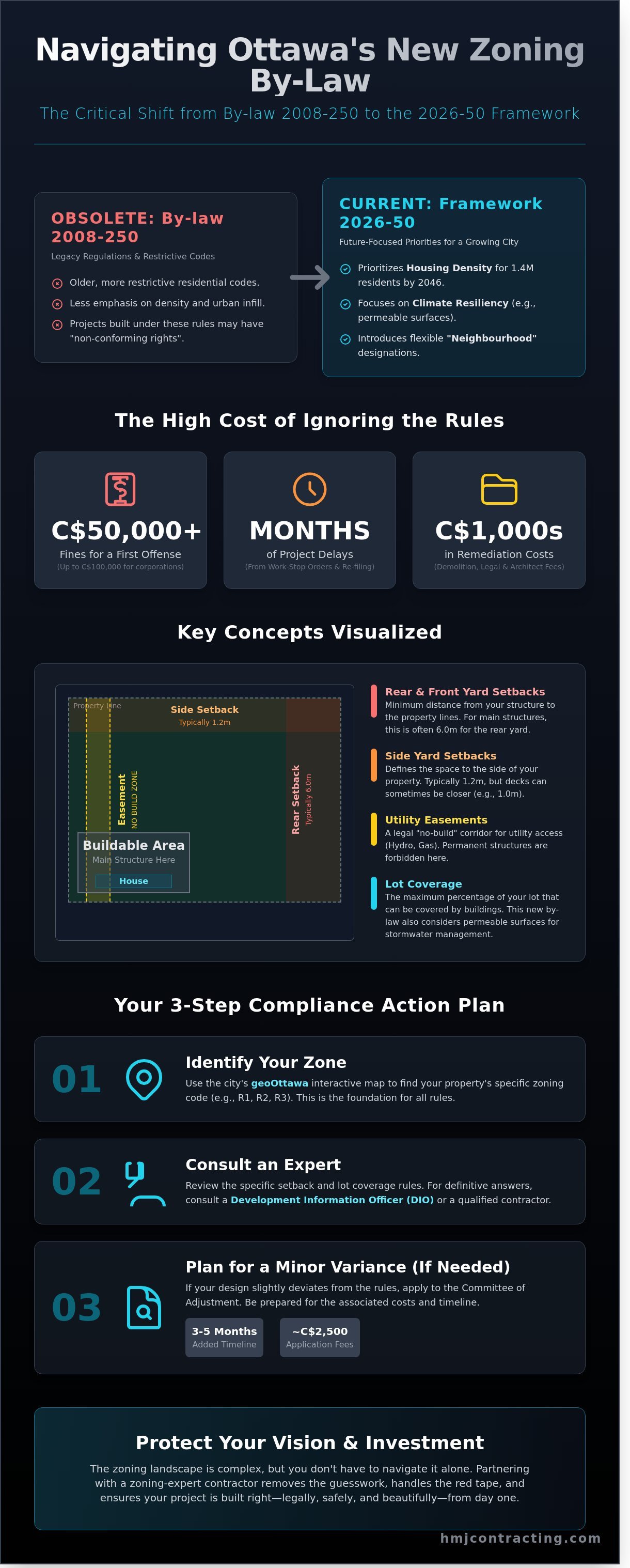
Ignoring these regulations carries heavy consequences. The City of Ottawa enforces the Building Code Act strictly; unauthorized work often triggers work-stop orders that freeze your project mid-construction. Beyond the frustration of a stalled build, the financial risks are substantial. Under the current provincial framework, individuals can face fines of up to C$50,000 for a first offense, while corporations may be liable for up to C$100,000. Correcting a non-compliant deck often requires expensive demolition or retroactive applications to the Committee of Adjustment, costing thousands in legal and architectural fees. At HMJ Contracting, we believe a seamless renovation starts with total compliance, protecting your investment from the first shovel in the ground.
The Shift from 2008-250 to the New 2026 Standards
The transition from the 2008-250 by-law to the new 2026-50 standards reflects Ottawa's goal to house 1.4 million residents by 2046. This update prioritizes housing density and climate resiliency, moving toward flexible "Neighbourhood" designations that replace older, restrictive residential codes. These new standards often include stricter rules for permeable surfaces to manage stormwater runoff, a critical factor for deck designs. For homeowners in established Nepean neighborhoods, "non-conforming rights" are vital. This legal status protects structures built legally under old codes, but any new zoning ottawa projects must align with the 2026 standards to ensure your home remains a meticulous, future-proof asset.
How to Identify Your Property’s Specific Zone
Identifying your specific requirements starts with geoOttawa, the city's primary interactive mapping tool. By entering your address, you can view the "Zoning" layer to find your specific code, such as R1, R2, or R3. These "R" prefixes define your residential density and the "setbacks" or minimum distances required between your deck and the property line. For example, an R1 zone typically requires larger rear-yard clearances than an R3 zone. If the online map feels complex, you can consult with Development Information Officers (DIOs) at the 110 Laurier Avenue West office. They provide authoritative clarity on property-specific rules, ensuring your vision for a bespoke outdoor space is built on a foundation of technical accuracy.
Key Zoning Rules for Ottawa Home Renovations and Additions
Building in a city as diverse as Ottawa requires a firm grasp of local bylaws. Every project begins with a review of the zoning ottawa regulations assigned to your specific property. These rules dictate exactly where your deck or addition can sit and how much of your land it can occupy. Ignoring these constraints often leads to costly work-stoppages or mandatory tear-downs. To find your specific designation, you should consult the geoOttawa interactive zoning map provided by the city. This tool provides real-time data on your property’s classification and any specific overlays that might apply to your neighborhood.
Navigating Setbacks and Easements
Standard R1 and R2 residential zones typically demand a 6.0-metre rear yard setback and a 1.2-metre side yard setback for primary structures. Decks have more flexibility; they often allow for a 1.0-metre clearance from side lot lines if they remain under a certain height. However, newer developments like Riverside South frequently contain utility easements. These legal corridors grant companies like Hydro Ottawa or Enbridge access to buried lines. You cannot build permanent structures over these easements, even if you own the land. It's a hard limit that can instantly shrink your buildable area.
If your design requires a 1.1-metre setback instead of the mandated 1.2 metres, you'll need a Minor Variance. This involves an application to the Committee of Adjustment. It's a formal public process that can add three to five months to your timeline and costs approximately C$2,500 in application fees. We've seen many homeowners successfully navigate this by proving the request is "minor" and maintains the spirit of the zoning ottawa bylaw, but it requires meticulous preparation and patience.
Lot Coverage and Soft Landscaping Requirements
The City of Ottawa limits the building footprint to ensure proper drainage and prevent overcrowding. In many mature suburbs, your total lot coverage cannot exceed 35% to 45% of the total land area. This calculation includes your house, garage, and any roofed structures like a covered porch. While an open-air deck isn't always counted toward the building footprint, it's still factored into your total hard surface area. Balancing these numbers is essential for a permit approval.
Ottawa’s updated Official Plan introduces stricter landscaping requirements by 2026. These rules aim to combat urban heat islands by requiring more permeable surfaces. For most residential lots, 30% of your yard must remain as soft landscaping, such as grass, gardens, or permeable pavers. This ensures rainwater absorbs into the ground rather than overwhelming the city’s sewer system during heavy storms. If you plan to pave your entire backyard for a massive patio, you'll likely hit a legal wall.
In established neighborhoods like Westboro or the Glebe, building height is strictly monitored to preserve the streetscape. Most additions are capped at 8.5 to 11 metres. Additionally, recent provincial changes through Bill 23 now permit up to three residential units on most urban lots. This means you can legally build a secondary suite or a coach house, provided you meet the specific structural and fire safety codes. Understanding these technicalities is the first step toward a successful build. If you're feeling overwhelmed by the paperwork, our team can help you plan your addition with precision and local expertise.
Zoning for Specific Projects: Decks, Basements, and Demolitions
Understanding how zoning ottawa bylaws apply to your specific project prevents costly work-stop orders and legal headaches. Whether you're building a custom deck or gutting a basement, the city requires strict adherence to the Ontario Building Code and local land-use rules. These regulations ensure that every modification to your property remains safe for your family and respectful of your neighbours' privacy.
The 0.6-metre threshold is the primary trigger for a deck building permit in Ontario. If your deck surface sits higher than this above the ground, it's a structural addition in the eyes of the city. We also look closely at setbacks. Most residential zones in Ottawa require at least 1.2 metres of clearance from the side property line to maintain fire safety corridors. Projects that ignore these boundaries often face mandatory removal or expensive retroactive variance applications.
Ottawa updated its zoning policies in 2021 to simplify the creation of secondary dwelling units. This incentive aims to increase housing density without changing the character of established neighbourhoods. To qualify as a legal basement apartment or "granny flat," you must provide a separate entrance and, in many wards, at least one dedicated parking space. These projects are an investment in your property's value, but only if they're registered and compliant with zoning ottawa standards.
Demolition is another area where regulations are rigid. Tearing down a detached garage or an old porch requires a demolition permit if the structure exceeds 10 square metres. Safety is the priority. For any structure built before 1990, the City of Ottawa requires a Designated Substance Report. This document identifies asbestos, lead, or mercury before any sledgehammer hits a wall. Handling these materials requires specialized contractors to prevent environmental contamination in your backyard.
Ottawa Deck Regulations: Height and Privacy Rules
In high-density areas like Westboro or the Glebe, privacy screen rules are strictly enforced. Screens cannot exceed 2 metres in height from the deck floor. Our team ensures that every design meets BCIN standards for structural integrity. This is vital for Ottawa's climate, where decks must withstand snow loads of 2.4 kPa. Whether you choose cedar or modern composite materials, the footings must reach below the 1.5-metre frost line to prevent shifting.
Basement Renovations and Legal Suites
Legal suites must meet a minimum ceiling height of 1.95 metres over at least 75 percent of the floor area. Fire safety is non-negotiable. You need 30-minute fire separations between units and interconnected smoke alarms on every level. HMJ Contracting manages the entire permit process from design to final inspection. We ensure your basement reno meets both the Ontario Building Code and local zoning requirements, giving you total peace of mind and a stress-free experience.
Building a home that lasts requires more than just quality materials. It requires a partner who understands the technical landscape of municipal law. We focus on the end-to-end nature of our service to ensure your vision is brought to life without compromise. By following the correct permit path today, you protect your home’s resale value and ensure the structural longevity of your project for decades to come.
The Permit Process: From geoOttawa to the Final Inspection
The permit process in Ottawa is a structured sequence designed to ensure safety and compliance with the 2024 Ontario Building Code. It begins with geoOttawa, the City’s interactive mapping tool. This platform allows you to identify your property’s specific zoning ottawa designation and any heritage or environmental overlays that might restrict construction. Once you've confirmed the zoning, the process moves through five distinct phases:
- Research: Verify your lot's setbacks and lot coverage limits using the Zoning By-law consolidation.
- Consultation: Speak with a Development Information Officer (DIO) to clarify complex constraints like floodplains or easements.
- Documentation: Draft professional site plans and structural drawings that meet the City's technical requirements.
- Application: Submit all materials and pay the required fees through the City of Ottawa’s Building Code Services portal.
- Inspection: Complete a minimum of three site visits by City officials to verify footings, framing, and final completion.
Current building permit fees in Ottawa are calculated at C$10.75 per C$1,000 of construction value, with a minimum fee of C$103.00 for 2024 projects. We manage these logistics to ensure your project stays on schedule and meets every legal benchmark. Skipping these steps can lead to work-stop orders or costly removals, so we prioritize getting the paperwork right the first time.
Working with Ottawa’s Development Information Officers
To get the most out of a 311 call or a meeting with a Development Information Officer (DIO), you need your 15-digit Roll Number and legal description ready. These are found on your property tax bill or through geoOttawa. DIOs provide clarity on how the zoning ottawa rules apply to your specific backyard. Bringing a preliminary site plan drafted by a professional contractor makes this interaction faster; it allows the DIO to give you a definitive answer based on visual data rather than hypothetical questions. They act as the gatekeepers for your project, so providing them with clear, professional information is the best way to avoid future delays.
Preparing Your Site Plan for Approval
A site plan is the most important document in your application. It must show the exact dimensions of your property lines, existing structures, and the proposed deck. Common mistakes that lead to rejection include failing to account for the distance to overhead power lines or forgetting to include existing sheds and AC units in the total lot coverage calculation. Data from municipal planning offices shows that over 40 percent of permit delays in the National Capital Region stem from incomplete or inaccurate site plans. We ensure every measurement is precise to facilitate a seamless approval process.
In Ontario, designers must hold a valid Building Code Identification Number (BCIN) to sign off on drawings for permit applications, ensuring the plans meet provincial safety standards.
Ready to start your project with a team that handles the red tape for you? Contact HMJ Contracting to manage your Ottawa deck permit today.
Why Partnering with a Zoning-Expert Contractor Saves Your Vision
HMJ Contracting brings 26 years of direct experience to every deck project. Ottawa's municipal by-laws aren't static; they shift with new urban densification goals and environmental updates. Since 1998, our team has adapted to every major amendment in the city’s building codes. We take the weight of red tape off your shoulders. This means you focus on the wood finish or the layout while we handle the zoning ottawa applications and permit filings. Our philosophy of "Quality Without Compromise" ensures your deck meets the 2024 City of Ottawa structural standards without any shortcuts.
A "Minor Variance" often feels like a dead end for homeowners. If your deck design encroaches on a rear-yard setback by as little as 0.3 metres, you'll need Committee of Adjustment approval. This process involves public notices and formal hearings that can delay construction by months. We turn this potential headache into a seamless, managed project phase. We prepare the necessary technical site plans and present the professional rationale to city officials. Our goal is to keep your vision intact while securing the legal right to build.
The HMJ Advantage: Local Expertise in Ottawa and Gatineau
Ottawa is a patchwork of specific regulations. A deck in a dense Westboro neighborhood faces different zoning ottawa constraints than a large lot in Stittsville or Orleans. We understand these local nuances because we live and work here. We manage the complex logistics of setback requirements and lot coverage ratios. If your lot coverage exceeds the 40% or 45% limit typical in many Ottawa residential zones, we find the structural solutions to keep you compliant. This level of detail-oriented planning prevents the stop-work orders that often plague DIY projects.
Our proactive approach covers more than just the new build. If an old structure needs to go first, we manage the demolition and any required asbestos removal with meticulous care. We maintain a professional rapport with City of Ottawa inspectors. They know our name and trust our adherence to the Ontario Building Code. This local accountability speeds up the inspection timeline and prevents costly mid-project corrections. When an inspector arrives, they see a site that is organized, safe, and built to the approved plans.
Start Your Stress-Free Renovation Today
Our team bridges the gap between your creative vision and the city’s legal requirements. You want a transformative outdoor space; we ensure it's a safe, permanent investment. Every project we touch is fully insured and 100% permit-compliant. This protection is vital for your long-term property value. If you decide to sell your home in 10 years, an unpermitted deck can stall a sale or lead to C$15,000 in retroactive fines and repairs. We provide the stability and reliability you need to enjoy your renovation without worry.
This commitment to excellence is why we remain a leader in the local industry. We don't just build decks; we build peace of mind through technical authority and local pride. From the first design sketch to the final walkthrough, we are your dedicated partners in construction. Bring your vision to life with HMJ Contracting and let our experts handle the details.
Protect Your Investment with Professional Zoning Oversight
The 2026-50 By-law transforms the landscape for residential projects, making it essential to align your plans with new density and setback requirements. Whether you're planning a basement suite or a structural addition, navigating zoning ottawa mandates requires technical precision and proactive planning. A single oversight in the geoOttawa application phase can result in thousands of dollars in avoidable municipal fines or project halts.
HMJ Contracting provides the steady guidance you need to navigate these changes. With 25 years of local experience and a team of certified asbestos and hazardous material specialists, we ensure every renovation is safe and fully compliant. Our A+ reputation for craftsmanship is built on a foundation of integrity and meticulous attention to detail. We manage the logistical hurdles, allowing you to enjoy a seamless transition from vision to finished home.
Schedule your Ottawa zoning consultation with HMJ Contracting. Let's build something lasting together.
Frequently Asked Questions
Do I need a permit for a deck in Ottawa if it's not attached to the house?
Yes, you require a building permit if your detached deck sits more than 60 centimetres above the ground. Even if the structure doesn't touch your house, any platform above this height must meet Ontario Building Code safety standards. We ensure your design complies with all zoning Ottawa bylaws to avoid future structural issues or city fines. This proactive approach ensures your investment is protected and your outdoor space is safe for your family.
How do I find out the zoning for my property in Ottawa?
You can identify your specific property requirements by using the geoOttawa online mapping tool. This official resource allows you to search your address and view the Zoning layer to see your exact designation, such as R1 or R2. Understanding these codes is the first step in determining your setbacks and allowable building area. Our team frequently uses this data to plan seamless, compliant renovations that respect your property's unique constraints and local regulations.
What is a minor variance and how long does it take in Ottawa?
A minor variance is a small deviation from existing zoning Ottawa bylaws, such as building a deck slightly closer to a property line than allowed. You must apply through the Committee of Adjustment for approval. This process typically takes between 60 and 120 days to complete. It involves a public hearing where neighbours can provide feedback before the city grants a decision. We guide you through this timeline to keep your project moving forward without stress.
Can I build a secondary suite in my basement under the 2026 zoning rules?
You can build a secondary suite now, and the upcoming 2025 Zoning By-law revisions aim to make this even easier by encouraging density. Current regulations allow one secondary suite per detached, semi-detached, or townhouse dwelling. You must ensure the unit meets the C$2,000 to C$3,500 permit fee range and follows strict fire separation rules to remain legal. This is a meticulous process that transforms your basement into a valuable, income-generating asset that lasts for years.
What happens if I build a renovation without a permit in Ottawa?
Building without a permit can result in a Work Order or an Order to Comply from the City of Ottawa. You may face fines up to C$50,000 and the city can force you to uncover or tear down completed work for inspection. This creates a stressful experience and can complicate your home's resale value when title insurance issues arise. We handle the paperwork to ensure your project remains a source of pride rather than a legal or financial liability.
How much does a building permit cost for a home renovation in Ottawa?
Ottawa building permit fees start at a minimum of C$98 for small projects, but most renovations cost C$10.75 for every C$1,000 of construction value. For a C$50,000 deck or basement project, expect to pay roughly C$537.50 in permit fees. These costs fund the city's inspection process, ensuring your project is built to last for generations. We provide clear, upfront estimates so you can manage your budget with total confidence and zero hidden surprises.
Does Ottawa zoning allow for home-based businesses in residential areas?
Yes, the City of Ottawa allows home-based businesses in residential zones provided they remain secondary to the home's use. You must limit the business to 25% of the gross floor area or 30 square metres, whichever is less. There are also specific rules regarding signage and the number of employees allowed on site. We help homeowners remodel their spaces to create bespoke offices that meet these legal criteria while providing a professional, productive, and transformative environment.
What is the difference between zoning and the building code?
Zoning dictates what you can build and where it sits on your lot, while the Ontario Building Code dictates how the structure is physically constructed. Zoning covers setbacks and height limits; the building code ensures your deck won't collapse and your stairs are safe. Both sets of rules are essential for a transformative renovation that balances aesthetic vision with structural integrity. We navigate both regulatory systems to deliver a seamless, safe, and high-quality construction experience for every client.