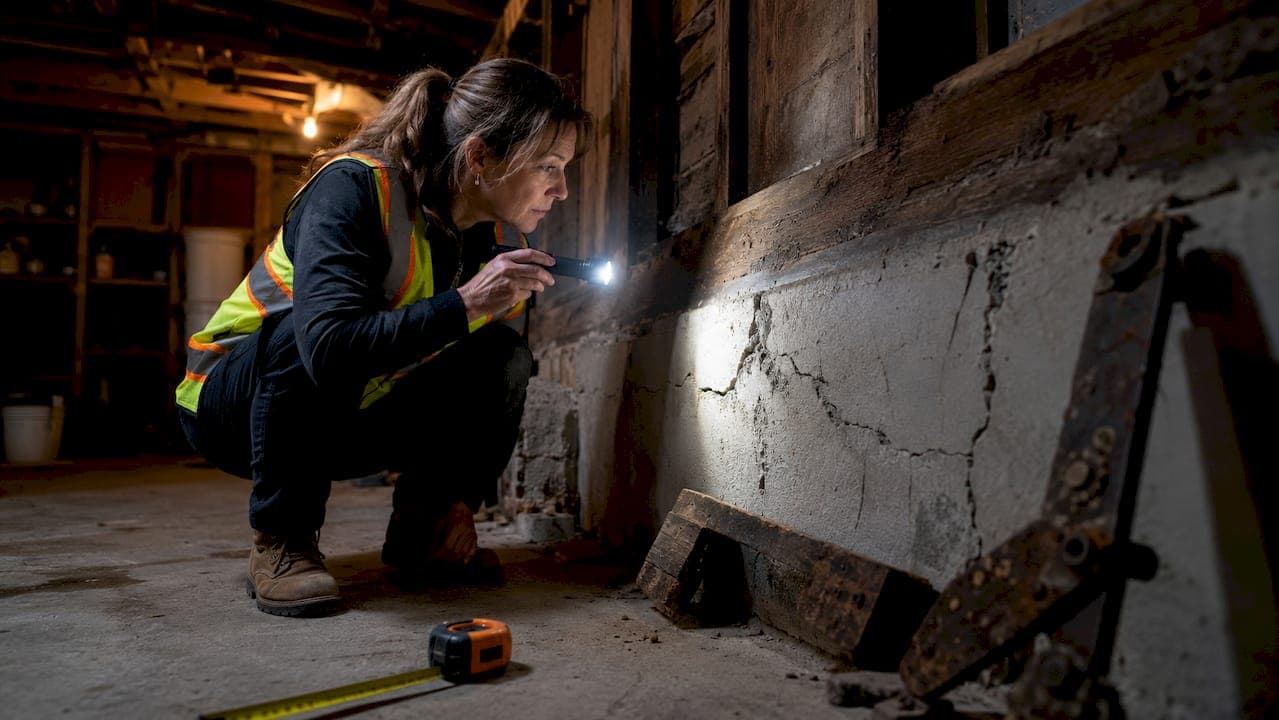
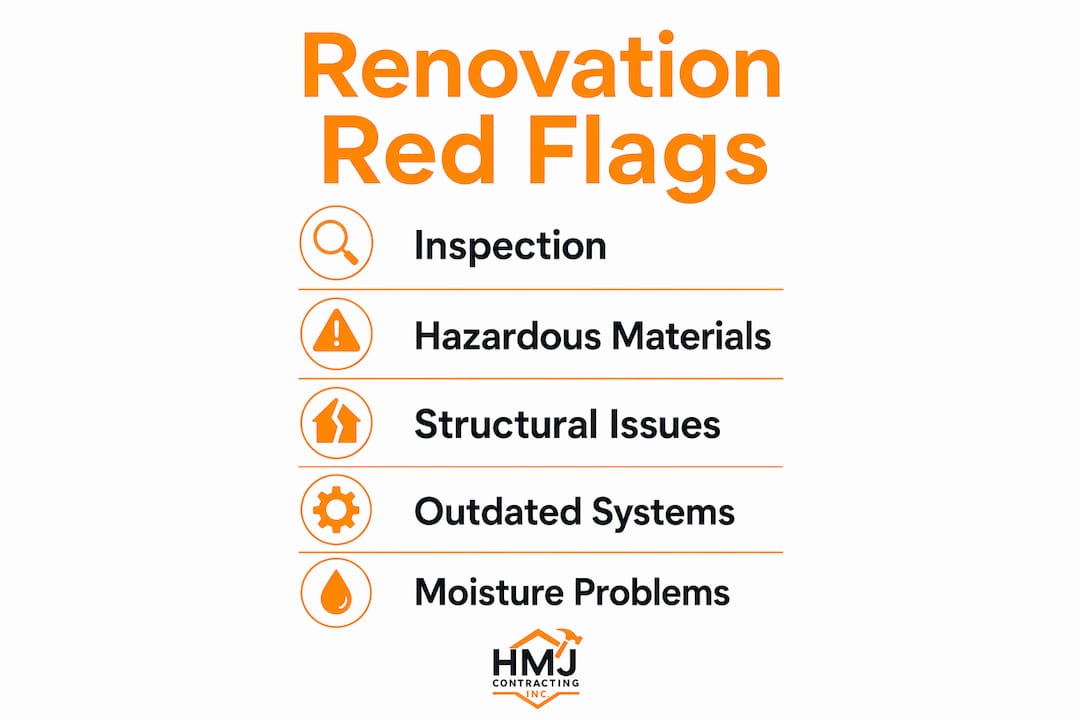
Renovation red flags in an older house are specific, identifiable signs of hidden hazards and structural concerns that must be addressed before any work begins. Canadian homes built before 1990 are presumed to contain asbestos and lead until a professional survey confirms otherwise. That single fact changes everything about how you plan a renovation. Beyond hazardous materials, older homes regularly hide foundation problems, outdated wiring, failing plumbing, and moisture damage behind finished walls. Identifying these issues early protects your health, keeps your project on budget, and keeps you on the right side of Canadian building regulations.
What are the renovation red flags in an older house?
The most serious renovation red flags in an older house fall into four categories: hazardous materials, structural problems, outdated mechanical systems, and hidden moisture damage. Each category carries its own health, financial, and legal consequences. A homeowner who skips a proper inspection before renovating can face project stoppages, insurance refusals, and remediation bills that dwarf the original renovation budget. Remediation costs for hidden hazards range from $5,000 to $100,000 depending on severity. That range reflects real projects, not worst-case scenarios.
The right starting point is a professional pre-renovation inspection that covers all four categories. A general home inspector covers the basics, but older homes often require specialists: a Certified Industrial Hygienist for hazardous materials, a structural engineer for foundation concerns, and a licensed electrician or plumber for mechanical systems. Booking these assessments before you pull a permit saves time, money, and significant stress. Hmjcontracting works with Ottawa homeowners at exactly this stage, helping coordinate hazardous material surveys and abatement before renovation work begins.
What hazardous materials are common red flags in older homes?
Asbestos was used in over 3,000 building products, and lead paint was standard in consumer products until around 1990. Both materials are present in a large share of Canadian homes built before that date. Vermiculite insulation, often found in attic spaces, is another common source of asbestos contamination. These materials are not dangerous when left undisturbed, but renovation work that cuts, sands, or demolishes them releases fibres and dust into the air.
A hazardous material survey is legally required in many Canadian jurisdictions before renovating pre-1990 homes. Only Certified Industrial Hygienists or equivalently trained professionals can conduct this testing and issue clearance documentation. Skipping this step is not just a health risk. It is a legal liability that can result in project shutdowns, fines, and personal injury claims.
Common materials to test before any disturbance include:
- Drywall joint compound and textured ceiling coatings
- Vinyl floor tiles and the adhesive beneath them
- Pipe insulation and duct wrap
- Attic vermiculite insulation
- Window glazing putty and exterior caulking
- Any paint applied before 1990
DIY testing spreads the very fibres you are trying to contain. Only certified professionals using wetting techniques and specialised tools can safely collect samples from suspect materials. A lab analysis from a properly collected sample costs far less than a contaminated worksite cleanup.
Asbestos fibres cause diseases like mesothelioma, and lead dust is acutely harmful to children and pregnant women. If testing confirms hazardous materials, proper containment, HEPA filtration, and third-party clearance testing are required before the space can be reoccupied. Improper disposal is illegal and carries significant cost penalties.
Pro Tip: Ask your abatement contractor for itemised documentation of all materials tested, results, disposal records, and clearance certificates. This paperwork protects you from future liability if you sell the property.
How do you identify structural red flags in an older home?
Structural problems are the most expensive category of hidden damage in older homes. Cracks wider than 1/32 inch, or any horizontal crack in a foundation wall, indicate serious structural stress that requires professional assessment before renovation proceeds. Many homeowners confuse cosmetic shrinkage cracks with structural failure, but the distinction comes down to three factors: crack width, orientation, and whether the crack is growing.
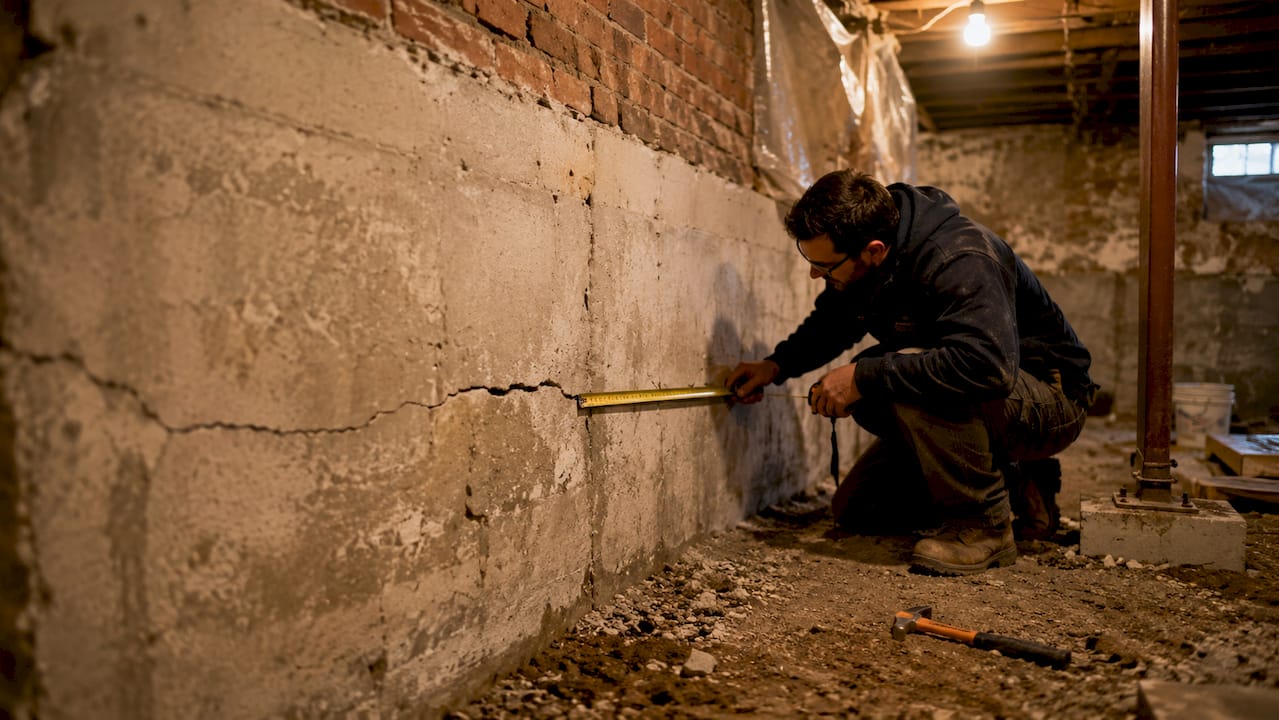
Crack types and what they mean
| Crack type | What it indicates |
|---|---|
| Hairline vertical crack | Normal concrete shrinkage; monitor but low urgency |
| Diagonal crack from door or window corner | Foundation settling; needs expert evaluation |
| Horizontal crack in foundation wall | Lateral soil pressure; serious and urgent |
| Stair-step crack in brick or block | Differential settling; professional assessment required |
| Wide vertical crack (over 1/32 inch) | Active movement; do not renovate until stabilised |
Doors that swing open on their own and uneven floors also indicate active foundation stress. These signs are easy to dismiss as quirks of an old house, but they often point to ongoing movement that will crack new finishes, buckle new flooring, and misalign new door frames within months of completion.
Structural red flags to look for during your old house inspection include:
- Floors that slope more than one inch over ten feet
- Walls that bow inward or outward
- Gaps between walls and ceilings or floors
- Doors and windows that stick or no longer close squarely
- Visible cracks in poured concrete or block foundation walls
Pro Tip: Photograph every crack you find and note the date. Return in 30 days and compare. A crack that has grown is active and needs a structural engineer before any renovation begins.
A structural engineer's assessment typically costs a few hundred dollars. That fee is negligible compared to the cost of repairing a renovation that was built over an unstable foundation.
Why are outdated electrical and plumbing systems renovation red flags?
Older electrical systems like knob-and-tube or aluminium wiring pose significant safety and insurance risks. Many Canadian insurers refuse to cover homes with these systems, or charge substantially higher premiums. Discovering this after new drywall is installed means tearing out finished work to access the wiring. The cost doubles when you factor in both the electrical upgrade and the restoration of finished surfaces.
Old wiring and plumbing systems are critically overlooked during renovation planning. Homeowners focus on cosmetic upgrades and miss the systems behind the walls. A licensed electrician and a licensed plumber should inspect both systems before any renovation scope is finalised.
Common outdated systems to assess before renovating:
- Knob-and-tube wiring: common in homes built before the 1950s; no ground wire, often at end of service life
- Aluminium wiring: used in the 1960s and 1970s; expands and contracts differently from copper, creating loose connections and fire risk
- 60-amp electrical panels: insufficient for modern loads; most insurers require a minimum 100-amp service
- Galvanised steel water pipes: corrode from the inside out, reducing flow and eventually failing
- Lead supply pipes: still present in some pre-1950 Ottawa homes; a health risk and a regulatory concern
Plumbing upgrades in older homes are a significant budget item. Understanding the full scope of plumbing work before renovation begins prevents mid-project surprises that delay completion and inflate costs. Budget for system replacement as a separate line item, not as a contingency.
What hidden moisture problems signal renovation red flags?
Mould is a symptom of an ongoing moisture problem, not a standalone issue. Surface cleaning without fixing the underlying leak or drainage failure leads to recurrence within months. Painting over mould or replacing drywall without addressing the moisture source is money spent twice.
Moisture problems in older homes originate from several sources:
- Foundation cracks that allow groundwater infiltration
- Failed or absent weeping tile systems
- Roof leaks that travel down wall cavities before appearing at ceiling level
- Inadequate bathroom and kitchen ventilation causing condensation
- Plumbing leaks inside walls that go undetected for years
The health consequences of mould exposure include respiratory irritation, allergic reactions, and more serious effects for people with compromised immune systems. The financial consequences are equally serious. Mould remediation costs range from $5,000 to $30,000 depending on the extent of contamination. Catching a moisture problem during inspection, before renovation begins, keeps that cost manageable. Discovering it after new finishes are installed multiplies the expense.
Pro Tip: Use a non-contact moisture metre on walls, floors, and ceilings in bathrooms, kitchens, and basement areas before finalising your renovation scope. Readings above 16% moisture content in wood framing indicate a problem worth investigating further.
Reducing mould remediation costs starts with fixing the moisture source first. Remediation without source repair is not remediation. It is a temporary cosmetic fix that will fail.
Key takeaways
Identifying renovation red flags in an older house before work begins is the single most effective way to protect your budget, your health, and your legal standing under Canadian building regulations.
| Point | Details |
|---|---|
| Hazardous materials survey is mandatory | Pre-1990 homes require professional testing for asbestos and lead before any disturbance. |
| Structural cracks need expert eyes | Horizontal cracks and cracks wider than 1/32 inch require a structural engineer before renovation. |
| Outdated systems cause insurance and safety problems | Knob-and-tube wiring and galvanised plumbing must be assessed and budgeted for replacement. |
| Mould signals moisture, not just contamination | Fix the moisture source first; surface cleaning alone leads to recurrence and higher costs. |
| Documentation protects you long-term | Clearance certificates, inspection reports, and disposal records reduce liability when you sell. |
What I have learned from years of older home renovations
The homeowners who run into the most trouble are not the ones who ignore obvious problems. They are the ones who assume that visible problems are the only problems. A wall that looks fine from the outside can hide asbestos-laden drywall compound, corroded galvanised pipe, and active mould growth all at once. The visible surface tells you almost nothing about what is behind it.
The second mistake I see regularly is treating the hazardous material survey as optional. In my experience, every pre-1990 Ottawa home we have worked on has contained at least one material requiring abatement. Not most. Every one. The survey is not a precaution for unusual cases. It is a standard step for any older home renovation.
I also want to address the temptation to use a general contractor's in-house assessment as a substitute for a Certified Industrial Hygienist. These are different qualifications. A contractor can identify suspect materials visually, but only a certified hygienist can collect samples legally, send them to an accredited lab, and issue the clearance documentation that protects you from liability. Verify credentials before you accept any assessment as final.
The homeowners who come through renovation projects on time and on budget are the ones who treat the inspection phase as seriously as the construction phase. Get the building code compliance checklist sorted before you pick your finishes. Know what is in your walls before you open them.
— Jason
Older home renovation support from Hmjcontracting
Hmjcontracting specialises in certified abatement and renovation services for Ottawa homeowners dealing with exactly these challenges. If your home was built before 1990, the team can coordinate hazardous material surveys, manage professional abatement services for asbestos, lead, and mould, and handle interior demolition safely and compliantly. Every project comes with itemised quotes, full documentation, and third-party clearance testing so you have the paperwork you need.

Hmjcontracting holds a perfect 5.0-star Google rating built on hundreds of completed projects across Ottawa. Whether you are planning a full gut renovation or addressing a specific hazard, the team brings the licensed expertise and local knowledge to keep your project moving. Contact Hmjcontracting before your renovation begins to get a clear picture of what your older home actually contains.
FAQ
What counts as a renovation red flag in an older house?
A renovation red flag is any sign of a hidden hazard, structural problem, or failing system that must be addressed before renovation work begins. Common examples include suspect materials in pre-1990 homes, foundation cracks, outdated wiring, and active moisture damage.
Are all pre-1990 Canadian homes required to be tested for asbestos?
Many Canadian jurisdictions legally require a hazardous material survey before disturbing materials in pre-1990 homes. Homes built before 1990 are presumed to contain asbestos until a Certified Industrial Hygienist confirms otherwise through professional testing.
How serious is a horizontal crack in a foundation wall?
A horizontal crack in a foundation wall indicates lateral soil pressure and is considered a serious structural concern. A structural engineer should assess it before any renovation proceeds, as it can signal active movement that will damage new finishes.
Can I clean mould myself before starting a renovation?
Surface cleaning without fixing the moisture source causes mould to return. Professional remediation that identifies and repairs the underlying leak or drainage failure is required for lasting results, particularly before new finishes are installed.
What happens if I skip the hazardous material survey?
Skipping the survey risks releasing asbestos fibres or lead dust during renovation work, which causes serious health consequences and can trigger a mandatory project stoppage. It also exposes you to legal liability and potential fines under Canadian occupational health and safety regulations.