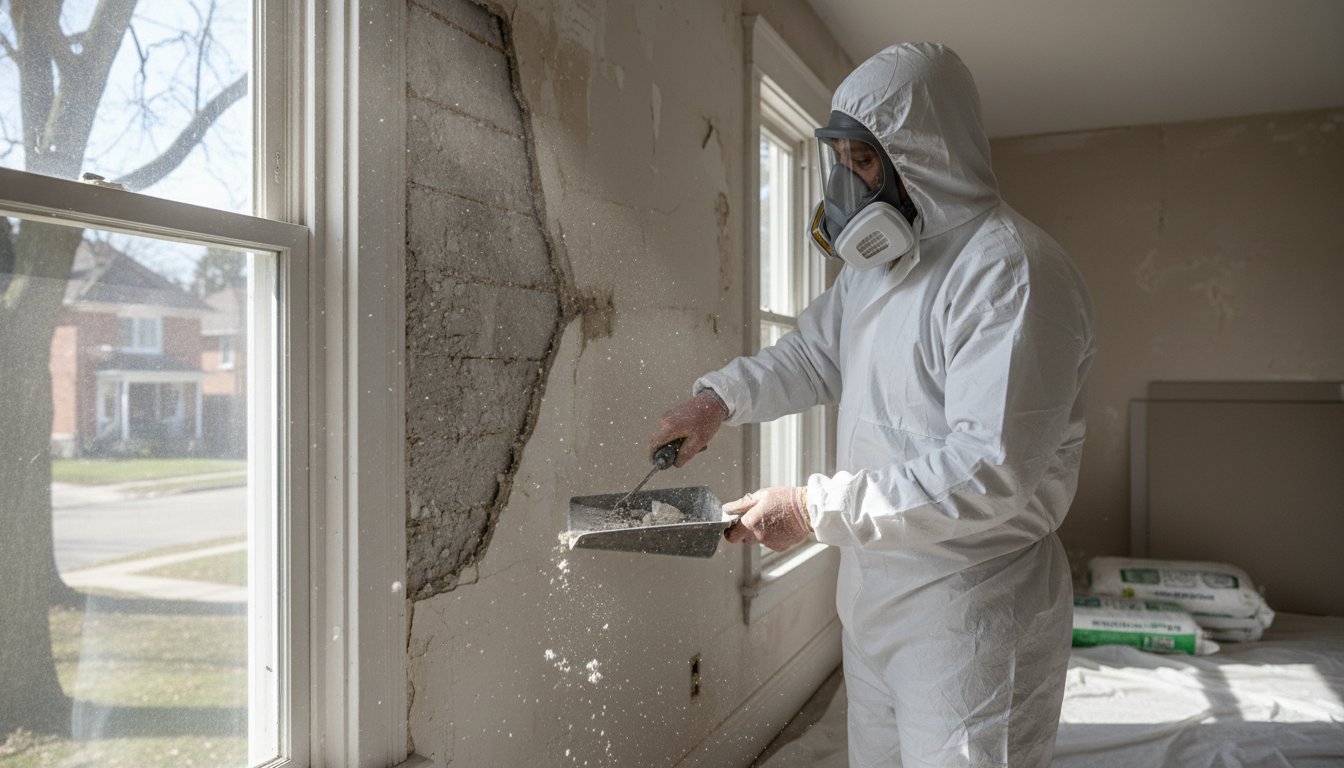
You're halfway through a weekend renovation in your Ottawa home when you notice a grey, fibrous layer behind the horsehair plaster. It's a moment that stops every homeowner in their tracks. If you suspect you've uncovered asbestos in plaster walls what to do next is the most critical decision you'll make for your family's safety and your property value. It's completely normal to feel overwhelmed by the fear of health complications or the sting of unexpected project delays.
We understand that your home is your most significant investment. Discovering hazardous materials doesn't have to mean the end of your creative vision. This 2026 guide provides the technical clarity you need to manage the situation with composure. You'll learn how to identify and test for these legacy materials while staying compliant with Ontario Regulation 278/05. We'll also explain the practical differences between encapsulation and professional removal, helping you choose the right path to a safe, successful project completion.
Key Takeaways
- Identify whether your Ottawa home is at risk by learning which plaster materials commonly contain asbestos and why they were used in older builds.
- Gain clarity on asbestos in plaster walls what to do immediately after discovery to protect your household and secure your renovation site.
- Navigate the complexities of Ontario Regulation 278/05 and understand the legal requirements for testing before any demolition or construction begins.
- Evaluate the long-term benefits of professional abatement versus encapsulation to make an informed decision for your property’s safety and market value.
- See how a methodical, professional removal process creates a clean slate for your high-end renovation and ensures lasting peace of mind.
Identifying Asbestos in Plaster Walls: The First Steps for Homeowners
Homes built before 1980 in the Ottawa area often contain asbestos within their plaster layers. This mineral was widely utilized because it provided exceptional fireproofing, durability, and sound insulation. While these properties made it a favorite for builders decades ago, it creates a significant challenge for modern property owners planning a renovation. If you are currently looking at a damaged wall and wondering about asbestos in plaster walls what to do, your first priority is to prevent fiber release. Visual identification is difficult because these fibers are microscopic. However, there are specific cues to watch for during a demolition. If you see a greyish, fibrous material mixed into the plaster, or if the "horsehair" binder looks suspiciously uniform and white rather than organic and brown, treat it as a hazard. At HMJ Contracting, we often encounter these materials during the early stages of high-end home transformations.
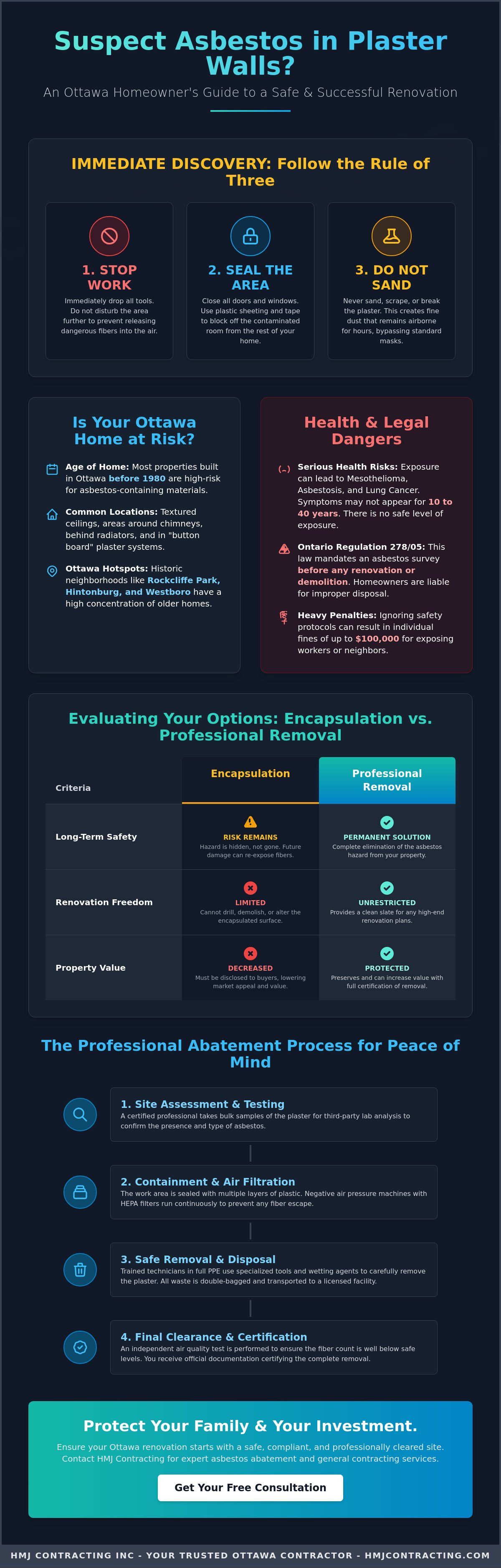
Follow the "Rule of Three" immediately upon discovery:
- Stop work: Drop your tools and step away from the area.
- Seal the area: Close doors and use plastic sheeting to prevent dust from traveling through the rest of the house.
- Do not sand: Never attempt to smooth out the edges of a broken plaster wall you suspect contains hazardous minerals.
Common Locations for Asbestos Plaster in Ottawa Homes
Many properties in historic Ottawa neighborhoods like Rockcliffe Park, Hintonburg, and Westboro are high-risk zones due to their age. Asbestos plaster was frequently applied to textured ceilings, behind cast-iron radiators, and around chimneys to manage heat. You should also be cautious of "button board" systems. These early drywall precursors often used a base layer of plaster that was heavily fortified with asbestos to ensure structural integrity and fire resistance.
The Dangers of Disturbance: Why You Must Stop Immediately
The risk level depends on whether the material is friable or non-friable. Friable plaster is easily crumbled by hand; this releases dangerous particulates into your breathing zone. Sanding these surfaces is particularly hazardous. It creates a fine dust that can remain airborne for hours, bypassing standard household filtration systems. Many homeowners mistakenly believe a standard N95 mask provides sufficient protection. In reality, basic PPE fails to stop microscopic asbestos fibers from entering the lungs. Professional asbestos removal is the only way to ensure your living space remains safe for your family. Understanding asbestos in plaster walls what to do means recognizing that specialized equipment and containment are non-negotiable requirements for a successful project.
The Health and Legal Realities of Asbestos in Ontario
Handling hazardous materials requires a clear understanding of the long-term consequences. Asbestos exposure isn't a minor health hurdle; it's a serious medical risk that often remains hidden for decades. Diseases like mesothelioma, asbestosis, and lung cancer typically take 10 to 40 years to manifest after the initial inhalation of fibers. This latency period means that a mistake made during a weekend DIY project today could result in a life-altering diagnosis much later. If you've found suspicious material, knowing about asbestos in plaster walls what to do isn't just about finishing a room; it's about protecting your future. The fibers are so small they can't be seen, but their impact on human tissue is devastating and permanent.
Ontario Workplace Safety and Homeowner Responsibility
In Ontario, the law is very specific regarding how these materials are managed. Ontario Regulation 278/05, which was recently updated on April 20, 2026, dictates that property owners must conduct a thorough asbestos survey before any demolition or renovation work begins. You can't claim ignorance if hazardous waste is disposed of improperly in Ottawa's waste stream. Homeowners carry significant legal liability when they hire uncertified contractors or "under-the-table" workers who ignore safety protocols. If a worker or a neighbor is exposed on your property because you bypassed containment rules, you could face individual penalties of up to $100,000. Choosing professional asbestos removal Ottawa ensures your project remains compliant and your financial liability is managed through proper documentation and disposal receipts.
Understanding the 'Safe' Level of Exposure
Health authorities and researchers agree that there is no scientifically "safe" level of exposure to these microscopic fibers. Even small amounts can accumulate in the lungs over time, leading to chronic respiratory issues. It's also vital to understand secondary exposure, which occurs when microscopic fibers are carried home on a person's clothing, hair, or tools, potentially endangering family members who never entered the renovation zone. To Learn About Asbestos and its impact on residential environments, you must consider the cumulative effect of repeated disturbances. If you're tackling multi-room renovations in an older Ottawa home, the risk increases with every wall you open. If you're unsure about the status of your walls, requesting a professional assessment is the most responsible way to provide the clarity needed to move forward safely.
Evaluating Your Options: Encapsulation vs. Professional Removal
Once you've confirmed the presence of hazardous fibers, you face a pivotal choice. Deciding on asbestos in plaster walls what to do involves weighing the immediate convenience of encapsulation against the long-term integrity of professional removal. This decision often depends on your vision for the property. Are you planning a minor cosmetic update, or is this a comprehensive renovation of a classic Ottawa bungalow? A structured decision framework helps you navigate these options with composure. If you intend to stay in your home for decades, removal offers a clean slate. If you're a property manager looking for a safe, code-compliant way to stabilize a ceiling, encapsulation might be the appropriate measure. Understanding the nuances of each method ensures your home remains a safe investment for years to come.
Encapsulation involves sealing the material behind a permanent barrier, such as a new layer of drywall or specialized high-build sealants. This approach is often faster and involves less disturbance to the existing structure. However, it's a management strategy rather than a permanent solution. You must follow the provincial guidelines for Asbestos in the workplace and residential settings, which include documenting the location of these materials for future reference. If you encapsulate, you're essentially deferring the remediation. This can create unexpected challenges later if you decide to change the layout of your home or update your mechanical systems.
When Encapsulation is a Viable Strategy
This is a practical choice when the plaster is in excellent condition and you have no intention of cutting into the walls. It's often used for textured ceiling treatments where the material is stable and out of reach. The primary benefit is a lower immediate cost and minimal project downtime. The downside is that you must disclose the presence of encapsulated asbestos to future buyers. In the competitive Ottawa real estate market, "hidden" asbestos can become a significant hurdle during a home inspection, potentially complicating your resale process.
Why Removal is the Gold Standard for Renovations
Abatement is the only way to render your home truly asbestos-free. By choosing asbestos removal, you clear the path for all future upgrades. You won't have to worry about hazardous dust every time an electrician needs to pull a wire or a plumber needs to access a pipe. While the upfront investment is higher, it simplifies every future project and protects your home's long-term value. You can explore the asbestos demolition cost in our detailed guide to see how this fits your renovation budget. For homeowners in neighborhoods like the Glebe or Alta Vista, total removal is frequently the preferred route to ensure absolute peace of mind and structural flexibility.
The Professional Abatement Process: What Homeowners Should Expect
Moving from a suspected hazard to a clean site requires a methodical, multi-stage approach. When you are faced with asbestos in plaster walls what to do involves more than just pulling down the material. The process begins with pre-abatement testing to characterize the site. A certified professional collects samples to confirm the concentration of fibers, which dictates the level of containment required. Under Ontario Regulation 278/05, work is classified into Type 1, 2, or 3 operations. Most extensive plaster removals in older Ottawa homes fall under Type 2 or Type 3, necessitating sophisticated barriers and air management systems.
The technical core of a safe project involves four distinct phases after the initial testing:
- Negative Air Pressure: We install high-efficiency particulate air (HEPA) filtration units to create a pressure differential. This ensures that air only flows into the work zone, never out into your living spaces.
- Wet-Removal: Technicians use specialized wetting agents to saturate the plaster. This keeps fibers heavy and prevents them from becoming airborne during the demolition.
- Rigorous Cleaning: Every surface within the containment zone undergoes a detailed HEPA-vacuuming and wet-wiping process.
- Final Air Clearance: For Type 3 projects, an independent third party must conduct air sampling to prove the environment is safe before the containment barriers are removed.
Containment and Safety Protocols on the Job Site
In high-risk Type 3 operations, you'll see a decontamination shower at the entrance of the work zone. This is a vital safety measure that prevents workers from carrying microscopic dust outside the project area. We use industrial-grade HEPA vacuums specifically designed for hazardous remediation. A standard household shop vac is dangerous in this context because its filtration is too coarse; it would simply capture the dust and spray it back out into the room. Our goal is to protect the architectural integrity of the rest of your home while isolating the hazard completely.
Disposal and Documentation: The Final Steps
Once the plaster is removed, it is placed into double-layered, 6-mil polyethylene bags that are sealed and labeled. This waste is transported to designated Ontario landfills equipped to handle hazardous materials. The most important document you'll receive is the final Clearance Report. This report serves as your legal proof of a successful abatement. Keep this with your home's permanent records. It is a critical asset during future property appraisals or sales. If you're ready to secure your site, contact HMJ Contracting for a professional consultation and expert abatement services.
From Remediation to Renovation: Partnering with HMJ Contracting
Transitioning from a hazardous site to a beautiful living space requires a partner who understands both the technical demands of safety and the aesthetic requirements of high-end design. When you realize you have asbestos in plaster walls what to do next shouldn't involve the stress of managing multiple sub-contractors. We bring 25 years of experience to every project, ensuring that the critical phase of removal flows seamlessly into your renovation. This integrated approach eliminates the communication gaps that often lead to delays and cost overruns. We treat your home with the same respect we give our own, providing a stable foundation for your family’s future.
Our "Clean Slate" philosophy ensures that every trace of hazardous material is gone before the first new stud is installed. This methodology protects your home's long-term value and gives you the freedom to envision a modern kitchen or bathroom without the lingering worry of legacy materials. We manage the entire timeline with precision, coordinating the abatement and construction phases to minimize your displacement. You receive a project that is organized, transparent, and executed to the highest professional standards.
Integrated Services for Ottawa Property Owners
Efficiency is the hallmark of a well-managed build. By combining asbestos removal with a comprehensive home renovation Ottawa, you save time and reduce the logistical burden on your household. We maintain neighborly communication throughout the process, keeping you informed of every milestone. Our team also handles the complex paperwork, including building permits and BCIN requirements. This ensures your subsequent build is fully compliant with local codes and ready for inspection. We focus on the technical hurdles so you can focus on the creative vision for your space.
Planning Your Safe Renovation in 2026
The journey toward a safe, updated home begins with a methodical assessment. Your first step involves booking a site visit where we can evaluate the condition of your plaster and coordinate professional testing. This initial data allows us to design your dream space while simultaneously planning the necessary safety protocols. We handle the containment, the specialized air filtration, and the hazardous disposal, allowing your project to move forward with composure. When you are ready to start your transformation, contact HMJ Contracting for a safe, professional consultation. We are your dedicated local experts in residential and commercial improvements.
Protecting Your Home’s Future with Professional Care
Managing an older property in Ottawa requires a balance of creative vision and technical caution. You now understand the critical steps for identifying hazardous materials and the legal necessity of following Ontario’s updated safety regulations. Whether you choose encapsulation or complete abatement, the goal is always to protect your family’s health and your home's long-term market value. When you encounter asbestos in plaster walls what to do is rely on seasoned professionals who can transition your project from a safety hazard to a stunning renovation. This methodical approach ensures that your home remains a stable, high-end investment for decades to come.
HMJ Contracting brings over 25 years of local Ottawa experience to your doorstep. As certified hazardous material remediation specialists, we provide a comprehensive service that covers everything from the initial demolition to the final renovation. We ensure your project stays on track while maintaining the highest standards of safety and craftsmanship. Your dream home is still within reach; it simply needs a safe foundation to grow upon. We are ready to handle the complexities so you can focus on the final result.
Secure your home's safety with a professional asbestos assessment from HMJ Contracting. We look forward to helping you realize your project goals with total peace of mind.
Frequently Asked Questions
Can I test for asbestos in my plaster walls myself with a store-bought kit?
While mail-in kits are available, they aren't recommended for comprehensive renovation planning. A certified professional provides a formal report that satisfies Ontario Regulation 278/05 requirements. This documentation is essential for legal compliance and property resale. DIY sampling also risks releasing microscopic fibers into your breathing zone if you don't follow strict containment protocols during the collection process.
Is it safe to live in my house while asbestos plaster is being removed?
It depends on the project's scale and the required containment type. For Type 3 operations, which involve extensive plaster removal, we typically suggest that residents vacate the property. This ensures your family is nowhere near the decontamination zones or negative air pressure units. Smaller, localized removals might allow you to stay if the work zone is completely isolated from your living quarters.
How can I tell the difference between horsehair plaster and asbestos plaster?
You cannot distinguish between these materials through visual inspection alone. Horsehair plaster utilizes organic animal hair as a binder, while asbestos plaster uses microscopic mineral fibers. Builders sometimes used both materials together in the same wall. The only reliable method to confirm the presence of hazardous minerals is through laboratory analysis of a bulk sample conducted by a qualified technician.
What does professional asbestos removal cost for a standard Ottawa room?
Costs vary significantly based on the room's square footage, the accessibility of the plaster, and the required containment level. Factors like high ceilings, intricate crown moldings, or multiple layers of material will influence the final investment. You should request a detailed site assessment to get a precise understanding of the scope and requirements for your specific Ottawa property.
If my plaster walls are in good condition, do I still need to remove them?
Removal isn't mandatory if the material is in good condition and remains undisturbed. Asbestos only becomes a health hazard when it is broken, sanded, or cut. If you aren't planning any structural changes, you can safely leave the walls as they are. However, if you're wondering about asbestos in plaster walls what to do before a remodel, professional testing is your first step.
Will my home insurance cover the cost of asbestos remediation in Ottawa?
Standard home insurance policies in Ontario rarely cover the cost of voluntary asbestos removal. Most insurers view hazardous material remediation as a maintenance or renovation expense rather than a sudden, accidental loss. You should review your specific policy documents or speak with your broker to see if any specialized riders or environmental clauses apply to your residential coverage.
How long does the typical asbestos abatement process take for plaster walls?
A standard project usually takes three to five business days to complete. This timeframe includes the initial setup of containment barriers, the actual removal process, and the mandatory final air clearance testing. Larger homes or complex structural removals may require more time. We provide a methodical schedule during the planning phase to help you manage your household's timeline with composure.
Do all houses built before 1980 in Ottawa contain asbestos in the walls?
Not every home from that era contains hazardous fibers, but the probability is high in the Ottawa region. Asbestos was a standard additive in many plaster and drywall products for decades. Neighborhoods like Rockcliffe Park and the Glebe have a high concentration of these legacy materials. If you're unsure about asbestos in plaster walls what to do, testing is the only way to be certain.