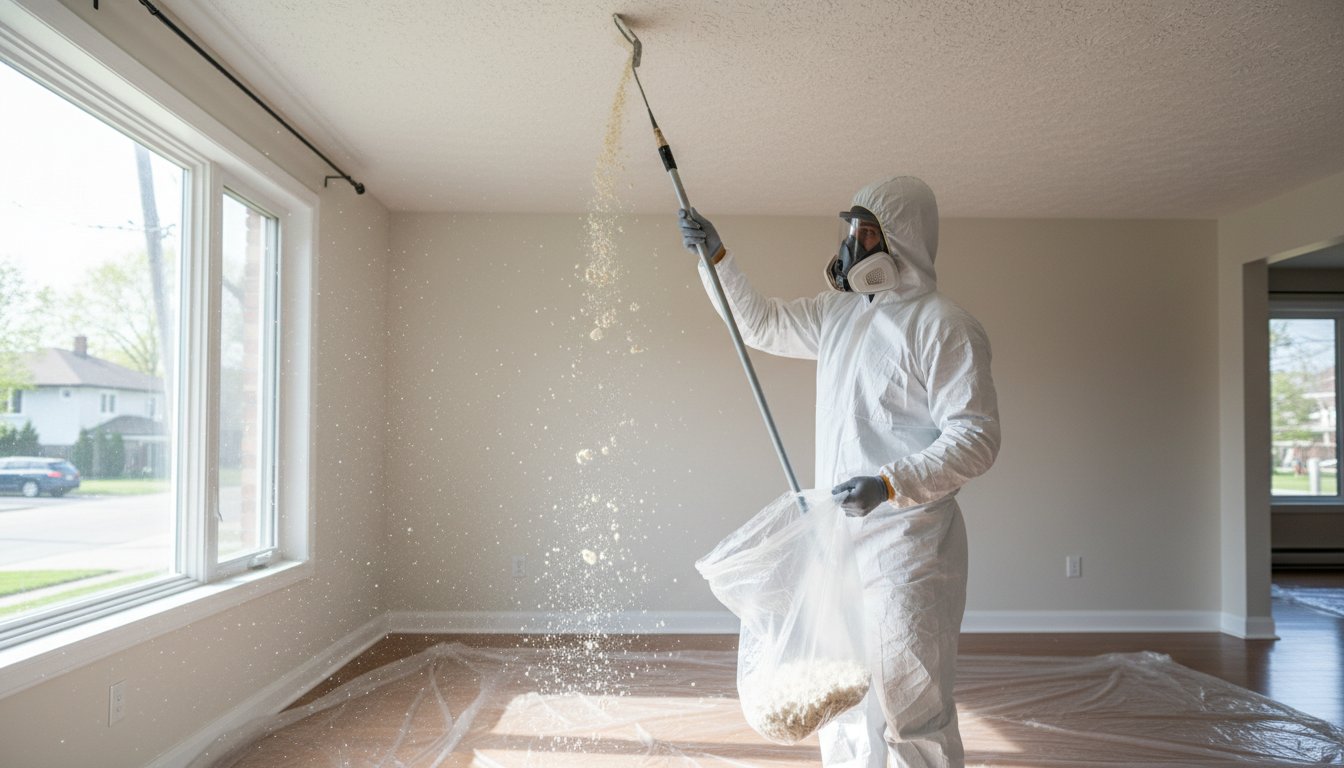
That textured ceiling you've been planning to scrape this weekend is often more than just a dated design choice; it's a potential safety hazard that requires professional scrutiny. Many Ottawa homeowners assume a quick DIY project will modernize their space, but without proper asbestos testing for popcorn ceilings, you risk releasing microscopic carcinogens into your home. It's understandable to feel overwhelmed by conflicting advice or the worry that a positive test result will stall your renovation plans indefinitely.
You want a home that's both beautiful and safe, and we agree that protecting your family is the absolute priority. This guide provides the clarity you need to identify, test, and manage asbestos in your textured ceilings while staying compliant with Ontario Regulation 115/26. We'll walk through the specific steps to get a definitive answer, explain the legal requirements for property owners in 2026, and help you find a trusted local partner to ensure your project moves forward with confidence and precision.
Key Takeaways
- Identify the historical reasons Ottawa homes used asbestos in textured finishes and why these materials pose a health risk during modern renovations.
- Discover why professional asbestos testing for popcorn ceilings provides a level of accuracy and safety that retail DIY kits can't match.
- Review the essential legal requirements under Ontario Regulation 278/05 to avoid heavy fines and ensure a safe environment for your family.
- Explore the professional options for managing positive results, including the technical differences between long term encapsulation and full removal.
- Learn how HMJ Contracting bridges the gap between hazardous material remediation and the final realization of your home's aesthetic potential.
Understanding Asbestos in Popcorn Ceilings: Why It Matters
Popcorn ceilings, often referred to as textured or acoustic ceilings, were a standard feature in Ottawa residential design for decades. Builders favored this finish because it effectively masked drywall imperfections and provided modest sound dampening between floors. However, that bumpy texture often hides a hazardous secret. For nearly forty years, manufacturers added asbestos to the spray-on mixture to enhance fire resistance and structural durability. Because these microscopic fibers are invisible to the naked eye, professional asbestos testing for popcorn ceilings is the only definitive way to confirm a home's safety before a renovation begins.
The primary concern with textured finishes is their high degree of "friability." In the contracting world, a material is friable if it can be easily crumbled or reduced to powder by hand pressure. Unlike asbestos-containing floor tiles, where fibers are locked within a hard vinyl matrix, the fibers in a popcorn ceiling are loosely bound. A simple bump from a piece of furniture or a minor vibration can release thousands of carcinogens into your living space. You cannot determine the presence of asbestos simply by looking at the ceiling's color or pattern; even modern-looking "white" textures can contain dangerous levels of the mineral.
The Era of Asbestos in Canadian Homes
In Ontario, the use of asbestos in construction materials remained common until 1990. While our neighbors in the United States began phasing out these materials in 1978, Canadian suppliers often utilized existing stockpiles for another decade. This timeline means that homeowners in established Ottawa neighborhoods like the Glebe, Westboro, Alta Vista, and Nepean must remain vigilant. If your property was constructed or renovated between 1950 and 1990, there's a strong statistical likelihood that your ceilings contain asbestos. Reviewing the history of popcorn ceilings reveals how deeply these materials were integrated into the suburban landscape. What was once considered a high-end fireproofing solution is now a primary hurdle for modern interior updates.
When Does a Popcorn Ceiling Become Dangerous?
Asbestos is generally considered stable when it remains intact and undisturbed. The risk profile changes the moment the material is agitated. In many Ottawa homes, common triggers for fiber release include roof leaks that soften the texture, vibrations from HVAC systems, or accidental scrapes during furniture moves. Even a small "test scrape" by a curious homeowner can contaminate an entire room's air quality. Because exposure is cumulative, even minor incidents contribute to long-term health risks. HMJ Contracting prioritizes identifying these hazards during the planning phase of any renovation or demolition project. We ensure that asbestos testing for popcorn ceilings is completed early, allowing us to manage the site safely and prevent the accidental spread of fibers throughout your home.
Health Risks and Legal Safety Standards in Ontario
Understanding the physical properties of asbestos is only the first step. For property owners in the National Capital Region, the health and legal implications of disturbing these materials are significant. Inhaling microscopic asbestos fibers can lead to debilitating conditions such as asbestosis, lung cancer, and mesothelioma. Medical research confirms there is no known safe level of exposure. Because symptoms often take decades to appear, the risks you take during a weekend renovation today can have life-altering consequences for your family in the future.
Beyond the health impact, Ontario's legal framework is strict. Compliance with Ontario's asbestos safety regulations is mandatory for any project that might disturb building materials. As of July 1, 2026, Ontario Regulation 115/26 further updates these standards to ensure higher levels of respiratory protection. A material is legally classified as "asbestos-containing" if it contains 0.5% or more asbestos by dry weight. Failing to perform asbestos testing for popcorn ceilings before starting work can lead to severe penalties. Individuals may face fines of up to $25,000, while penalties under the Occupational Health and Safety Act can reach $100,000.
The Invisible Threat: How Asbestos Fibers Behave
Asbestos fibers are uniquely dangerous because of their microscopic size and needle-like shape. They are so small that standard household vacuum filters cannot trap them; instead, these machines often blow the fibers back into the air, making the contamination worse. Once airborne, these fibers are incredibly aerodynamic and can remain suspended for several days. Secondary exposure poses a significant risk to family members who inhale microscopic fibers inadvertently carried into clean living areas on the skin, hair, or clothing of those who disturbed the material.
Ontario Legal Requirements for Renovation
If you are planning a renovation in Ottawa, you have a legal responsibility to manage hazardous materials. Before any demolition or construction begins, you must obtain a Designated Substance Survey (DSS) report. This document identifies the location and condition of substances like asbestos and lead paint. Ottawa contractors cannot legally begin work on your property without this report. Additionally, any removed material must be transported to specific hazardous waste facilities in the Ottawa area. If you're unsure where to start, our team can help you navigate the process of identifying hazardous materials to keep your project compliant and safe.
Homeowners also carry liability for the safety of guest workers and future buyers. If you sell a home without disclosing known asbestos or if you expose a tradesperson to fibers due to a lack of asbestos testing for popcorn ceilings, the legal repercussions can be devastating. Investing in professional verification isn't just about safety; it's about protecting your financial interests and ensuring a smooth transition to your new home design.
Professional Asbestos Testing vs. DIY Kits: A Comparison
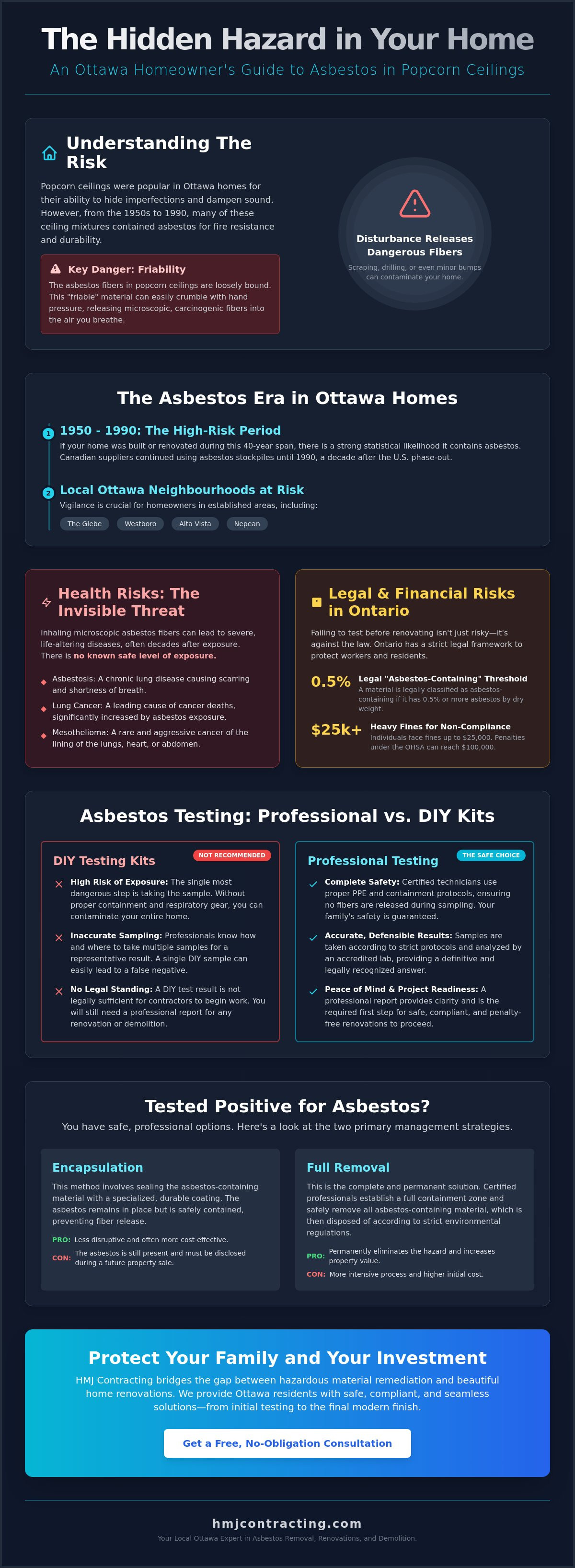
Choosing between a hardware store kit and a professional service often feels like a simple budget decision. However, the reality of asbestos testing for popcorn ceilings involves more than just collecting a small crumb of texture. DIY kits often lead to a false sense of security. They rely on the homeowner to safely extract a sample without contaminating the rest of the house. Most people don't realize the dangers of DIY asbestos testing, specifically the risk of releasing thousands of fibers during the sampling process itself. Without the right containment tools, a single scrape can turn a localized issue into a whole-home air quality crisis.
Professional testing ensures a methodical approach that protects your living space. Technicians use specialized wetting agents to prevent dust and establish mini-containment zones before taking any samples. They also follow a "triple-sampling" protocol. This means they take multiple samples from different areas of the same room. Because asbestos was often mixed by hand on-site, one corner of a ceiling might have a high concentration while another shows none. A professional report from a laboratory certified by NVLAP or AIHA provides the technical accuracy required for a legal Designated Substance Survey.
The cost-benefit analysis favors professional verification when you consider the stakes. While a DIY lab fee might only cost between $30 and $50 per sample, a single mistake can lead to decontamination costs that reach into the thousands. Professional inspections for several areas typically range from $300 to $600 in 2026. This investment provides a definitive "yes" or "no" that protects your family and your property value. It also gives you a clear roadmap for the next steps of your project.
The Risks of DIY Sampling
Accidental fiber release is the most common consequence of untrained sampling. Most homeowners lack the high-efficiency particulate air (HEPA) respirators and polyethylene sheeting necessary to manage the risk. Furthermore, DIY results lack the formal documentation required by reputable Ottawa contractors. If you provide a general contractor with a home-test result, they'll likely require a professional re-test to ensure the safety of their crew and the validity of their work permits. One sample from a large room is rarely enough to provide a statistically significant result, leading to dangerous false negatives.
What a Professional Inspection Includes
A certified professional does more than just scrape a ceiling. They perform a comprehensive visual assessment of the entire property to identify other suspect materials you might have missed, such as drywall joint compound or duct wrap. Their sampling patterns are strategic, accounting for various "batches" of texture applied during the original construction. You receive a detailed report that outlines the exact percentage of asbestos content. This data is vital for determining whether your ceiling requires a standard removal process or a more intensive high-risk abatement strategy.
What to Do When Your Test Results Are Positive
Receiving a positive result from asbestos testing for popcorn ceilings shouldn't cause panic; it simply defines the safety parameters for your renovation project. Lab reports typically categorize results by the percentage of asbestos found in the dry weight of the sample. In Ontario, any material containing 0.5% or more asbestos is legally considered an asbestos-containing material (ACM). If the report indicates "trace" amounts below this threshold, the risk is lower, but caution is still required. If the result is 1% or higher, you must follow strict provincial protocols to manage or remove the material safely.
You essentially have three paths forward: managing the material in place, encapsulation, or professional removal. If the ceiling is in perfect condition and you don't plan to disturb it, management in place is a valid short-term strategy. However, the moment you decide to modernize your lighting, install a ceiling fan, or change the room's layout, you must address the hazard. Never attempt to scrape a positive ceiling yourself. The risk of contaminating your HVAC system and soft surfaces like carpets or curtains is far too high for a DIY approach. Professional intervention ensures that the fibers stay contained during the process.
Encapsulation vs. Full Removal
Encapsulation involves covering the textured surface with a specialized sealant or installing a new layer of drywall directly over the popcorn. While this might seem like a cost-effective shortcut, it often masks the problem rather than solving it. Future renovations become significantly more complex and expensive because any work behind that new wall will still trigger asbestos protocols. Full asbestos removal in Ottawa remains the only way to permanently eliminate the hazard from your property. This choice not only protects your family's health but also preserves your home's resale value by providing a clean, hazard-free inspection report to future buyers.
The Abatement Process Explained
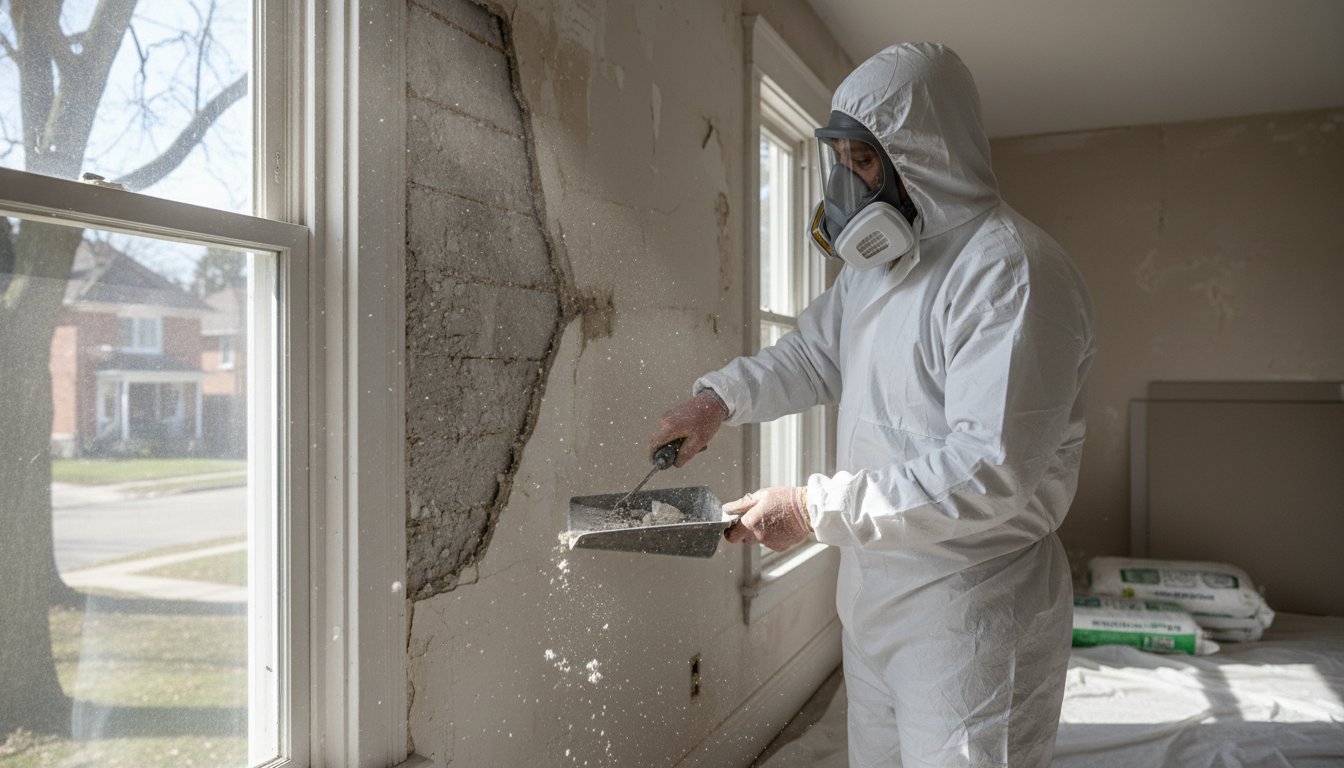
Professional abatement is a highly controlled logistical operation. Based on the scope of your project, the team will establish a Type 1, 2, or 3 enclosure as defined by Ontario Regulation 278/05. For most popcorn ceiling removals, a Type 2 or 3 setup is necessary. This involves sealing the work area with heavy polyethylene sheeting and using negative air pressure machines equipped with HEPA filtration. These systems ensure that no microscopic fibers escape into the rest of your home. Once the removal is complete, a third-party professional performs final air clearance testing. This "all-clear" provides the documented proof you need to safely re-occupy the space and begin your aesthetic upgrades.
Preparing your home for an abatement team involves clearing the room of all furniture, curtains, and personal items. If you have questions about the logistics of your specific project, you can contact our team for a professional assessment of your remediation and renovation needs.
Safe Removal and Ceiling Modernization with HMJ Contracting
HMJ Contracting offers a unique advantage by bridging the gap between hazardous material remediation and high-end residential design. While many specialized firms only provide the technical cleanup, we view asbestos testing for popcorn ceilings as the first step in a larger creative journey. We don't just handle the messy parts of the project. Our integrated approach means you don't have to juggle separate abatement crews and finishing carpenters. We manage the entire transition with a focus on stability and longevity, ensuring that the safety protocols we implement today support the beautiful, modern home you envision for tomorrow.
Our project management style is grounded in clarity and decisiveness. We provide Ottawa property owners with a methodical roadmap that covers everything from initial sampling to the final coat of paint. With over 25 years of experience in home renovation in Ottawa, we've developed a reputation for handling complex challenges with professional composure. We take full accountability for every phase of the work, ensuring your investment is protected and your family's health remains our absolute priority throughout the process.
Beyond Removal: Modernizing Your Space
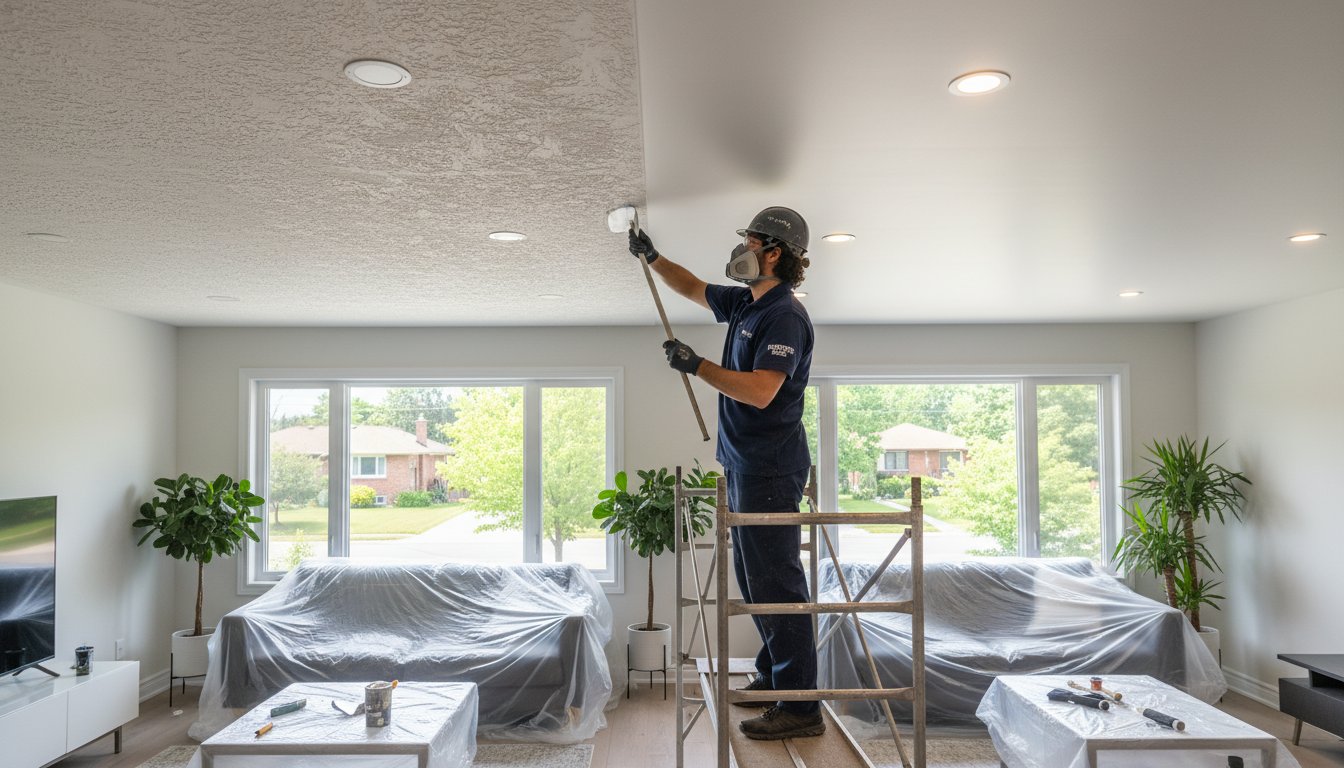
Removing a textured ceiling does more than just eliminate a carcinogen; it opens the door to contemporary interior design. Modern Ottawa homes favor smooth, light-reflective finishes that make rooms feel larger and more inviting. This phase is the perfect opportunity to install energy-efficient pot lights or decorative coffered details. These upgrades are much safer and more cost-effective once the asbestos hazard is gone. Beyond the aesthetic benefits, having professional documentation of a clean test or a certified removal is a significant asset. It protects your property's resale value and provides peace of mind for future buyers who are often wary of older textured finishes.
Start Your Safe Renovation Today
Choosing a local partner who understands the nuances of Ottawa's older neighborhoods is essential for a successful project. We are committed to local craftsmanship and unwavering quality in every renovation we undertake. Whether you're curious about the asbestos demolition cost or you're ready to plan a full-scale remodel, our team is here to provide technical authority and neighborly advice. We handle the complexity of the remediation so you can enjoy a simplified, ease-oriented experience. You can find more practical advice on managing your property's health and value on our official blog. Let's work together to realize your home's full potential safely and professionally.
Secure Your Home’s Future and Aesthetic Potential
Handling the complexities of older Ottawa properties requires a balance of technical precision and creative vision. You now understand that asbestos testing for popcorn ceilings is the essential first step to ensuring a safe environment for your family. By choosing professional verification over unreliable DIY methods, you comply with strict Ontario safety standards and protect your property’s long-term value. Whether your test results lead to encapsulation or full removal, the goal remains the same: a healthy home ready for a modern transformation.
With 25+ years of Ottawa renovation expertise, HMJ Contracting provides a seamless experience from the initial assessment to the final high-end finish. Our team of certified hazardous material remediation specialists manages every technical detail; you don't have to worry about the logistics of containment or disposal. We handle the demolition and remediation with the same level of care we apply to our premium craftsmanship. Take the next step toward a modernized, hazard-free home today.
Book Your Professional Asbestos Inspection and Renovation Consult with HMJ Contracting. Your vision for a safer, more beautiful home is within reach, and we’re here to guide you through every phase of the process.
Frequently Asked Questions
Is it safe to live in a house with asbestos popcorn ceilings?
Living in a home with asbestos-containing textures is generally safe as long as the material remains in good condition and is left undisturbed. The health risk arises only when the material is damaged, crumbling, or agitated, which releases microscopic fibers into the air. If your ceiling shows signs of water damage or is in a high-traffic area where it might be bumped, you should consider professional testing to evaluate the risk.
Can I just paint over my popcorn ceiling if it has asbestos?
Painting over the texture is a common method of encapsulation that can temporarily trap fibers and prevent them from becoming airborne. While this makes the surface more durable, it is not a permanent solution and often complicates future renovations. The added weight of the paint can sometimes cause the texture to peel away from the drywall, and any future removal will be significantly more labor-intensive and expensive once the material is sealed.
How much does it cost to test a popcorn ceiling for asbestos in Ottawa?
A professional asbestos inspection for one to three areas in Ontario is estimated to cost between $300 and $600 in 2026. If you choose to collect a sample yourself and deliver it to a local laboratory, the analysis fee typically ranges from $30 to $80 per sample. These costs are a small investment compared to the potential legal fines or decontamination expenses associated with improper handling.
What happens if I accidentally scraped part of an asbestos ceiling?
You should stop all activity immediately, turn off your HVAC system to prevent fiber circulation, and evacuate the room. Do not attempt to clean the debris with a standard household vacuum or broom, as this will only spread the carcinogens further. The safest course of action is to seal the room and contact a remediation specialist to perform a professional cleanup using HEPA-filtered equipment.
How long does the asbestos testing process take from sample to result?
The standard turnaround time for asbestos testing for popcorn ceilings is usually between two and five business days. This timeline accounts for the site visit, sample transportation, and the laboratory's microscopic analysis. Many Ottawa laboratories offer expedited services if you require results within 24 hours to keep a fast-moving renovation project on schedule.
Do I have to disclose asbestos in my ceiling when selling my Ottawa home?
Ontario real estate disclosure requirements generally mandate that sellers reveal known latent defects that could impact the safety of the occupants. If you have confirmed the presence of asbestos through professional testing, you must disclose this information to potential buyers. Providing clear documentation of the material's condition or professional removal often builds trust and prevents legal complications during the closing process.
Can I take the asbestos sample myself and send it to an Ottawa lab?
While DIY sampling is possible, it is not recommended due to the high risk of accidental exposure and cross-contamination. Professionals use specific wetting techniques and containment protocols to ensure no fibers escape during the process. Furthermore, many insurance providers and general contractors require a certified third-party report before they will approve work or coverage for your property.
What is the difference between a Type 1 and Type 2 asbestos removal?
The classification is based on the risk of fiber release and the scope of the project as defined by provincial law. Type 1 operations involve small-scale work on non-friable materials with basic safety gear. Type 2 operations are mandatory for larger areas of friable material, such as popcorn ceilings, and require specialized enclosures, respiratory protection, and strict decontamination procedures to ensure the safety of the site.