Did you know that paint manufactured in Canada before 1950 could contain as much as 50% lead by dry weight? If you own an older property in the Glebe or Westboro, starting a renovation often brings up a difficult choice: should you use a lead paint testing kit vs professional inspection? You likely want a quick answer so you can start swinging a hammer, but the confusion over conflicting swab results can be paralyzing. It's natural to feel uneasy about Ontario safety regulations when the health of your family or tenants is on the line.
This guide clarifies the critical differences between DIY kits and expert analysis to ensure your project is both safe and compliant. We'll explore why those hardware store swabs are better suited for screening than final decisions. You will also discover when professional testing is a legal necessity for lead paint removal or demolition. At HMJ Contracting, we believe every Ottawa homeowner deserves a clear, technical understanding of their environment before any work begins. We'll help you move from uncertainty to a concrete plan for a lead-free home.
Key Takeaways
- Identify if your property in neighbourhoods like Centretown or Westboro is at high risk based on Canadian lead paint phase-out timelines.
- Compare the accuracy of a lead paint testing kit vs professional inspection to decide which is appropriate for your specific renovation goals.
- Understand how advanced tools like XRF scanning provide instant, non-destructive results that chemical swabs often miss.
- Determine when lab-certified testing becomes a legal or safety requirement for large-scale demolition and asbestos removal projects.
- Learn how to transition from testing to a safe lead paint removal plan that keeps your Ottawa home free from hazardous dust.
Lead Paint Risks in Ottawa’s Older Neighbourhoods
Ottawa is a city of deep history and architectural character. Neighbourhoods like Centretown, Westboro, and New Edinburgh are filled with heritage homes that define our local charm. However, these older properties often hide a legacy of toxic materials. Before you begin a renovation or demolition project, deciding between a lead paint testing kit vs professional inspection is the first step toward protecting your investment. Lead paint isn't usually a threat when it's undisturbed and in good condition. It becomes a dormant hazard the moment you start sanding, scraping, or tearing down walls, releasing invisible dust into your living space.
The timeline for lead usage in Canada is specific. If your home was built before 1950, the paint could contain as much as 50% lead by dry weight. While the federal government limited lead to 0.5% (5,000 ppm) in 1976, it wasn't until much later that the strict 90 ppm limit was fully enacted. Homes built after 1980 are generally safer, but those constructed during the mid-century boom still carry risks. Understanding the dangers of lead paint is vital because even small amounts of dust can cause long-term health issues for children and pets.
Ottawa’s Heritage Homes and Hidden Hazards
In many Ottawa residences, multiple layers of modern latex paint mask older, lead-based coats. You'll often find these hazardous layers on window sills, door frames, and exterior siding. A major concern in older architecture is "friction surfaces." These are areas where two surfaces rub together, such as sliding window sashes or doors. Over decades, this friction grinds down the paint into a fine, toxic powder that settles into carpets and floorboards. Because these layers are buried, a standard lead paint testing kit vs professional XRF scanning might yield different results depending on how deep the sample goes.
Health Canada Guidelines for Lead Exposure
Health Canada maintains strict standards to limit lead exposure in residential settings. They warn that there's no known safe level of lead in the blood, especially for developing brains. Exposure can lead to learning disabilities and behavioural issues in children. According to Canadian health standards, lead-based paint is defined as any surface coating containing more than 90 mg/kg of total lead. For property owners, staying informed through resources like the HMJ Contracting blog helps clarify these complex safety requirements. We focus on ensuring your home remains a safe environment by addressing these risks before the first hammer swings.
How DIY Lead Paint Testing Kits Work
Chemical swabs are the primary tool for Ottawa residents seeking immediate answers about their walls. These kits rely on a chemical reaction to identify the presence of lead on a surface. When comparing a lead paint testing kit vs professional inspection, it's important to understand that DIY kits are screening tools rather than definitive diagnostic instruments. You can find these kits at local retailers like Walmart or Home Hardware across Ontario. A pack of 30 swabs typically costs between $13 and $15, while larger 60-count kits may cost around $30.
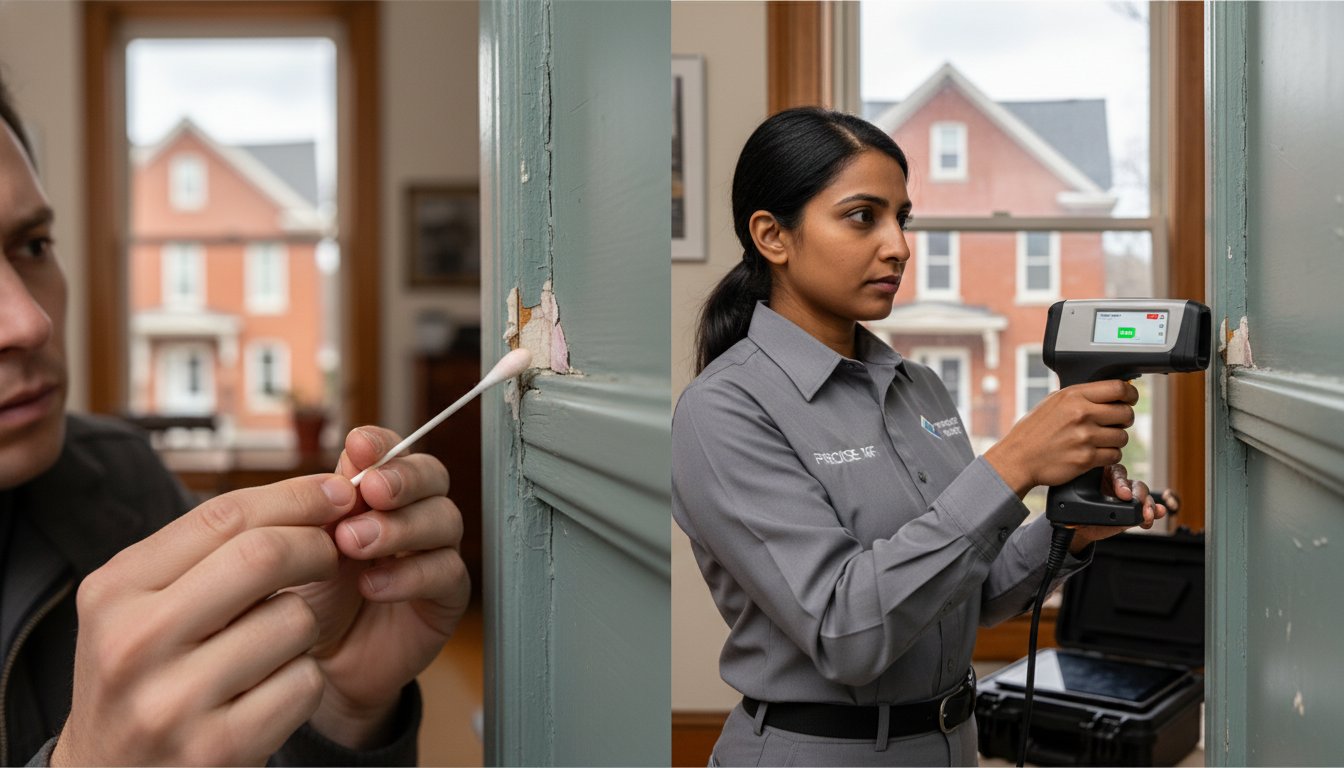
There are two main types of chemical indicators used in these kits. Rhodizonate-based swabs are designed to turn a bright pink or red when lead is detected. Sodium sulfide kits react differently, producing a black or dark brown colour. Regardless of the chemical used, you must "score" the paint before testing. This involves using a sharp blade to cut a small "V" or notch through every layer of paint down to the original substrate. Simply swiping the surface often misses older lead-based coats buried under years of modern, lead-free latex. Using EPA-recognized lead test kits like Luxfer LeadCheck can improve reliability, but user error remains a significant factor in the accuracy of the results.
Pros and Cons of Home Test Kits
The main advantage of a home kit is accessibility. You get results in seconds for a fraction of the cost of a lab analysis. It's a practical first step for a small project like sanding a single chair. However, these kits have a major limitation: they cannot tell you the concentration of lead present. They only provide a "yes" or "no" result. This lack of detail makes it difficult to determine if the lead levels exceed the Canadian limit of 90 mg/kg, which is a crucial distinction for safe disposal and compliance.
The Risk of False Negatives
False negatives pose a serious safety risk during a home renovation. If you're testing red or pink paint with a Rhodizonate swab, the background colour of the paint can easily mask the chemical reaction. This leads to a false sense of security. You might start a demolition project believing the area is safe, only to release toxic dust into your ventilation system. If your DIY results are inconclusive or if you're planning a large-scale project, it's often safer to transition to professional lead paint removal services. HMJ Contracting provides the technical oversight needed to manage these risks, ensuring your property remains a healthy environment for your family or tenants.
Professional Lead Testing: XRF and Lab Analysis
While chemical swabs offer a basic starting point, professional testing provides the technical depth required for high-stakes projects. When comparing a lead paint testing kit vs professional inspection, the most significant difference lies in data precision. Professionals don't just look for a color change; they measure the exact concentration of lead in milligrams per square centimeter. This level of detail is essential for Ottawa property managers who must maintain strict safety records or for homeowners planning extensive structural changes. A certified inspector performs a comprehensive site survey, identifying hazards that a simple swab would likely miss. They evaluate the condition of the paint and the likelihood of it becoming airborne, which is a level of risk assessment DIY kits simply don't offer.
How XRF Scanning Works
X-Ray Fluorescence (XRF) technology is the gold standard for non-destructive testing. An XRF analyzer uses low-level radiation to excite the atoms in the paint, allowing the device to "see" through 20 or more layers of coatings without damaging the surface. This is a massive advantage for heritage properties in areas like Rockcliffe Park, where preserving original woodwork is a priority. An inspector can take over 100 readings across an entire house in about an hour, providing an instant map of lead concentrations. Even though some EPA-recognized lead test kits are available for consumer use, they cannot match the speed or depth of a handheld XRF scanner.
When Lab Analysis is Necessary
There are scenarios where even XRF technology has limitations. In complex projects involving asbestos removal or total demolition, paint chip lab analysis becomes necessary. A technician collects physical samples from various locations and sends them to an accredited laboratory for Inductively Coupled Plasma (ICP) testing. This method is vital for:
- Testing soil samples around a home's perimeter to check for historical lead leaching.
- Analyzing dust wipes after a renovation to verify that lead paint removal was successful.
- Providing a legal paper trail for commercial property transactions and insurance requirements.
- Verifying borderline XRF results in aging Ottawa commercial buildings.
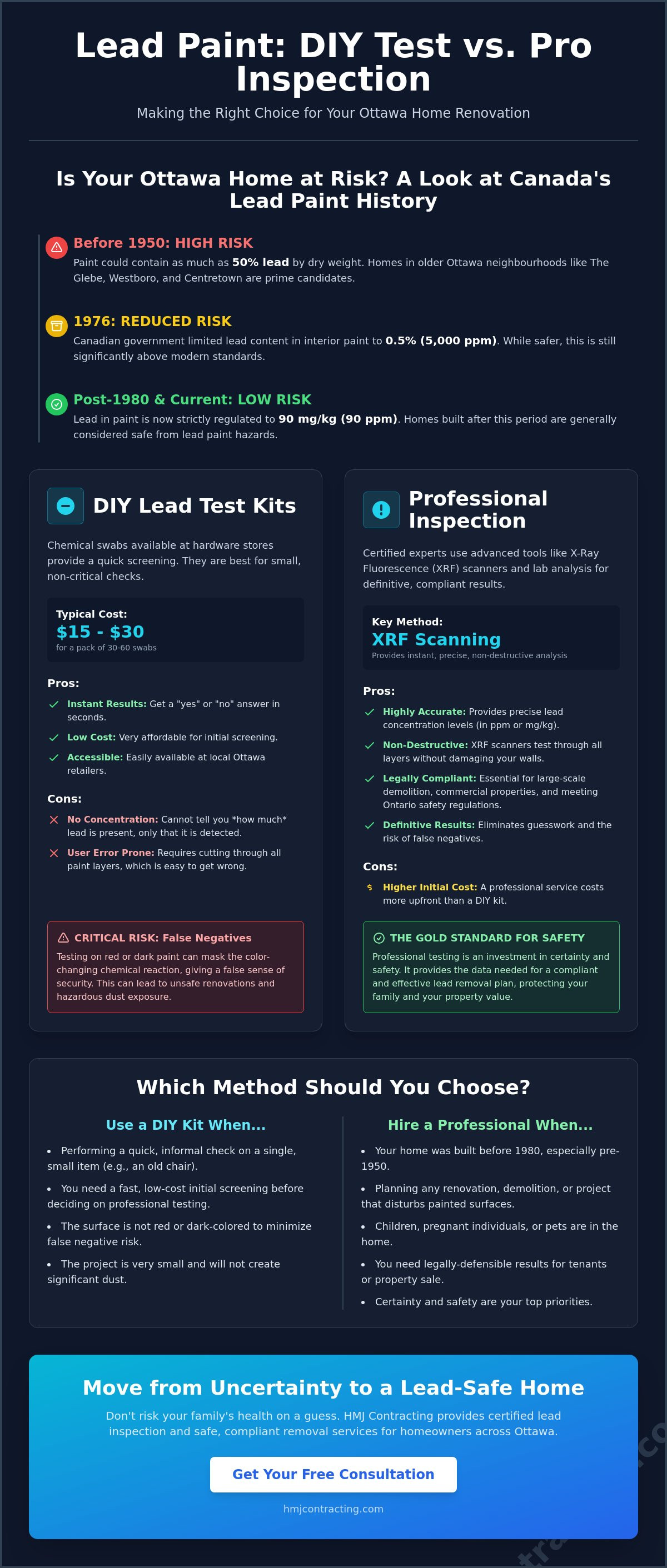
DIY vs. Professional: Which Method Should You Choose?
Choosing between a lead paint testing kit vs professional evaluation often comes down to the scope of your vision. If you're simply painting a single bedroom in a home built after 1980, the risks are statistically lower. In these cases, a quick swab might offer a basic level of reassurance. However, gutting a kitchen or removing structural walls in a pre-1960 Ottawa home is a different story entirely. The "peace of mind" factor is paramount for families with young children or pets, as lead dust is nearly impossible to remove once it settles into the ventilation system. Small projects carry lower stakes, but major renovations require technical certainty that a $15 swab cannot provide.
Budgeting for your project should account for long-term liability. While a DIY kit is inexpensive, the cost of remediating a home contaminated by improper lead removal is astronomical. Professional general contractors in Ottawa are also bound by safety regulations that require verified testing before demolition begins. If you're managing a commercial property or a multi-unit residential building, a professional report is often a legal necessity to protect yourself from future health-related claims. Investing in professional testing early prevents expensive delays and ensures your project remains compliant with Ontario safety standards.
The "When to DIY" Checklist
- Post-1980 Construction: Homes built after this date are unlikely to have high lead concentrations, making DIY kits a viable preliminary screening tool.
- Preliminary Checks: Use a swab to decide if you need to call a professional for a more detailed survey.
- Portable Items: Testing suspected furniture, old toys, or a single door frame rather than structural walls or entire rooms.
- Intact Surfaces: Checking paint that is in good condition and not currently peeling or chalking.
The "Call a Pro" Red Flags
- Major Demolition: Any project involving asbestos demolition or structural changes in homes built before 1960.
- Deteriorating Paint: Visible peeling, cracking, or "alligatoring" paint in high-traffic areas like hallways or kitchens.
- Aggressive Removal Methods: If your plan involves sanding, heat-stripping, or power-washing surfaces that might contain lead.
- Friction Surfaces: Areas like window sills and door jambs where constant movement creates invisible, toxic dust.
If you've identified these red flags in your home, it's time to stop and consult the experts. For a safe and compliant renovation, contact us to discuss our professional lead paint removal services today.
Safe Lead Remediation with HMJ Contracting
Finding lead in your home isn't the end of your renovation journey; it's the point where technical expertise becomes your most valuable asset. Once the debate over a lead paint testing kit vs professional inspection is settled, the focus shifts to containment and elimination. At HMJ Contracting, we move seamlessly from the assessment phase to high-standard remediation. We treat lead-based paint as a serious environmental hazard that requires specialized equipment and a methodical approach. Attempting a DIY removal often does more harm than good by spreading microscopic particles through your vents and carpets. We ensure your project stays on track by integrating lead safety directly into your renovation or demolition plan.
The HMJ Remediation Process
Our team uses a multi-layered strategy to keep your home clean and safe. We start by establishing a rigid containment zone using heavy-duty plastic barriers and negative air pressure systems. This prevents toxic dust from escaping the work area into other parts of your property. We use high-efficiency particulate air (HEPA) filtration systems to scrub the air constantly during the removal process. Every piece of lead-contaminated debris is bagged, sealed, and transported for professional disposal according to Ontario environmental regulations. After the lead paint removal is complete, we perform a thorough post-remediation cleaning. We then recommend clearance testing to verify that the space is ready for you and your family to re-enter with total confidence.
This systematic approach is what distinguishes a professional project from a risky DIY attempt. We don't just remove the hazard; we manage the entire environment to prevent cross-contamination. This is particularly important when lead remediation is part of a larger project, such as a kitchen gut or a bathroom renovation. By coordinating these phases, we minimize downtime and ensure that every contractor on-site is working in a safe, lead-free environment. This logistical assurance is a cornerstone of our methodology, reflecting our commitment to clear communication and project efficiency.
Your Partner for Safe Ottawa Renovations
With 25 years of experience handling hazardous materials in the Ottawa area, we've built a reputation based on transparency and craftsmanship. We've seen the complications that arise when property owners rely on a basic lead paint testing kit vs professional oversight during a major structural change. Our goal is to simplify a complex and often stressful process so you can focus on the creative vision for your property. We're proud to serve our local community, from the historic streets of the Glebe to the growing suburbs of Kanata. Whether you're planning a modern update or a full-scale demolition, our team ensures that safety is never compromised. Contact HMJ Contracting for a professional assessment today to start your next project with confidence.
Secure a Safe Foundation for Your Ottawa Renovation
Deciding between a lead paint testing kit vs professional inspection is about more than just checking a box on your renovation to-do list. It's about ensuring the long-term safety of your family and the integrity of your property. While DIY swabs offer a quick screen, they lack the technical precision required for major structural changes in Ottawa’s historic neighbourhoods. Professional testing provides the definitive data you need to proceed with confidence, especially when dealing with the complex paint layers found in heritage homes.
HMJ Contracting brings over 25 years of Ottawa renovation experience to every project. As locally owned and operated Ontario specialists, we are certified hazardous material remediation experts who prioritize your peace of mind. We handle everything from initial containment to final clearance, ensuring your home improvement journey is seamless and compliant. Don't leave your indoor air quality to chance before starting your next big project. Contact HMJ Contracting for Professional Lead Remediation and Renovations today. We look forward to helping you realize your creative vision in a space that is truly safe and healthy.
Frequently Asked Questions
Are lead paint test kits from the hardware store reliable?
Lead paint test kits are useful for preliminary screening; however, they are not 100% reliable for making final safety decisions. These kits often produce false negatives when used on red pigments or when the user fails to score the paint deeply enough to reach older layers. While brands like Luxfer LeadCheck are helpful for a quick check, they don't provide the technical precision required for high-risk demolitions.
What is the most accurate way to test for lead paint?
The most accurate methods are X-Ray Fluorescence (XRF) scanning and accredited laboratory paint chip analysis. XRF technology allows a technician to see through dozens of layers of paint without damaging your walls. Lab analysis provides a definitive measurement of lead concentration in milligrams per kilogram, which is the only way to confirm if levels exceed the Canadian limit of 90 ppm. This technical depth is the main advantage when comparing a lead paint testing kit vs professional inspection.
Do I need a professional lead test before a renovation in Ottawa?
You should secure a professional test if your Ottawa home was built before 1960 or if you're planning a major structural demolition. Professional assessments are often a legal requirement for general contractors to ensure worker safety and environmental compliance. Getting a certified report protects you from liability and ensures that hazardous dust isn't spread through your home’s ventilation system during the project.
What should I do if my DIY lead test comes back positive?
Stop all work immediately and do not sand, scrape, or disturb the area. A positive result from a lead paint testing kit vs professional survey indicates a hazard that requires expert containment. You should seal off the area and contact a remediation specialist to perform a more detailed analysis. They will help you develop a safe lead paint removal plan that includes HEPA filtration and proper hazardous waste disposal.
Can lead paint be safely covered instead of removed?
Lead paint can sometimes be managed through encapsulation if the original surface is in excellent condition and not on a friction surface. Encapsulation involves using specialized liquid coatings to seal the lead, but this isn't a permanent solution for windows or doors where constant rubbing creates dust. For long-term safety in high-traffic areas, professional removal is the most reliable way to eliminate the risk entirely.
How much does professional lead paint testing cost in Ontario?
Professional testing costs vary based on the size of your property and the specific methods used, such as XRF scanning or dust wipe sampling. Homeowners should check with local environmental consultants for current market rates in the Ottawa area. While the upfront cost is higher than a DIY swab, it's a vital investment that prevents the astronomical expenses associated with environmental decontamination and health-related liabilities.
Is lead paint still a problem in homes built after 1978?
Lead is less common in homes built after 1978, but it isn't impossible to find. While Canada limited lead to 0.5% in 1976, some retailers sold existing stock for several years afterward. Homes built after 1980 are generally considered low risk, and those constructed after 1992 are very unlikely to contain lead. If you're unsure about the history of your property, a professional assessment provides the only technical guarantee.
What is the difference between a lead inspection and a lead risk assessment?
A lead inspection identifies exactly where lead paint is located on every painted surface of the home. A lead risk assessment goes further by determining if those lead sources are currently hazardous to the occupants. The risk assessment includes testing for lead in household dust, soil, and water, providing a comprehensive safety profile. This detailed approach is why many Ottawa property managers choose professional services over basic screening tools.