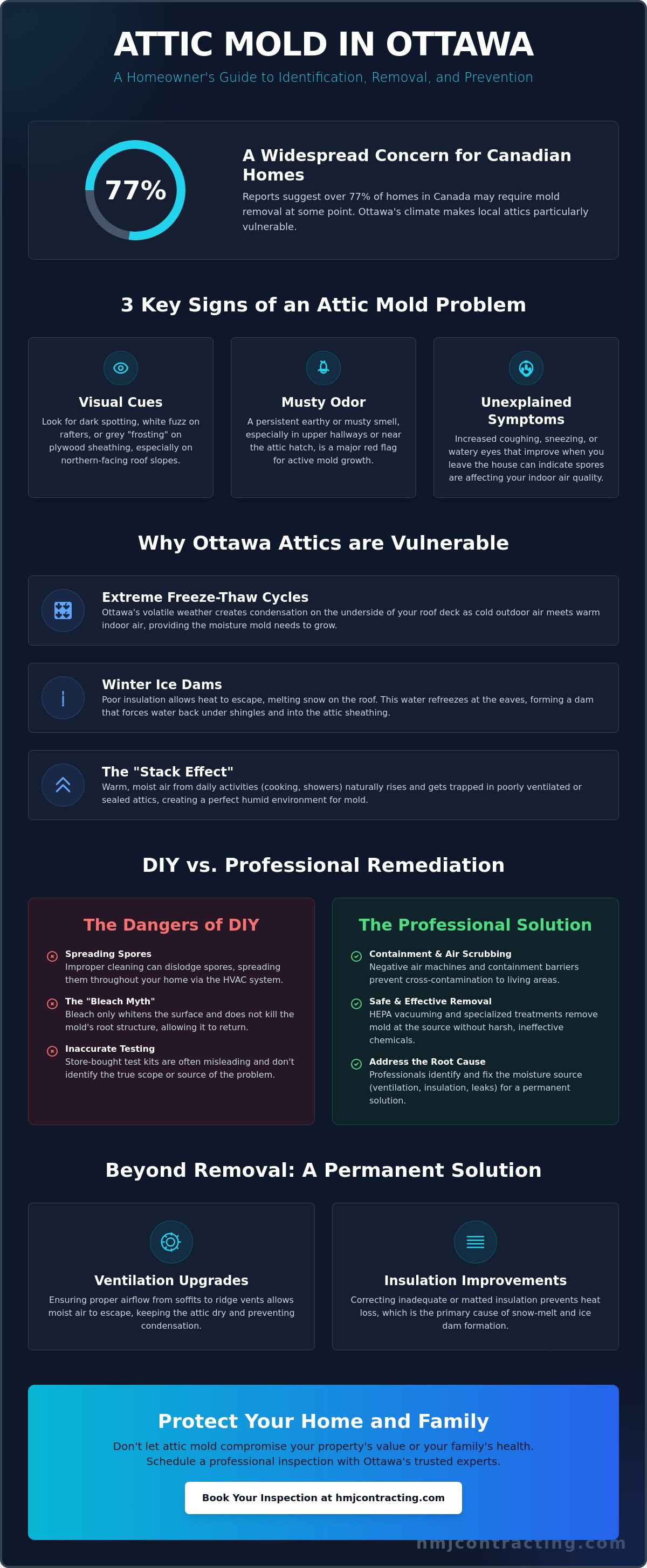
Did you know that some reports suggest over 77% of homes across Canada may require mold removal at some point? If you've recently discovered dark staining or a musty odor above your ceiling, you're likely wondering about mold in attic what to do Ottawa experts recommend. It's a common concern for local homeowners, especially given our city's harsh freeze-thaw cycles and humid summers. You might feel uneasy about the potential health risks to your family or the complexity of the project, but finding mold in a cold attic is a challenge we can help you solve with precision.
We understand that your property represents a significant emotional and financial investment. This guide provides the clarity you need to move forward. You'll discover exactly how to identify specific mold types, the professional standards used for safe removal, and how to re-engineer your attic environment to stay dry. We'll examine the critical role of proper ventilation and insulation in preventing recurrence. This overview ensures you have the technical knowledge to restore your home's integrity and protect your indoor air quality for the long term.
Key Takeaways
- Recognize visual indicators like black spotting or grey "frosting" and understand why a musty odor in your upper hallway requires immediate attention.
- Examine how Ottawa's climate and winter ice dams force moisture into attic spaces, creating hidden breeding grounds for mold.
- Learn the essential steps for mold in attic what to do Ottawa residents should follow to avoid the "bleach myth" and prevent spreading spores through your HVAC system.
- Explore the professional methodology for safe removal, featuring negative air machines and HEPA vacuuming to ensure every surface is properly treated.
- Discover how a comprehensive approach that includes ventilation and insulation upgrades provides a permanent solution for a healthy home environment.
Identifying Attic Mold in Your Ottawa Home
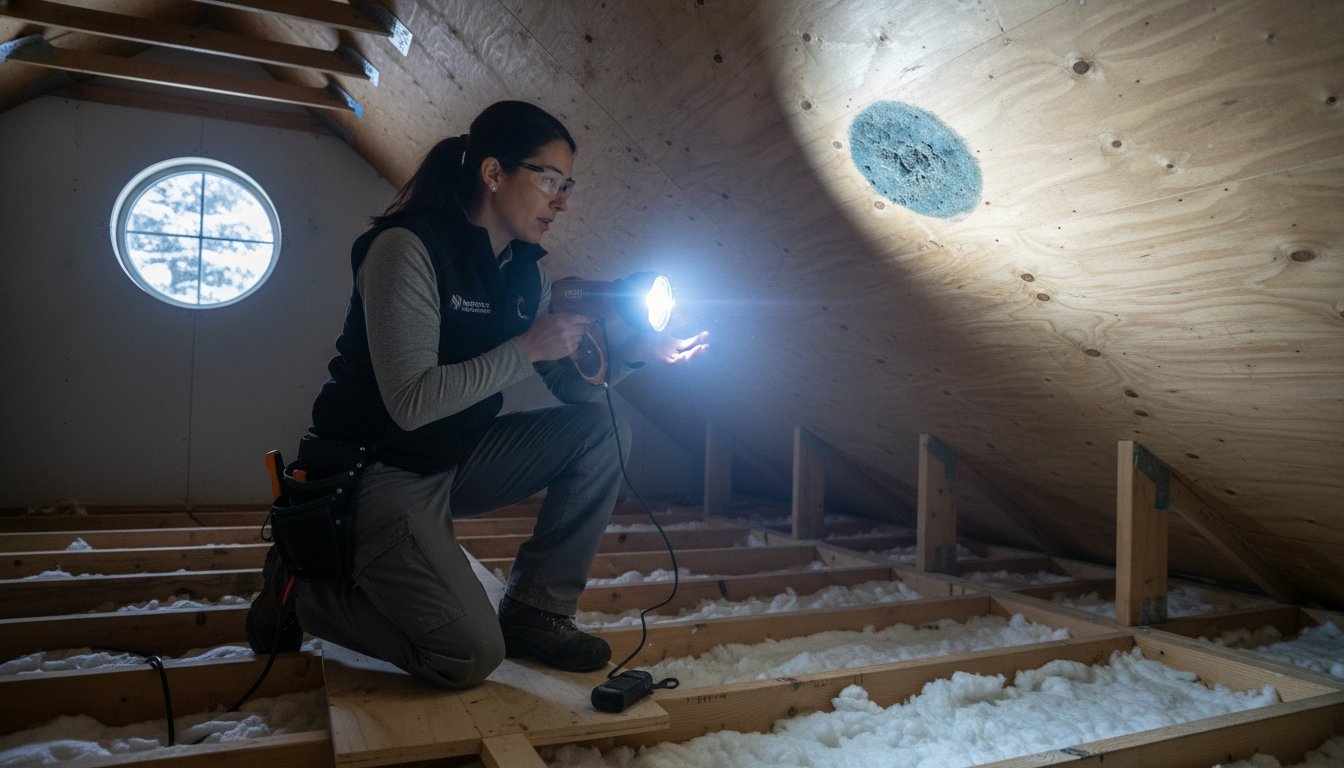
Spotting mold in an Ottawa attic often starts with a subtle change in your home's environment. You might notice dark, irregular spotting on the plywood sheathing or a strange, white fuzz creeping across the rafters. In our local climate, this often looks like a grey "frosting" that homeowners mistake for simple dust or wood aging. If you are researching mold in attic what to do Ottawa, the first step is a thorough visual assessment of the space. Look for these visual cues along the northern slopes of your roof, where less sunlight allows moisture to linger longer and condensation to form more frequently.
Beyond the eyes, your nose often detects a problem first. A persistent, musty odor in the upper hallway or near the attic hatch is a significant red flag. This scent indicates that fungal colonies are actively off-gassing. You should also check for physical signs of high humidity, such as rusted roofing nails or matted, damp insulation. These conditions suggest your attic isn't breathing correctly, which creates a perfect habitat for growth. For those seeking a comprehensive overview of indoor mold, understanding these environmental triggers is essential to protecting your property's value.
Unexplained health cues often provide the final piece of the puzzle. If family members experience persistent coughing, sneezing, or watery eyes that seem to improve when they leave the house, the attic might be the culprit. Mold spores can easily migrate into the living space through recessed lighting, plumbing stacks, or the attic hatch itself. Identifying these signs early prevents a minor moisture issue from becoming a major structural concern.
Visual Red Flags on Sheathing and Rafters
Active mold usually feels slightly velvety or slimy to the touch, whereas old water stains appear as flat, dried rings with distinct edges. In Ottawa, we frequently see "ghosting," which is actually soot or dust clinging to cold rafters due to thermal bridging. It looks like mold but isn't. A professional eye helps you distinguish these harmless marks from a structural hazard. Mold often congregates near the eaves where airflow is blocked by insulation, making these tight corners a priority for inspection.
The Role of Professional Mold Testing
DIY test kits from big-box stores often provide misleading results. They don't account for the baseline spore count already present in the air. We recommend professional air quality sampling to identify hidden colonies behind knee walls or deep within insulation. Following IICRC standards ensures the identification process is scientific and accurate. This data allows for a targeted plan rather than a generic cleaning approach. Understanding the root cause is the cornerstone of effective mold remediation and long-term prevention.
Why Ottawa Attics are Prone to Mold Growth
Ottawa's weather is notoriously hard on residential roofing systems. Our local climate features extreme temperature swings, often moving from deep freezes to sudden thaws within a single day. This volatility creates high humidity levels within enclosed spaces like your roof cavity. When homeowners ask about mold in attic what to do Ottawa weather patterns are often the primary culprit. Cold air outside meets the warm air radiating from your home's interior, causing condensation to form on the underside of your roof deck. This persistent moisture provides the ideal environment for fungal colonies to thrive.
The "Stack Effect" further complicates this issue for local property owners. Warm air naturally rises, carrying moisture from daily activities like cooking and bathing into the attic through small gaps in the ceiling or around light fixtures. If the attic hatch isn't properly sealed, this humid air becomes trapped. According to Health Canada's guide to mould, controlling this indoor moisture is the only effective way to prevent a recurring problem. Without a clear path for this air to escape, your attic becomes a biological incubator during the winter months.
Ice Dams and Winter Moisture Intrusion
Ice dams represent a specific challenge for Ottawa homes. When heat escapes through poor insulation, it melts the snow on your roof. This water runs down to the cold eaves and refreezes, creating a solid dam that forces liquid water back under your shingles. In our late winter months, this cycle of freezing and thawing is relentless; it can saturate wood sheathing in a matter of days. Identifying this water damage early is critical before mold takes root. If you suspect your roof has been compromised by winter weather, a professional attic inspection can pinpoint these entry points.
Ventilation and Insulation Failures
Many homeowners inadvertently cause mold growth by "over-insulating" their space. If you block your soffit vents with fiberglass batts, you stop the fresh air intake necessary to flush out moisture. Similarly, bathroom exhaust fans that vent directly into the attic rather than through the roof create localized "hotspots" of extreme humidity. A balanced attic temperature, which should ideally stay close to the outdoor temperature, is your best defense against rot. If you find your ventilation is lacking, consulting with an expert about mold remediation and structural upgrades can ensure your home remains dry and safe for years to come.
DIY vs. Professional Attic Mold Remediation
Many Ottawa homeowners feel a natural urge to handle home repairs themselves to save on costs. However, when you discover mold in attic what to do Ottawa experts advise is often at odds with the local hardware store's advice. The most persistent misconception is the "Bleach Myth." While household bleach is effective on non-porous surfaces like bathroom tile, it's largely ineffective on the porous wood rafters and sheathing found in your attic. Bleach contains a high percentage of water; when applied to wood, the chlorine stays on the surface while the water soaks in, potentially feeding the mold roots deeper into the grain.
Attempting a DIY cleanup also carries a high risk of cross-contamination. Agitating mold colonies without proper containment sends millions of microscopic spores into the air. These spores can quickly find their way into your HVAC system, spreading the problem to every room in your house. Professional mold remediation teams, like those at HMJ Contracting, prevent this by using specialized equipment. Following the EPA's mold remediation guidelines, experts establish containment zones and use negative air machines to ensure that disturbed spores are filtered out rather than redistributed through your living space.
Safety is another critical factor that separates professional work from DIY attempts. Standard N95 masks are often insufficient for high-concentration spore environments. Our crews utilize P100 respirators and disposable Tyvek suits to prevent skin contact and inhalation. This level of protection is essential for maintaining long-term health and ensuring the job is done right the first time. Our methodical approach reflects our commitment to craftsmanship and the long-term stability of your home.
Why Scrubbing Mold Can Make it Worse
Scrubbing or sanding moldy wood without professional-grade HEPA vacuuming and negative pressure is dangerous. This mechanical agitation triggers a "spore release" defense mechanism in many fungal species. Instead of wiping the surface clean, you end up pushing hyphae, the root-like structures of mold, deeper into the timber. Professional remediation often involves antimicrobial fogging; this penetrates the wood grain and neutralizes the fungi at a cellular level, something a simple sponge cannot achieve.
The Cost of 'Cheap' Fixes
A "cheap" fix often becomes the most expensive option over time. In the Ottawa real estate market, uncertified mold work can be a significant liability during a home inspection. If you can't provide an IICRC-certified clearance letter, potential buyers may demand a full remediation at your expense before closing. Investing in professional mold remediation provides the documentation and peace of mind needed to protect your home's resale value. It ensures the root cause is addressed, preventing the cycle of recurring growth that plagues DIY attempts.
The Professional Mold Removal Process in 2026
Professional remediation is a methodical engineering project. It begins with isolating the affected area to protect the rest of your home. When considering mold in attic what to do Ottawa residents should look for a contractor who prioritizes strict containment protocols. We start by sealing the attic hatch and any potential air bypasses with heavy-duty polyethylene sheeting. This creates a physical barrier. Then, we deploy high-efficiency particulate air (HEPA) scrubbers to establish negative air pressure. This ensures that any airborne spores are pulled into the filtration system rather than drifting into your bedrooms or living spaces.
Containment and Air Filtration
We monitor air pressure levels throughout the project to ensure 100% containment. The HEPA scrubbers run continuously, scrubbing the air and exhausting it outside. This process removes microscopic contaminants that the naked eye cannot see. It's about more than just cleaning; it's about re-engineering the environment to be safe for your family. This technical precision is what separates a professional restoration from a simple surface cleaning.
Once the environment is stable, we begin the mechanical removal of fungal growth. We use HEPA vacuuming to lift loose spores from rafters and joists. For colonies that have penetrated the wood grain, we utilize abrasive cleaning methods like wire brushing or media blasting. Our team understands mold in attic what to do Ottawa property owners need is a solution that reaches deep-seated roots that surface wiping misses. This step is vital for ensuring the mold doesn't simply grow back once the project concludes.
Safe Removal of Contaminated Materials
Insulation often acts as a sponge for spores and moisture. If the infestation is severe, we remove the contaminated material entirely. We use specialized bagging techniques to seal the waste before it leaves the attic space. This prevents cross-contamination during the removal process. We focus on cleaning the structural wood without compromising your roof's integrity. Proper disposal of these materials is a key part of our service, ensuring your home remains a clean environment.
After the physical removal, we apply EPA-registered antimicrobial sealants to all treated surfaces. These sealants provide a protective layer that inhibits future growth. The final phase is a clearance inspection to confirm the attic is safe for re-entry. We look for a clean finish where the wood looks restored and the air smells fresh. This comprehensive process restores your peace of mind and the structural integrity of your property. If you are ready to secure your home's future, schedule a professional mold remediation to start the process today.
Beyond Remediation: Restoring Your Attic with HMJ Contracting
Killing the mold is only the first phase of a successful project. To ensure a permanent solution, you must address the structural and environmental failures that allowed the growth to start. When homeowners search for mold in attic what to do Ottawa experts often point to the need for a full-service partner. Unlike "cleaning-only" crews that leave you with an empty, stripped attic, HMJ Contracting provides integrated services that bridge the gap between hazardous material removal and high-end renovations. We don't just clear the hazard; we restore the integrity of your home.
Structural damage often hides beneath years of fungal growth. If moisture has sat on your roof deck or rafters for too long, rot can compromise the load-bearing capacity of your roof. Our team handles the necessary demolition and reconstruction of these elements with the precision of seasoned builders. We focus on longevity, ensuring that every repair meets or exceeds current safety standards. This comprehensive approach protects your investment and provides the stability your family deserves. Our commitment to quality craftsmanship means we look beyond the surface to evaluate the entire attic system.
By combining our expertise in demolition and general contracting, we provide a streamlined experience that saves you the stress of managing multiple vendors. You get a single point of accountability and a result that stands up to Ottawa's toughest winters. We replace water-damaged rafters and reinforce roof sheathing that has softened over time, ensuring your home is structurally sound before the new insulation is installed. This attention to detail is what defines our professional standard.
Upgrading Attic Insulation and Ventilation
A mold-free attic requires a sophisticated balance of airflow and thermal protection. We install proper baffles to keep your soffit vents clear, ensuring fresh air circulates freely from the eaves to the ridge. By increasing your attic's R-value to meet modern Ontario building standards, we reduce the heat loss that triggers ice dams. We also meticulously seal air leaks from the living space below to neutralize the "Stack Effect." These upgrades create a dry, stable environment that resists future moisture intrusion and improves your home's energy efficiency.
Why Choose HMJ for Your Ottawa Attic Project?
With over 25 years of local experience, we understand the specific challenges Ottawa properties face. Our project management is transparent and methodical, guiding you from the initial demolition to the final finish. We take pride in our neighborly approach, treating every project as a commitment to our community's well-being. For more detailed information on our methodology, please read our comprehensive mold removal guide. Choosing a dedicated local expert ensures that when you ask about mold in attic what to do Ottawa, you receive a solution built to last and the peace of mind you expect from a professional partner.
Secure Your Home’s Structural Integrity and Air Quality
Addressing attic moisture is a vital step in maintaining your property’s value and your family's health. We've explored how identifying visual indicators early and understanding Ottawa's unique climate factors, such as ice dams, can prevent extensive damage. Choosing a professional path ensures that containment and high-efficiency filtration are handled correctly, avoiding the common pitfalls of DIY attempts. When you're deciding on mold in attic what to do Ottawa experts recommend a comprehensive approach that addresses both the fungal growth and the underlying ventilation issues.
HMJ Contracting brings over 25 years of industry experience to every project. As IICRC-certified mold remediation specialists, we provide the technical skill required for hazardous material removal while offering full-service general contracting for total restoration. We handle everything from safe disposal to structural repairs, ensuring your attic stays dry and functional for years to come. Your home is a long-term investment; let's help you protect it with precision and care.
Schedule Your Attic Mold Inspection with HMJ Contracting Today and gain the peace of mind that comes from working with a dedicated local partner.
Frequently Asked Questions
Is attic mold dangerous if I never go up there?
Yes, attic mold can impact your health even if you rarely enter the space. Spores often migrate into the living areas of your home through the "Stack Effect." Air rises from the lower levels and escapes through light fixtures, plumbing stacks, and the attic hatch, carrying microscopic contaminants with it. This migration can lower your indoor air quality and trigger respiratory issues for sensitive family members.
Can I sell my house in Ottawa if there is mold in the attic?
You can sell your home, but you must disclose the presence of mold to potential buyers. In Ontario, failing to disclose a known defect can lead to legal complications or a collapsed sale. Most buyers will insist on professional remediation before closing. Providing an IICRC-certified clearance letter from a professional contractor demonstrates that the issue was handled correctly and protects your home’s resale value.
How much does professional attic mold removal cost in Ottawa?
The cost of remediation depends on several factors, including the square footage of the attic and the severity of the growth. Projects that require full insulation removal and structural repairs will naturally be more intensive than surface treatments. Since every home is different, it's best to have a professional assessment to determine the specific scope of work. Factors like accessibility and the type of cleaning media used will also influence the final project requirements.
Will my home insurance cover attic mold remediation?
Insurance coverage typically depends on the root cause of the moisture. Most policies cover mold if it results from a "sudden and accidental" event, such as a burst pipe or a fallen tree damaging the roof. However, mold caused by gradual issues like poor ventilation, high humidity, or lack of maintenance is usually excluded. You should review your specific policy or speak with your provider to confirm your coverage details.
If you are managing a water-related emergency outside of the local area, such as in Tennessee, you can check out Mold Doctors USA for expert assistance with water damage restoration and remediation.
How long does the professional mold removal process take?
A typical residential project takes between two and five days to complete. The first day usually focuses on establishing containment and setting up negative air machines. The subsequent days involve the physical removal of contaminated materials and the cleaning of structural wood. If your project includes post-remediation renovations or insulation replacement, the timeline may extend slightly to ensure every phase meets our high standards for quality and safety.
What is the most common cause of attic mold in Ontario homes?
Inadequate ventilation combined with moisture escaping from the living space is the primary cause. In our local climate, ice dams and high humidity levels during winter create condensation on cold roof sheathing. If you are researching mold in attic what to do Ottawa weather patterns are a critical factor to consider. Fixing the airflow is essential to ensure the mold doesn't return after the initial cleaning is finished.
Should I remove all my insulation if I find mold?
Insulation replacement is often recommended because the material acts as a filter that traps spores and moisture. If the mold infestation is widespread, the insulation is likely contaminated even if it looks clean on the surface. Removing the old material allows us to clean the joists thoroughly and perform essential air sealing. This process ensures that your new insulation performs efficiently and stays dry for the long term.
How do I know if the mold is actually gone after remediation?
A professional clearance inspection is the most reliable way to confirm the project was successful. This involves a thorough visual check to ensure no staining or fungal growth remains on the wood surfaces. In many cases, we also recommend post-remediation air sampling. This test compares the spore counts in your attic to the outdoor air to verify that the environment has returned to a normal, healthy state.