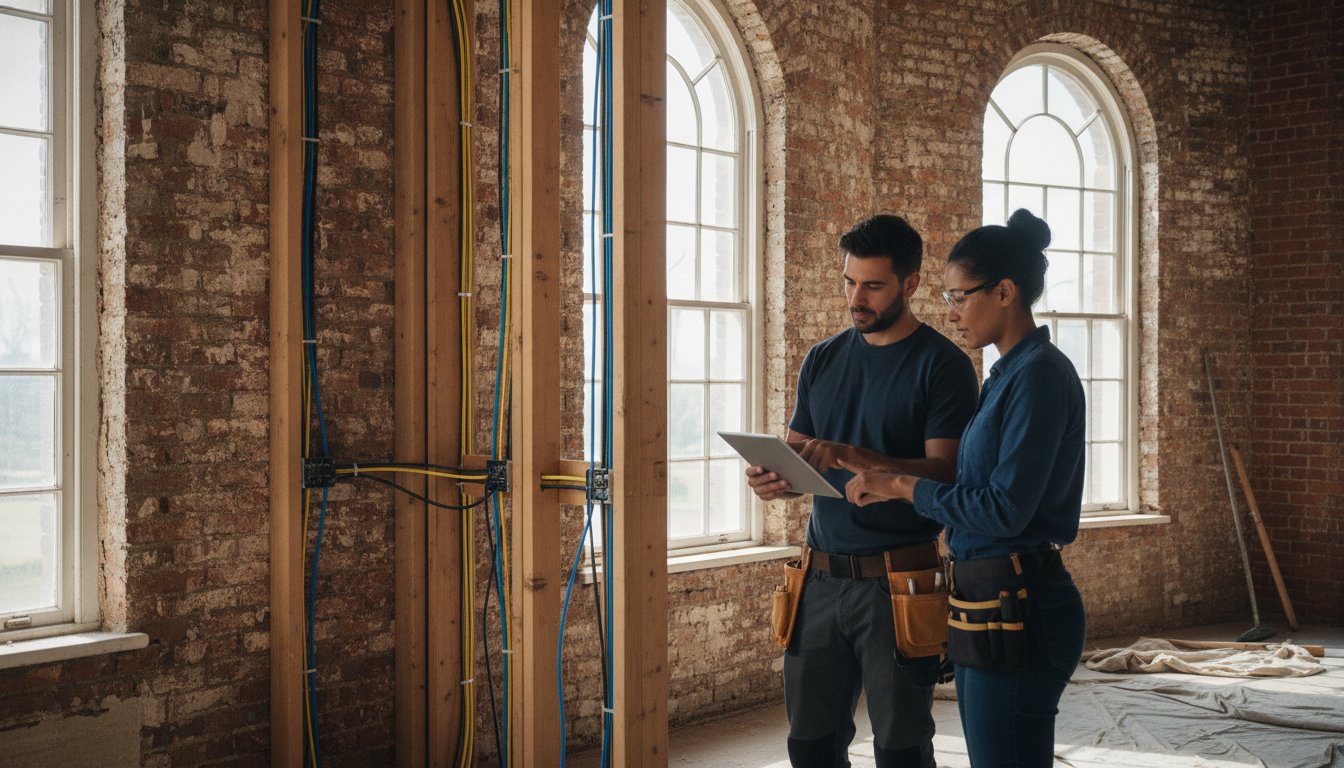

What if the most expensive part of your project isn't the designer finishes, but the hidden structural issues lurking behind your home's aging walls? Many local homeowners start their journey with a clear vision, only to face immediate "sticker shock" when they realize the complexities of local regulations. It's natural to feel uneasy about the 2026 Ontario Building Code or the potential for discovering asbestos in a pre-1990s property. This guide provides a structured renovation budget template for Ottawa homes designed to help you master your finances from the very beginning. We believe that a successful project starts with transparency and a grounded plan that accounts for every variable of the local market.
You'll learn how to categorize your expenses effectively, including critical items like City of Ottawa permit fees and the new Zoning Bylaw No. 2026-50. We'll also address the impact of the toxic substance regulations coming into force on June 30, 2026, regarding lead paint removal. We'll walk you through the essential stages of planning, from initial demolition and hazardous material testing to the final finishing touches. By the end of this article, you'll have the technical insight and local data needed to approach contractor interviews with absolute confidence and a clear path to a high-quality result.
Key Takeaways
- Learn how to adapt your financial plan for Ottawa's seasonal shifts, ensuring weather-dependent phases like deck construction or exterior work remain on track.
- Identify the essential hard and soft costs, from material procurement to City of Ottawa building permit fees, to prevent unexpected budget leaks.
- Use a specialized renovation budget template for Ottawa homes to account for local market tiers and ensure your estimates align with current 2026 labor rates.
- Understand why homeowners in older Ottawa neighborhoods must prioritize contingencies for hazardous materials like asbestos, lead paint, and mold remediation.
- Discover how itemized, transparent quotes from HMJ Contracting transition your project from a ballpark figure to a firm, professional agreement.
Why Your Renovation Budget Needs an Ottawa-Specific Framework
A renovation budget template for Ottawa homes isn't a static document you fill out once and forget. It's a proactive tool for tracking initial estimates against real-time actual costs. Many homeowners download generic spreadsheets found online, only to realize these "national average" templates fail to account for Ontario's specific labor rates and the 2026 Building Code requirements. Successful home improvement projects in the capital region require a framework that respects local economic shifts and neighborhood-specific regulations. For instance, a renovation in Rockcliffe Park or the Glebe may involve heritage rules that add layers of complexity and cost that a generic template simply won't capture.
Ottawa's seasonal climate also plays a heavy role in your financial planning. The freeze-thaw cycle dictates when you can realistically break ground on exterior projects like new decks or structural additions. Scheduling demolition or exterior work during the peak summer months often means competing for skilled labor, while winter projects might require additional line items for site heating and snow management. A local framework allows you to anticipate these fluctuations rather than reacting to them when your project is already underway.
The Reality of Ottawa's 2026 Construction Market
In 2026, the demand for skilled trades in the Ottawa area remains high. This creates a competitive environment where "ballpark" figures from previous years no longer apply. Logistics also impact your bottom line; projects in high-density urban areas like Centretown often incur a logistics premium due to restricted site access and parking for contractor vehicles. Your budget must include inflation-adjusted costs for materials and specialized services to ensure your project stays solvent from the first permit to the final inspection.
Defining Your Renovation Scope
Clarity is your best defense against budget creep. You must differentiate between "need-to-have" structural repairs and "nice-to-have" aesthetic upgrades. At HMJ Contracting, we often see projects where homeowners prioritize high-end finishes before addressing critical issues like mold remediation or outdated wiring. Grouping your project into phases helps manage cash flow; it allows you to complete essential demolition and remediation work before committing to expensive fixtures. Establishing a firm "walk-away" number before you begin interviewing contractors ensures you stay grounded when the creative vision starts to expand.
The Core Components of a Comprehensive Renovation Budget Template
Successful project management in the capital region starts with an exhaustive breakdown of every anticipated expense. A robust renovation budget template for Ottawa homes requires a granular approach to ensure that nothing slips through the cracks during the construction phase. You should view your budget as a roadmap that distinguishes between the physical materials you can see and the administrative requirements that keep your project legal and safe. By organizing your finances into specific categories, you'll gain the clarity needed to make informed decisions when selecting finishes or approving change orders.
Hard Costs vs. Soft Costs Breakdown
Hard costs are the most visible part of your investment. These include the physical materials and fixtures that define your new space, such as high-end cabinetry, hardwood flooring, and plumbing components. You must also account for specialized equipment rentals, especially for complex demolition phases or structural work. It's essential to track these items separately to monitor how material price fluctuations impact your overall bottom line.
Soft costs are the "invisible" expenses required for legal compliance and professional planning. In 2026, you must account for City of Ottawa building permit fees, which generally range from $13 to $15 per $1,000 of the declared construction value. You'll also need to budget for BCIN-certified designer costs and architectural drawings. Understanding your rights when starting home renovations is a critical part of this phase, as it ensures your contracts and permits protect your investment. These administrative fees are non-negotiable and should be finalized before any physical work begins.
Labor and Project Management Fees
Labor costs often represent the largest portion of your budget. You'll need to decide between a fixed-price contract, which provides price certainty, or a cost-plus agreement that offers more flexibility. Project management fees are a vital inclusion; they cover the professional oversight required to maintain site safety and ensure that trade-specific subcontractors meet your quality standards. Professional site clearing and demolition services are often the first labor expenses you'll encounter. Investing in skilled labor during the early stages prevents costly errors that could derail your timeline later on.
The "Hidden 15%" is a non-negotiable line item for any Ottawa property owner. We recommend setting aside at least 15% of your total project value as a contingency fund. This reserve isn't for "nice-to-have" upgrades; it's a safety net for the unexpected challenges common in Ottawa's older housing stock. Whether you discover outdated plumbing or need minor structural adjustments, having this capital ready ensures your project doesn't stall. Planning for these realities from the start allows you to maintain momentum and peace of mind throughout the renovation process.
Accounting for Ottawa's 'Hidden' Costs: Asbestos, Lead, and Demolition
Ottawa neighborhoods like Westboro, Hintonburg, and the Glebe are renowned for their architectural character. However, that historic charm often conceals hazardous materials that can derail a project. If your property was built before 1990, your renovation budget template for Ottawa homes must prioritize environmental testing. Many owners overlook this step, yet discovering asbestos mid-project often triggers immediate work stoppages and expensive remediation. Integrating these "below-the-surface" costs into your initial framework is the only way to avoid the sticker shock of unexpected hazardous material handling once the walls are opened.
Professional testing for asbestos and lead paint is a foundational step that should occur before any physical work begins. Investing in these inspections is a minor commitment compared to the health risks of asbestos. Individuals exposed to these fibers are five times more likely to develop lung cancer, making professional abatement a matter of safety and long-term liability. Additionally, damp Ottawa basements frequently require mold remediation to prevent structural decay. Ignoring these hidden issues before installing new finishes often leads to costly repairs just a few years later, effectively wasting your initial investment.
Asbestos and Lead Paint Remediation
In many local bungalows, asbestos-containing materials (ACM) are found in floor tiles, pipe insulation, and older drywall joint compounds. The process involves professional containment and certified disposal fees that must be factored into your early estimates. New regulations coming into force on June 30, 2026, also tighten the requirements for handling lead-based paint in residential settings. For a comprehensive look at these safety protocols, read our Asbestos Removal in Ottawa: The Reliable Expert’s Guide. Our team at HMJ Contracting ensures that every remediation phase meets provincial standards, providing you with a clean slate for your renovation.
Controlled Demolition and Site Prep
A successful rebuild starts with a methodical demolition phase. While DIY "demo day" might seem like a way to save money, it often leads to expensive environmental fines or damage to hidden utilities. Professional demolition involves more than just a sledgehammer; it requires a structural understanding of your home to prevent accidental collapses. Managing debris removal is another logistical challenge, especially with the narrow driveways typical of central Ottawa homes. A clean, professional site preparation phase allows subcontractors to begin their work immediately, which keeps your timeline tight and your labor costs within the planned budget.

How to Estimate Your Project Using Local Ottawa Market Tiers
Organizing your project into distinct financial tiers is the most effective way to maintain control over your investment. A renovation budget template for Ottawa homes must be flexible enough to accommodate everything from a cosmetic update in a Kanata suburb to a complex structural overhaul in the Glebe. By categorizing your goals into tiers, you can prioritize essential repairs while keeping your aesthetic desires within reach. This methodical approach ensures that your project remains financially viable from the initial demolition to the final walk-through.
- Basic/Refresh Tier: This level focuses on high-impact cosmetic changes. It typically includes professional painting, updated flooring, and mid-range lighting or plumbing fixtures. It's ideal for homeowners looking to modernize a space without moving walls or altering the footprint.
- Mid-Range/Standard Tier: This tier involves full room remodels. It often includes structural tweaks, such as opening a non-load-bearing wall, alongside custom cabinetry and upgraded finishes. In the 2026 Ottawa market, these projects often see a return on investment of 60% to 100% for kitchens and bathrooms.
- High-End/Luxury Tier: Reserved for comprehensive architectural changes. This includes premium materials like natural stone, smart home integration, and significant structural modifications. These projects require meticulous site management and specialized trade coordination.
- Exterior Tier: Specific to Ontario's climate, this tier covers custom decks and fencing. These projects must account for local frost line requirements and durable materials capable of withstanding Ottawa's significant temperature swings.
Regional Price Variations: Kanata vs. The Glebe
The age of your property heavily influences your budget tier. In central Ottawa neighborhoods like the Glebe or Westboro, homes built before the 1990s often require a "Standard" tier budget even for seemingly simple projects. This is due to the high probability of encountering outdated wiring or the need for professional asbestos removal. Additionally, renovating in high-traffic or permit-restricted zones often incurs higher logistical costs for debris removal and material delivery. For a deeper look at neighborhood-specific requirements, consult our Home Renovation Ottawa: Comprehensive 2026 Guide.
Seasonal Budget Adjustments
Timing your project is a strategic financial decision. Winter builds in Ottawa often include a "Winter Surcharge" to cover the costs of on-site heating and constant snow clearing to maintain safe access. Conversely, spring and summer see a massive spike in demand, which can limit your negotiation power with contractors. We recommend finalizing your budget and securing your materials during the off-peak season to avoid price hikes. Planning your project phases around these seasonal realities helps you maintain a steady cash flow. Start your journey with a professional partner by reviewing our Ottawa renovation planning resource to ensure your timeline and budget align perfectly.
Finalising Your Budget: Professional Estimates with HMJ Contracting
A renovation budget template for Ottawa homes serves as your initial roadmap, but it requires professional validation before you begin construction. While a template helps you organize your thoughts and set financial boundaries, it cannot replace the technical precision of a site-specific estimate. Many homeowners find themselves trapped by "ballpark" figures that fail to account for the structural realities of their property. Transitioning from a spreadsheet to a fixed-price contract is the most critical step in protecting your investment and ensuring your project reaches completion without financial strain.
At HMJ Contracting, we believe that transparency is the foundation of a successful partnership. Unlike generic estimates that use broad allowances, we provide itemized quotes that account for every structural requirement, material choice, and regulatory fee. Our team leverages over 25 years of local Ottawa experience to identify potential risks long before the first hammer swings. This proactive approach allows us to address "below-the-surface" issues like aging plumbing or structural shifts that a standard template might miss, giving you a final number you can rely on.
The HMJ Transparency Promise
Our commitment to your peace of mind starts with a rigorous assessment of hazardous materials. Given that many homes in the capital region contain legacy materials, our approach to asbestos identification and safe removal is integrated directly into your project plan. We manage project-based fees with precision, ensuring that your budget remains stable even when complex demolition or remediation is required. For more information on selecting the right partner for your project, read our guide on Hiring a General Contractor in Ottawa. We prioritize clear communication to ensure you understand every line item in your agreement.
Book Your Site Assessment
Moving from your renovation budget template for Ottawa homes to a working construction plan requires a professional site walkthrough. To prepare for your first meeting with an HMJ expert, it's helpful to have your list of "need-to-have" structural repairs and your desired aesthetic goals ready for review. We'll examine your property's specific conditions, from the foundation to the roofline, to refine your estimates into an actionable schedule. This collaborative process eliminates the guesswork and sets a high standard for the work to follow. You can contact HMJ Contracting for a reliable renovation estimate and take the first step toward a professionally managed home improvement project.
Your Path to a Successful Ottawa Renovation
Mastering your home project finances begins with a realistic framework. By utilizing a renovation budget template for Ottawa homes, you've already taken the first step toward a managed and transparent experience. You now understand the importance of accounting for local permit fees, seasonal labor shifts, and the critical need for hazardous material testing in older properties. These steps transform a complex process into a methodical journey toward a high-quality result that adds lasting value to your property.
At HMJ Contracting, we bring over 25 years of Ottawa industry experience to every project. As certified asbestos and hazardous material specialists, we prioritize your safety from the moment demolition begins. We offer fixed-price contract options to ensure you have complete peace of mind without the fear of unexpected financial surprises. Our team is ready to help you refine your goals into a precise construction plan that respects both your creative vision and your bottom line.
Get a Professional, Transparent Renovation Quote from HMJ Contracting. We look forward to helping you realize your home's full potential with unwavering integrity and professional craftsmanship.
Frequently Asked Questions
How much should I set aside for a renovation contingency fund in Ottawa?
You should set aside at least 15% of your total project value for unforeseen expenses. This reserve is essential for handling the "Hidden 15%" mentioned earlier in our guide. Older Ottawa properties frequently present structural surprises or outdated systems that require immediate attention. Having this capital ready ensures your timeline remains intact and your stress levels stay manageable throughout the construction process.
Do I need a building permit for a simple interior renovation in Ontario?
A building permit is required if you are making structural changes, altering plumbing or electrical systems, or changing the building's use. Cosmetic updates like painting or new flooring usually don't require one. However, the City of Ottawa has specific requirements for more involved projects. It's best to verify with a professional to ensure your project complies with the 2026 Ontario Building Code and local bylaws.
How does the age of my Ottawa home affect my renovation budget?
The age of your home is a primary driver of potential "hidden" costs. Properties built before the 1990s have a significantly higher probability of containing asbestos or lead paint. Your renovation budget template for Ottawa homes must account for these environmental factors from the start. Older homes also often require electrical panel upgrades or foundation repairs to meet modern safety standards and insurance requirements.
Are asbestos testing and removal usually included in a general renovation quote?
Asbestos testing and remediation are often listed as separate line items or excluded from a standard "ballpark" estimate. HMJ Contracting provides transparent, itemized quotes that identify these requirements during the initial assessment phase. Professional removal is a specialized service that requires specific containment protocols. We ensure these costs are identified early so they don't disrupt your financial planning or stall your project unexpectedly.
What is the most expensive part of a home renovation in Ottawa?
Labor and structural modifications typically represent the largest portion of your total investment. In our local market, the demand for skilled trades remains high, which influences current rates. Additionally, addressing hazardous materials or making significant architectural changes in high-density urban areas can add logistical complexity. Strategic planning helps you manage these high-value categories without compromising on the quality of your finishes or the integrity of the build.
How can I reduce my renovation costs without sacrificing quality?
Maintaining the existing layout of your plumbing and electrical systems is the most effective way to control costs. Focus your investment on structural integrity and professional remediation first, as these provide the highest long-term value. You can also manage your cash flow by phasing your project over several months. Using a detailed renovation budget template for Ottawa homes allows you to track material costs and identify where mid-range fixtures can achieve a high-end look.
Should I budget separately for demolition and junk removal?
Yes, professional demolition and site clearing should be distinct line items in your financial plan. While it's tempting to view this as a DIY task, professional services ensure that debris is handled safely and that hazardous materials are disposed of correctly. Proper junk removal keeps your site organized and accessible for subcontractors. This methodical approach prevents delays and reduces the risk of accidental damage to your home's structural components during the early stages.
How often should I update my budget template during the project?
You should update your tracking document at least once a week or after every major project phase. Comparing your actual expenses against your initial estimates allows you to adjust your spending on later stages if needed. This consistent oversight ensures that your contingency fund is used wisely and not exhausted prematurely. Regular updates provide the clarity needed to make confident decisions as your vision begins to take physical shape.