If you live in an older Ottawa home, those beautiful, deep-profile baseboards might be hiding a toxic secret that puts your family at risk. What if the very architectural details that give your home character are also the greatest threat to your children's health? Many local homeowners feel stuck between the desire to preserve heritage craftsmanship and the urgent need for safe lead paint removal from trim. It's a high-stakes decision where the safety of your pets and children depends on technical precision rather than just speed.
You likely recognize that lead exposure is a serious concern, especially as the Prohibition of Certain Toxic Substances Regulations, 2025 come into force on June 30, 2026. This guide outlines the professional standards for identifying, containing, and removing lead-based paint to protect your family and preserve your property's value. We'll walk through the specific containment protocols used by seasoned experts, explain when to strip versus when to replace, and show you how to achieve a lead-free environment without the mess you're dreading. By following established safety frameworks, you can restore your home's beauty while ensuring it remains a safe haven for years to come.
Key Takeaways
- Identify lead risks in older Ottawa neighborhoods and understand why homes built before 1990 require specialized safety protocols.
- Master the professional standards for safe lead paint removal from trim, including the use of critical barriers and negative air machines.
- Evaluate the financial and aesthetic trade-offs between stripping heritage woodwork and replacing trim during a renovation project.
- Learn how to prepare your home logistically for a remediation project by clearing soft surfaces and coordinating air monitoring with your contractor.
Understanding Lead Paint Risks in Older Ottawa Homes
Ottawa's architectural charm often hides a legacy of hazardous materials within its most beautiful features. In Canada, lead was a standard additive in paint for decades because of its durability and moisture resistance. While the maximum allowable concentration is now strictly capped at 90 mg/kg, homes built before 1960 often contain paint that is 50% lead by dry weight. If your property is in a heritage-rich area like the Glebe, Sandy Hill, or Rockcliffe Park, the likelihood of encountering lead in your original wood trim is nearly certain. Even in newer developments from the 1970s and 80s, exterior trim and some interior enamels still frequently contain lead levels that require professional intervention.
The most significant risk in these older homes isn't just the presence of the paint; it's the "friction surface" problem. Window sashes and door frames are constantly in motion. Every time you slide a window open or close a closet door, the layers of old paint grind against each other. This mechanical action creates a fine, invisible dust that settles on floors and sills. For children who crawl or pets that explore near baseboards, this dust is the primary route for lead poisoning. Understanding Lead Paint and its tendency to break down into these microscopic particles is the first step toward safe lead paint removal from trim. There is no known safe level of lead exposure, and even small amounts of inhaled dust can lead to serious health issues for expectant mothers and developing children.
How to Identify Lead Paint on Your Woodwork
Identifying lead paint often starts with a visual inspection. Look for "alligatoring," a distinct cracking pattern that resembles reptile scales. This happens as the heavy lead layers lose elasticity over time. If you see multiple layers of different colors when the paint chips, it's a sign of a long history that likely includes lead-based products. While DIY chemical test kits are available at local hardware stores, they often produce false negatives on older, encapsulated layers. At HMJ Contracting, we recommend professional XRF (X-ray fluorescence) scanning. This technology allows us to see through every layer of paint without damaging your heritage trim, providing an instant and accurate reading of lead concentrations.
The Science of Lead Dust Contamination
Lead dust is deceptively heavy but microscopic in size. When homeowners attempt safe lead paint removal from trim using standard sanding or scraping methods, they inadvertently launch these particles into the air. These toxins settle into carpets, soft furniture, and even your HVAC ductwork, where they can recirculate for months. It is vital to understand that a standard household vacuum is your worst enemy in this scenario. Most consumer vacuums don't have the specialized seals or HEPA filtration required to trap lead. Instead, they suck up the dust and blast it out the exhaust, turning a localized problem into a whole-home contamination event.
The Professional Methodology for Safe Lead Paint Abatement
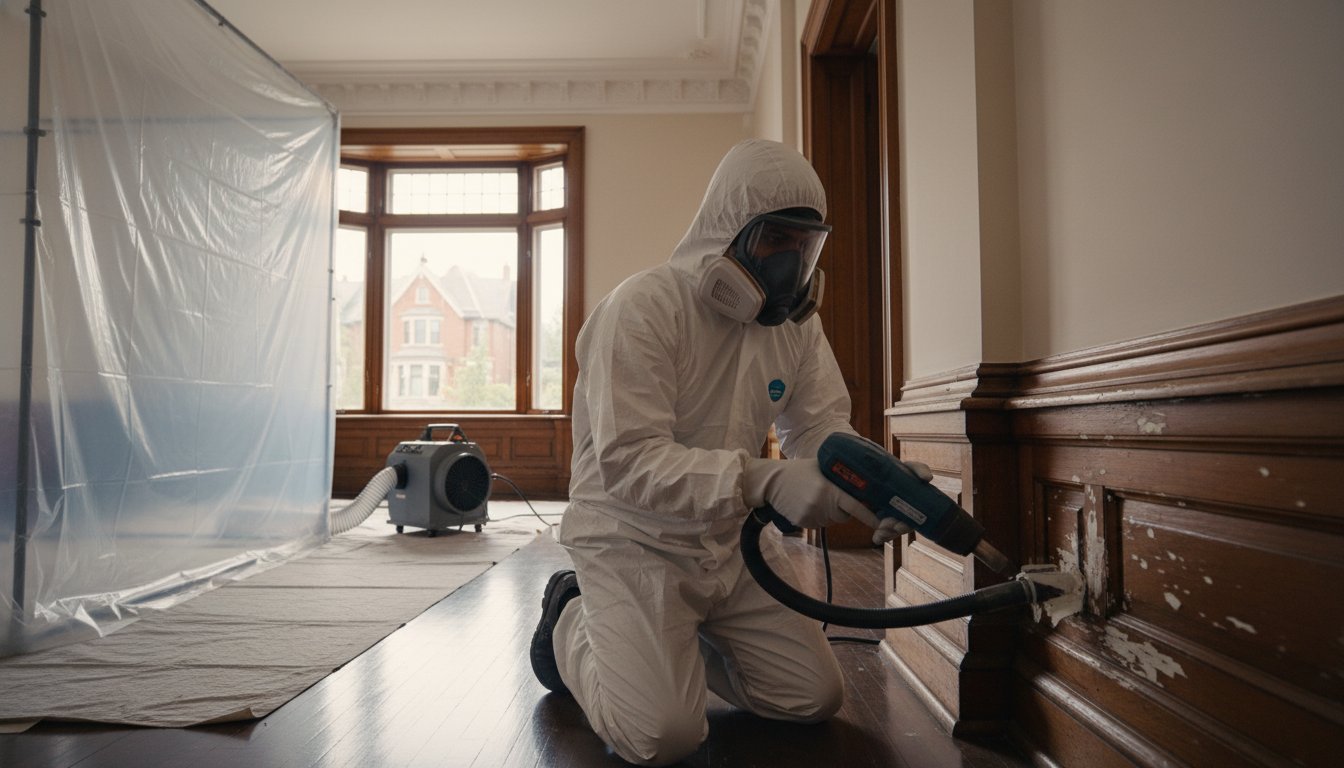
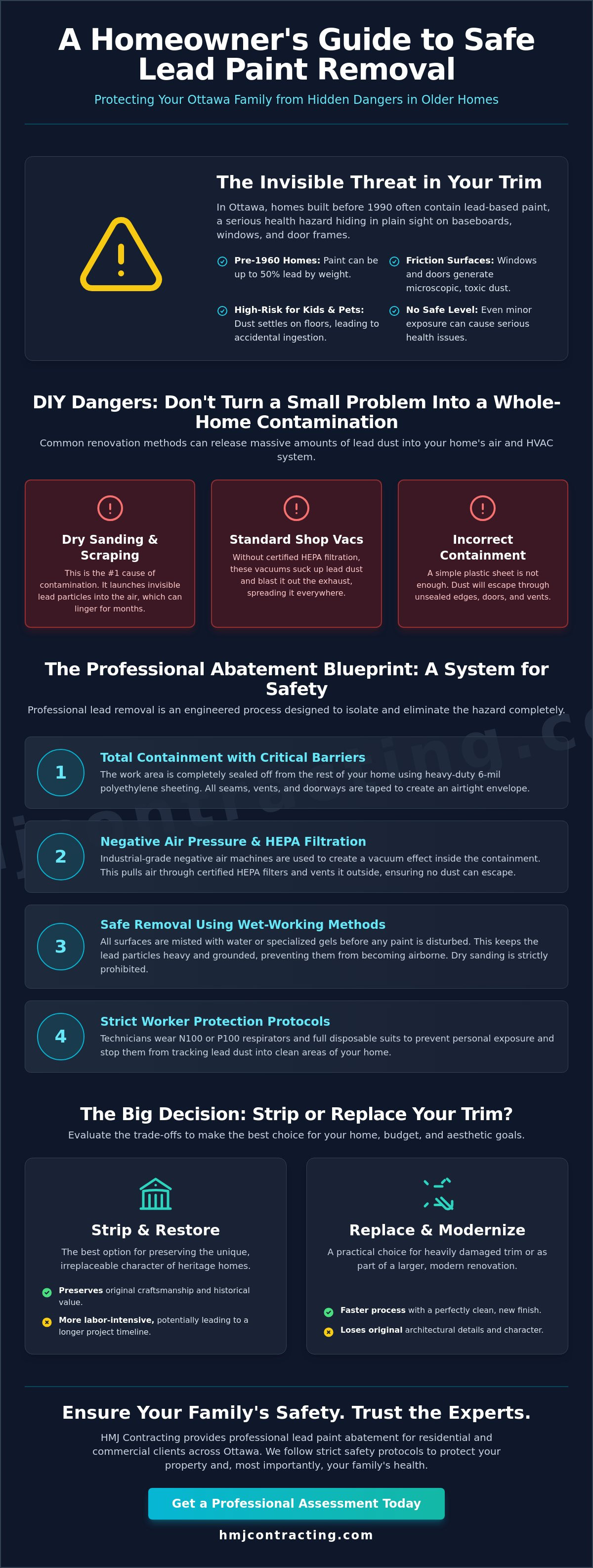
Professional lead abatement isn't just about wearing a mask. It's a systematic engineering process designed to isolate the hazard entirely. While resources for DIY lead-safe work practices offer a baseline for minor repairs, professional abatement involves much higher engineering controls to ensure zero dust migration. This starts with a "Critical Barrier." We use heavy-duty 6-mil polyethylene sheeting to seal the work area from the rest of the home. We don't just hang plastic; we tape every seam with specialized adhesives to create an airtight envelope that protects your living spaces.
To keep dust from escaping when the door opens, we utilize negative air machines. These industrial units pull air through a certified HEPA filter and vent it outside, creating a vacuum effect within the containment. This ensures that any microscopic particles generated during safe lead paint removal from trim stay within the controlled zone. Workers must wear N100 or P100 respirators and disposable suits to prevent carrying lead dust into clean areas of your house. Every movement is calculated to maintain the integrity of the seal.
Dry sanding is strictly prohibited in professional remediation. It's the fastest way to contaminate a home and saturate the air with toxins. Instead, we use wet-working techniques. By misting surfaces with water or using specialized gels, we keep the lead "heavy" and grounded. This prevents it from becoming airborne, which is the primary danger in residential environments. If you're concerned about the safety of your heritage woodwork, our team provides expert lead paint removal services tailored to the unique needs of Ottawa properties.
Containment Strategies for Interior Trim Projects
Isolating the work area requires more than a closed door. We seal every HVAC vent and gap under doors with professional-grade tape to prevent dust from entering your ventilation system. A dedicated decontamination zone acts as a transition space where workers remove protective gear before exiting. For floor protection, we employ a double-layer protocol. The first layer of plastic catches the bulk of the debris, while the second remains as a final safeguard during the deep-clean phase.
Specialized Tools: HEPA Vacuums and Chemical Strippers
A standard shop vac won't suffice for safe lead paint removal from trim. Only certified HEPA vacuums, which capture 99.97% of particles down to 0.3 microns, are used for cleanup. For the removal itself, we favor low-VOC chemical strippers or infrared heat technology. Unlike traditional high-heat torches that vaporize lead into toxic fumes, infrared tools operate at lower temperatures to soften paint safely. The "Wet-Scrape" method then allows us to remove the softened material as a paste, virtually eliminating airborne dust.
Stripping vs. Replacing: Choosing the Best Path for Your Trim
Choosing between restoration and replacement is a pivotal decision for any Ottawa homeowner facing lead-based paint. It's a balance of historic preservation and modern safety. In heritage neighborhoods like the Glebe or Rockcliffe Park, original wood trim isn't just a decorative element; it's a piece of history. However, the labor-intensive nature of stripping means that safe lead paint removal from trim through restoration requires a significant investment of time and expertise. Conversely, replacement offers a definitive end to the lead hazard. We often help clients weigh these factors based on the condition of the wood and the long-term goals for the property.
From a safety perspective, complete removal via replacement is often the cleanest long-term solution. When you remove the wood entirely, you remove the source of toxic dust forever. In cases where the trim is damaged or lacks historic significance, replacement is highly efficient. If the budget or aesthetic goals don't support full removal, professional encapsulation is an alternative. This involves sealing the lead paint behind specialized, high-solids coatings. It's a valid choice for stable surfaces, but it requires ongoing monitoring to ensure the seal remains intact over the years. It doesn't eliminate the lead, but it manages the risk effectively.
When to Restore Original Architectural Woodwork
Identifying "unreplaceable" profiles is crucial before making a final call. Old-growth wood used in Ottawa's early 20th-century homes possesses a density and grain pattern that modern MDF or finger-jointed pine simply cannot replicate. If your trim features intricate, hand-carved details or unique profiles specific to historic estates, restoration is usually the preferred path. For removable pieces like door casings or baseboards, off-site stripping in a controlled environment is an excellent option. This allows for safe lead paint removal from trim without the risks associated with on-site chemicals or heat application in your living space.
The Benefits of Complete Trim Replacement
Replacing your trim allows you to eliminate the lead source entirely. This process often integrates seamlessly into a broader home renovation Ottawa project. By choosing new materials, you can upgrade the scale of your baseboards or match the style to a modern interior design. This path significantly streamlines the project timeline. You bypass the tedious, multi-step hand-stripping process. This allows your family to return to a lead-free environment much faster, providing immediate peace of mind for parents and pet owners alike.
Preparing Your Home for a Safe Remediation Project
Preparation is the foundation of a successful abatement project. Before our team arrives, you must clear the work area of all furniture and soft surfaces. Items like curtains, rugs, and upholstered chairs act as magnets for microscopic lead particles. By removing these items, you simplify the containment process and ensure that no toxins linger in your fabrics long after the safe lead paint removal from trim is complete. If items cannot be moved, we seal them under two layers of 6-mil plastic to ensure they remain isolated from the work zone.
Effective communication with your general contractor Ottawa Ontario is essential during the planning phase. You should discuss specific air monitoring protocols to ensure the containment remains properly pressurized. This proactive approach ensures that your home’s air quality is managed throughout the remediation. Once the physical removal is finished, we utilize the "HEPA-Sandwich" cleaning technique. This involves a rigorous cycle of vacuuming with HEPA-certified equipment, wet-mopping with specialized lead detergents, and a final vacuuming pass to capture any remaining residue. This three-step process is the professional standard for removing lead dust that standard cleaning methods miss.
If you're ready to ensure your home meets the highest safety standards, book your lead paint removal project with HMJ Contracting today.
Protecting Your Family During the Process
For large-scale projects involving multiple rooms, we often suggest temporary relocation for families with young children or pets. This eliminates any risk of accidental exposure during the most active phases of remediation. Before you move back in, we perform final clearance testing. This involves using lead-dust wipes on various surfaces to verify the area is safe for re-entry. It's vital to remember that "clean to the eye" is not the same as "lead-safe." Only lab-verified samples can confirm that microscopic hazards have been fully eliminated, providing you with the peace of mind that your safe lead paint removal from trim was successful.
Navigating Waste Disposal in Ottawa
Handling lead-contaminated debris requires strict adherence to local regulations. The City of Ottawa classifies lead paint waste as hazardous, meaning it cannot go into your regular curbside collection. For instance, the city will hold a household hazardous waste collection event on June 28, 2026, at the Trail Waste Facility for residents managing small amounts of waste. For larger remediation projects, professional contractors handle the logistics of certified waste hauling and disposal. We maintain a detailed paper trail for every abatement project. This documentation is a valuable asset during future home sales, proving that your property has been professionally remediated and meets modern safety standards.
Expert Lead Remediation Services by HMJ Contracting
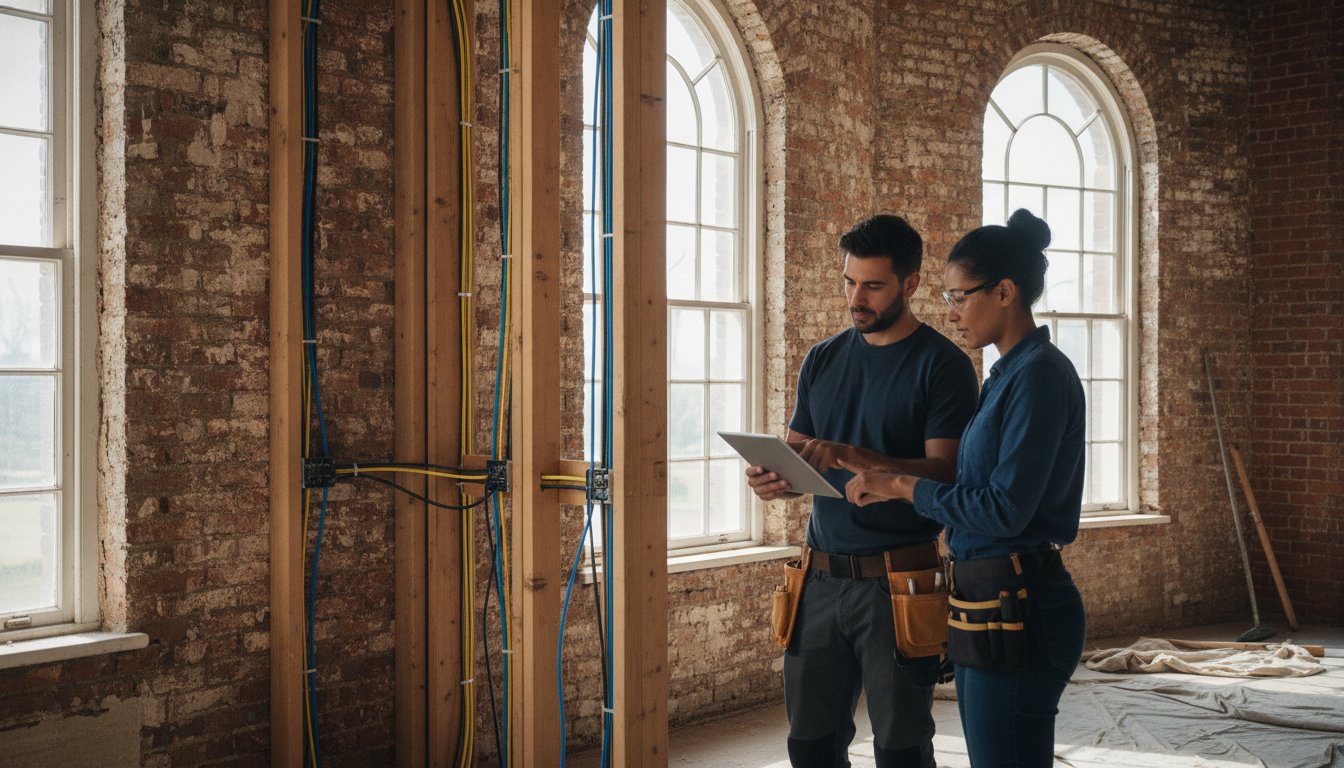
HMJ Contracting brings a 25-year history of technical excellence to every Ottawa project. We understand that lead remediation is rarely an isolated task. Often, it's discovered during a larger renovation or alongside other hazardous materials. By integrating lead safety into our broader asbestos removal Ottawa and general contracting services, we provide a streamlined experience that smaller, niche companies can't match. This comprehensive capability ensures that safety protocols are maintained from the initial deconstruction through to the final coat of paint.
Our approach to safe lead paint removal from trim centers on three pillars: professional containment, certified technicians, and transparent communication. We don't just clear the hazard; we manage the entire environment to protect your home's integrity. Having a unified team handle demolition, remediation, and finishing eliminates the risk of communication gaps between different subcontractors. It creates a safer, more efficient project timeline where every worker is held to the same high standards of craftsmanship and accountability. This means you don't have to worry about a finishing carpenter inadvertently disturbing an area that hasn't been fully cleared.
A Professional Partner for Complex Renovations
We specialize in moving from hazardous deconstruction to high-end finishing with a single point of contact. This is particularly vital for Ottawa's heritage homes in neighborhoods like Westboro or the Glebe, where preserving original woodwork requires a delicate touch and specialized tools. Our team works methodically to minimize disruption to your daily life. We treat your property with the respect it deserves, ensuring that the final result reflects the vision you have for your living space. We handle the heavy lifting and the fine details, so you don't have to manage multiple vendors.
Get a Professional Assessment for Your Project
Every home is unique, and an on-site consultation is the first step toward a lead-safe environment. We provide a transparent quoting process that clearly outlines the costs for remediation, whether you choose stripping or full trim replacement. This clarity allows you to make informed financial decisions without hidden surprises. You'll receive a clear roadmap for your project that prioritizes the health of your family and the longevity of your property. Contact HMJ Contracting today to discuss your project and gain the peace of mind that comes from working with a seasoned professional.
Securing Your Home’s Future with Professional Lead Abatement
Protecting your family from legacy toxins requires a methodical approach that balances architectural preservation with modern safety standards. You've learned how to identify the friction surface risks in heritage trim and the critical role of negative air pressure in maintaining a clean environment during remediation. Whether you choose to restore original woodwork or opt for full replacement, your project's success depends on rigorous containment and specialized equipment. Achieving safe lead paint removal from trim isn't just about aesthetics; it's about creating a permanent health sanctuary for your children and pets.
As a local, family-owned business with over 25 years of Ottawa renovation experience, we take pride in managing these complex challenges with composure. Our certified hazardous material remediation specialists ensure every phase of your project meets the highest industry standards for safety and craftsmanship.
Ensure your home is safe with professional lead remediation from HMJ Contracting. By partnering with a seasoned expert, you can confidently restore your property's beauty while ensuring it remains a healthy environment for generations to come.
Frequently Asked Questions
Is it safe to live in the house while lead paint is being removed from trim?
Living in the home is safe if the contractor establishes a sealed containment zone with heavy duty plastic and negative air machines. These engineering controls prevent dust migration into your clean living spaces. If the project involves multiple rooms or large scale demolition, temporary relocation is often the most practical choice for families with small children or pets.
Can I just sand lead paint if I wear a mask?
Sanding lead paint is never recommended because it creates invisible, toxic dust that saturates your home's air and surfaces. A standard dust mask cannot filter out microscopic lead particles. Professional safe lead paint removal from trim utilizes wet scraping or infrared heat to keep the lead grounded and prevent it from becoming airborne.
How much does professional lead paint removal cost in Ottawa?
The total cost depends on whether you choose encapsulation, enclosure, or full removal of the trim. A standard residential lead paint assessment in Ontario typically starts at $349, while larger properties requiring extensive lab analysis can cost up to $599. Labor rates for certified abatement professionals generally range from $50 to $120 per hour depending on the project's complexity.
What is the difference between lead abatement and lead encapsulation?
Lead abatement refers to the permanent removal or replacement of the hazardous material to eliminate the risk entirely. Encapsulation is a management strategy where a specialized, high solids coating is applied over the existing paint to prevent dust from escaping. While encapsulation is cost effective for stable surfaces, full abatement is the only way to achieve a truly lead free environment.
Does lead paint always need to be removed if it is in good condition?
Lead paint in good condition that isn't on a friction surface can often be left alone or encapsulated. However, trim around doors and windows is a high risk area because the constant opening and closing grinds the paint into toxic dust. Addressing these friction points is a priority for safe lead paint removal from trim even if the paint currently looks stable.
How do I dispose of lead-painted trim in Ottawa?
Lead painted debris is classified as hazardous waste and cannot be placed in your regular curbside garbage. The City of Ottawa organizes specific collection events, such as the household hazardous waste event at the Trail Waste Facility on June 28, 2026. Professional contractors manage the certified hauling and disposal of this debris as part of the remediation process.
Will removing lead paint increase my home’s value?
Remediation significantly increases marketability and value, particularly in heritage neighborhoods like the Glebe or Sandy Hill. Buyers in 2026 are increasingly sensitive to environmental hazards. Providing a professional paper trail that proves your home has been cleared of lead hazards offers immense peace of mind and simplifies the closing process during a future sale.