What if the most important tool for your deck build isn't a saw or a drill, but a simple piece of paper from City Hall? Many homeowners view the municipal office as a hurdle, but understanding the deck building permit requirements Ottawa enforces in 2026 is actually your best defense against structural failure and legal fines. It's easy to feel overwhelmed by the shift between 108 square feet and 10 square meters, but these regulations ensure your investment survives decades of Ontario winters. At HMJ Contracting, we believe a permit is a structural safety insurance policy, not just a municipal tax.
We know you'd rather be planning your first summer barbecue than worrying about property setbacks or the latest 2026 Ontario Building Code updates. This guide provides everything you need to handle the application process, from understanding the $117 minimum fee to meeting mandatory frost protection depths. You'll get a clear checklist for permit necessity and a realistic timeline for approval. This ensures your project remains safe, legal, and stress-free while adding genuine value to your property.
Key Takeaways
- Identify the three primary triggers—height, size, and attachment—that determine if your project requires municipal oversight under the 2026 regulations.
- Distinguish between the Ontario Building Code’s structural standards and City of Ottawa zoning bylaws to ensure your deck respects property setbacks.
- Navigate the deck building permit requirements Ottawa homeowners face by gathering essential documents like site plans and cross-section drawings before applying.
- Determine if your project qualifies for an exemption, such as low-profile freestanding decks under 10 square meters or simple maintenance repairs.
- Leverage professional expertise for safe demolition of old structures and meticulous design to guarantee a stress-free approval process.
Understanding Ottawa Deck Building Permit Requirements in 2026
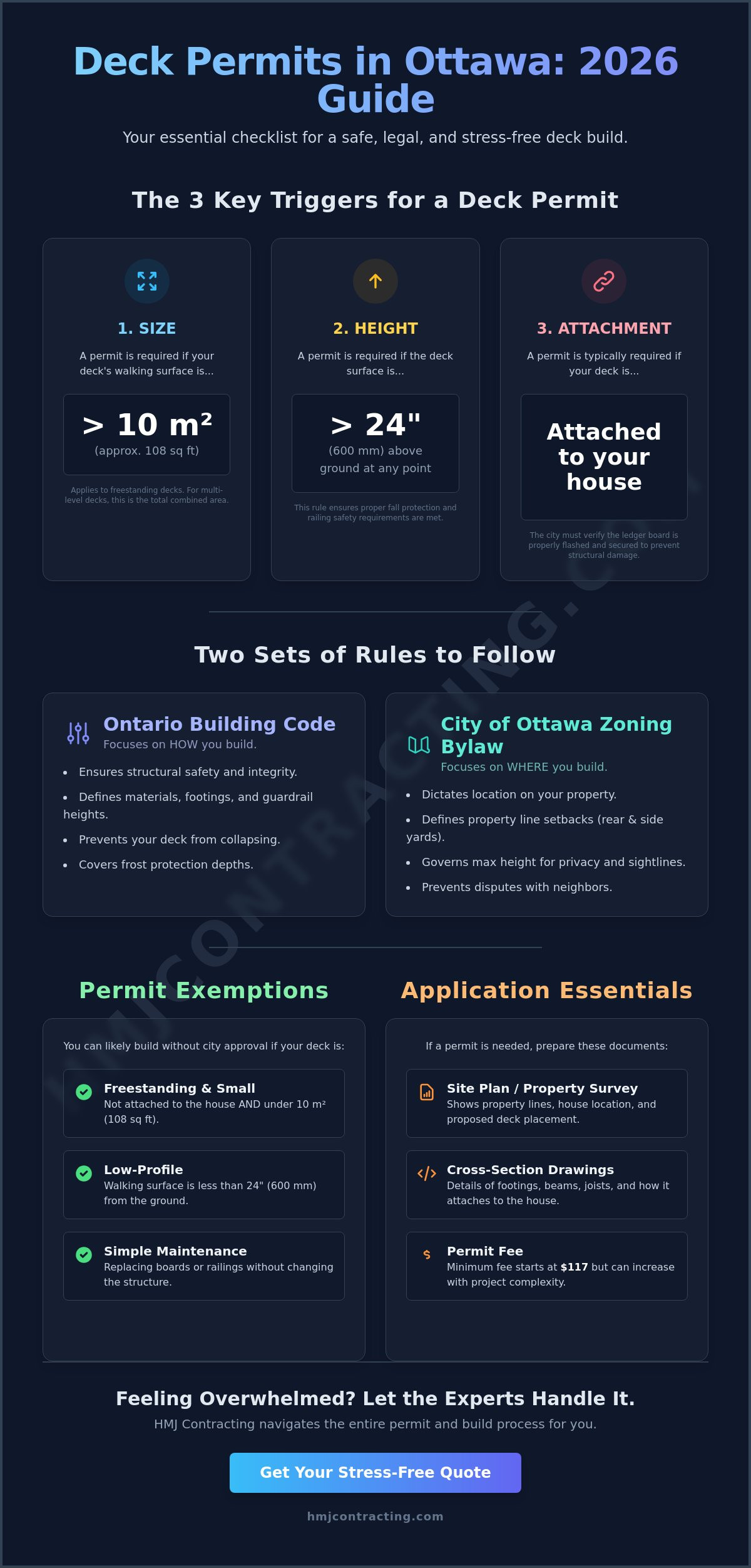
A building permit serves as your project's legal foundation. In Ottawa, this document confirms that your plans comply with the 2026 Ontario Building Code (OBC) and local zoning bylaws. Without it, you risk heavy fines, the forced removal of your deck, or complications during a future home sale. The City uses a "Three Triggers" rule to determine if your project needs oversight: size, height, and how it connects to your house.
The 2026 regulations place a heavy emphasis on structural resilience. Ottawa's climate is notoriously hard on outdoor structures because of the constant expansion and contraction of the soil. By following the deck building permit requirements Ottawa has established, you ensure your deck is built to withstand these environmental pressures. This meticulous approach to construction is exactly what HMJ Contracting provides, turning a potential liability into a lasting asset. Whether we are handling a complex renovation or a bespoke new deck, our team ensures every bolt and footing meets the highest standards.
The 108 Square Foot Rule: Measuring Your Surface Area
Size is the most common reason homeowners seek a permit. Any freestanding structure with a walking surface greater than 10 square metres, which translates to approximately 108 square feet, requires official approval. When measuring a multi-level deck, you must calculate the total combined area of all platforms. The 10sqm rule is the primary trigger for freestanding structures. It ensures that even detached backyard retreats are structurally sound and capable of supporting the intended weight loads.
Height and Attachment: Why 24 Inches is the Magic Number
Even a small deck might require a permit if it sits high off the ground or touches your home. The City of Ottawa sets the height limit at 600 mm, which is exactly 24 inches. If your deck's walking surface is more than 24 inches above the adjacent ground at any point, a permit is mandatory. This rule exists to prevent fall injuries and ensure that railings meet specific safety heights required by the 2026 code.
Attachment status is equally critical. If your deck is attached to the house, the size and height often matter less; the City wants to ensure the ledger board is properly flashed and bolted to prevent moisture damage or structural collapse. Finally, consider "principal access" decks. If your deck includes the stairs leading to your main entrance, it's considered a vital safety component of the dwelling. These decks always require a permit to ensure they provide a secure path for residents and emergency services alike.
Zoning Bylaws vs. The Ontario Building Code: Know the Difference
Many homeowners believe that meeting the structural standards of the Ontario Building Code is the only step to a legal deck. This is a common misconception. While the Code ensures your deck won't collapse, the City of Ottawa Zoning Bylaw dictates exactly where that deck can sit on your land. You might build a structurally perfect deck that still violates municipal law because it's two inches too close to your neighbor's fence. This is why your property survey is the most critical document in your file. It shows the exact boundaries and easements that govern your specific lot.
If you're unsure about your local rules, the City of Ottawa provides access to Development Information Officers (DIOs). These experts clarify how deck height restrictions change in densely populated areas like Westboro or newer developments in Kanata. In these neighborhoods, privacy and sightlines are strictly protected. A deck design that's legal in a rural part of Ottawa might be rejected in a suburban ward because it interferes with a neighbor's "right to light" or privacy. Understanding these deck building permit requirements Ottawa enforces is the only way to avoid costly teardowns later.
Property Line Setbacks and Site Plans
Setback requirements vary significantly by ward and zoning designation. Rear-yard and side-yard limits are non-negotiable. For example, townhome owners often face tighter restrictions than those with detached properties. Adding features like privacy screens or pergolas can also complicate your application. If a screen exceeds a certain height, the City may reclassify it, changing the structural requirements. Corner lots are particularly tricky because they technically have two "frontages," which can severely limit your buildable area.
Structural Standards for Safety and Longevity
The 2026 Ontario Building Code focuses on long-term safety and resilience. Footings must reach a depth of 1.2 meters to get below the frost line, preventing the "heaving" that destroys so many DIY projects. If your deck surface is 24 inches or higher, you must install guardrails that meet specific load-bearing and height standards. Joist spacing also matters; switching from traditional wood to composite lumber often requires closer support to prevent sagging. Our team at HMJ Contracting manages these technical details to ensure your vision is built to last. If you're planning a project, a professional deck consultation can help identify these structural needs early in the design phase.
Permit Exemptions: When Can You Build Without City Approval?
Not every backyard project requires a trip to the permit office. You can build a low-profile, freestanding deck without city approval if it meets two strict criteria. First, the walking surface must be less than 600 mm (24 inches) above the adjacent ground. Second, the total area must not exceed 10 square metres. These small, detached platforms are perfect for a quiet reading nook or a small bistro set. Ground-level patios made of stone or pavers also fall outside the building code, though they must still comply with your lot's maximum coverage limits.
Understanding the deck building permit requirements Ottawa mandates helps you distinguish between a new build and simple maintenance. If you're just swapping out graying cedar planks for new composite boards, you likely don't need a permit. This is considered a cosmetic repair. However, the moment you replace a structural joist, beam, or post, you've entered the territory of a structural renovation. Adhering to the deck building permit requirements Ottawa established for 2026 protects your property value during these structural updates.
The Risks of Building Unpermitted Structures
Skipping the permit process might save time today, but it often creates a financial nightmare tomorrow. City inspectors have the authority to issue work-stop orders immediately. If they can't verify the depth of your footings, they may force you to deconstruct the entire deck at your own expense. This oversight also complicates home sales; savvy buyers and home inspectors will check for open permits. A lack of permit can lead to a "Notice of Violation" on title, which effectively freezes your ability to sell or refinance until the issue is resolved. Most insurance companies will also deny claims related to injuries or damage occurring on uncertified structures.
When "Simple" Maintenance Becomes a Structural Project
It's easy to underestimate the scope of a repair. Adding a roof, pergola, or full enclosure to an existing deck always triggers a permit requirement because of the added weight and wind resistance. These additions change how the foundation performs under pressure. If your project expands beyond a simple board replacement, it's often part of a larger Home Renovation Ottawa homeowners should plan for with professional guidance. At HMJ Contracting, we help you identify these "scope creep" moments before they become legal liabilities. We ensure your maintenance stays within the rules or guide you through the structural permit process with meticulous care.
Step-by-Step: How to Apply for a Deck Permit in Ottawa
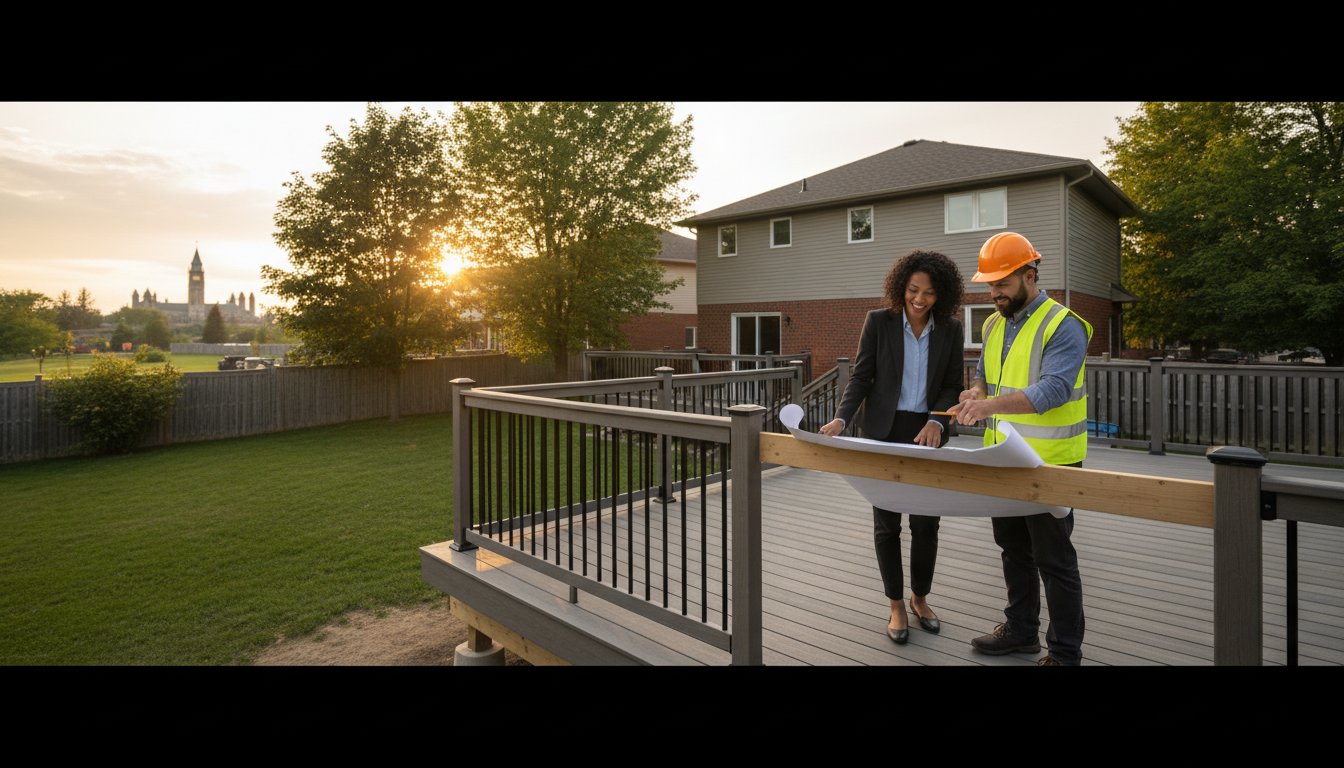
Securing a permit is a methodical process that transforms your vision into a legal reality. To meet the deck building permit requirements Ottawa enforces, you must submit what the city calls a "complete application." This isn't just a simple form; it's a comprehensive package of technical data. You'll need a site plan showing your property boundaries, a detailed floor plan, and structural cross-sections that illustrate how the deck will be built. Providing this level of detail upfront prevents delays and ensures your project starts on a solid legal foundation.
Budgeting for your permit is equally straightforward. As of January 1, 2026, the minimum fee for any building permit in Ottawa is $117.00. For most deck construction and renovations, the fee is calculated at a rate of $12.75 per $1,000 of the project’s assessed value. If your new deck adds significantly to the gross floor area of a detached or semi-detached home, the city applies a rate of $12.52 per square meter. These fees cover the cost of professional review and the mandatory inspections required to certify your build.
Timing is everything in the Ottawa construction season. While the city aims for a five-day initial review, peak spring and summer months often see these timelines extend. Once your permit is issued, you must schedule three critical inspections. First, the inspector must see the footings before you pour concrete. Second, they'll check the framing and structural connections before you install the deck boards. Finally, a walkthrough ensures everything meets the 2026 safety standards. Missing any of these stages can result in orders to uncover or dismantle your work.
Navigating the Ottawa e-Permitting Portal
The My ServiceOttawa portal is the primary tool for modern applications. You'll need to create a secure account to upload your digital drawings. The city requires these files in PDF format, and they must be clear, scaled, and legible. Using the portal allows you to track your application status in real-time. If the city requires "Additional Information," you'll receive a notification through the dashboard. Responding quickly to these requests is the best way to keep your project on schedule.
Preparing Your Structural Drawings
Your drawings must be precise. The city specifically looks for cross-sections that detail post-to-beam connections and footing depths. If your design is complex or involves non-traditional materials, you may need a designer with a Building Code Identification Number (BCIN) or a professional engineer to sign off on the plans. This level of technical oversight guarantees that your deck is safe for your family and guests. For many homeowners, hiring a general contractor in Ottawa is the most reliable way to ensure these technical documents are perfect from the first submission. At HMJ Contracting, we handle the technical heavy lifting so you can focus on enjoying your new outdoor space.
Don't let the paperwork stall your summer plans. Connect with HMJ Contracting today to discuss your deck project and let our experts manage the permit process for you.
Designing Your Stress-Free Outdoor Space with HMJ Contracting
Building a deck in Ottawa shouldn't feel like a legal battle. Our team at HMJ Contracting transforms the complex deck building permit requirements Ottawa mandates into a streamlined, predictable process. We believe that professional craftsmanship starts long before the first board is cut. It begins with a technical understanding of the 2026 Ontario Building Code and a commitment to meticulous planning. By acting as your proactive partner, we handle the logistical heavy lifting, ensuring your vision is built on a foundation of stability and integrity.
Choosing the right materials is the next step in creating a space that lasts for generations. Ottawa’s climate demands resilience. While pressure-treated lumber offers a classic look and reliable value, many homeowners now opt for bespoke composite decking. These modern materials resist the warping and rot often caused by our intense freeze-thaw cycles. Regardless of your choice, our focus remains on "Quality Without Compromise." We prioritize structural framing that exceeds minimum standards, providing you with a transformative outdoor living area that increases your property's value and your peace of mind.
For homeowners looking to understand how professional restoration and structural outdoor construction can enhance their property's value, read more about these specialized services.
Safe Demolition and Site Preparation
Many new projects begin with the removal of an old, unsafe structure. This phase is critical. Removing an aging deck requires careful deconstruction to protect your home’s foundation and siding. We don't just tear things down; we perform surgical removals that prepare the site for its next chapter. HMJ Contracting provides specialized demolition services for hazardous or deteriorating decks, ensuring all debris is cleared responsibly. Proper site preparation also includes grading the ground to prevent future shifting. This methodical approach ensures your new deck remains level and secure for decades.
From Permit to Final Walkthrough: The HMJ Process
Our end-to-end service model is designed to be entirely stress-free. We manage every city inspection, from the initial footing review to the final structural walkthrough. This ensures your project never stalls due to paperwork errors or missed appointments. We also specialize in making sure your new outdoor space integrates seamlessly with any existing home renovation. This holistic view of your property ensures the deck feels like a natural extension of your home rather than an afterthought. If you are looking for design inspiration, our Expert Deck Builders in Ottawa can help you envision a custom layout that fits your lifestyle perfectly. We stand behind our work with a professional handshake and a commitment to excellence that speaks for itself.
Secure Your Investment with Professional Expertise
Your backyard transformation shouldn't be stalled by red tape or technical confusion. By understanding the deck building permit requirements Ottawa has established for 2026, you've already taken the most important step toward a safe and legal structure. Compliance is more than just a municipal hurdle; it's the key to protecting your property value and ensuring your family's safety for years to come.
At HMJ Contracting, we bring over 25 years of local experience to every project. Our team provides BCIN-compliant designs and certified installers who understand every nuance of the current building code. We offer a full-service experience that handles everything from the initial site plan to the final municipal inspection. This end-to-end management removes the stress from your shoulders and places your home in capable, professional hands.
Start your stress-free deck project with HMJ Contracting today. Let's work together to bring your vision to life with quality that lasts for generations. Your dream deck is within reach, and we're ready to help you build it right.
Frequently Asked Questions
Do I need a permit for a deck that is not attached to my house in Ottawa?
Yes, you need a permit if the freestanding deck is larger than 10 square metres and sits more than 600 mm above the ground. If the deck stays below both of these thresholds, it's generally exempt from the application process. However, any deck that provides the principal access to your home requires a permit regardless of its size or whether it's attached to the house.
How much does a deck permit cost in Ottawa for 2026?
The minimum fee for a building permit is $117.00 as of January 1, 2026. For most residential deck projects, the city calculates the cost at $12.75 for every $1,000 of the project’s assessed value. If your deck adds to the gross floor area of a detached or semi-detached home, the fee is $12.52 per square metre instead of the value-based rate.
Can I build a deck myself, or do I need a licensed contractor?
You're legally allowed to build a deck on your own property in Ontario without a license. You must still comply with all deck building permit requirements Ottawa enforces and pass all mandatory inspections. For complex designs, many homeowners partner with HMJ Contracting to ensure their structural plans meet the 2026 standards and pass the city's review on the first attempt.
What happens if I built a deck without a permit and want to sell my house?
An unpermitted deck often causes significant delays during the home sale process. Buyers or home inspectors may identify the lack of a permit, leading to a "Notice of Violation" on your property title. You might have to apply for a retroactive permit, which often requires uncovering footings or dismantling sections of the deck so an inspector can verify the work meets current safety codes.
How long does it take the City of Ottawa to issue a deck permit?
The City of Ottawa typically targets an initial review within five business days for standard residential applications. During the peak spring and summer construction months, this timeline often extends because of the high volume of requests. Submitting a complete digital application through the My ServiceOttawa portal is the most effective way to avoid unnecessary back-and-forth and keep your project on schedule.
Do I need a permit to replace the boards on my existing deck?
You don't need a permit for basic cosmetic maintenance like replacing deck boards, railings, or stairs. These are considered repairs that don't alter the structural footprint of the deck. If you decide to replace the underlying joists, beams, or foundation posts, the city classifies the work as a structural renovation. These changes always require a permit to ensure the new frame is safe and stable.
What is the maximum height a deck can be without a railing in Ontario?
A deck surface can be no more than 600 mm above the adjacent ground to be built without a railing. Once the walking surface reaches 600 mm or higher, the 2026 Ontario Building Code makes guardrails mandatory. For decks under 1,800 mm above grade, the railing must be at least 900 mm high; decks higher than that require a minimum railing height of 1,070 mm.
Does a floating deck require a permit in Ottawa?
A floating deck only requires a permit if it exceeds 10 square metres in area and sits more than 600 mm above the ground. If your floating deck is smaller than 108 square feet and remains low to the grade, it's typically exempt from the building permit process. You must still ensure the structure respects your property’s zoning setbacks and doesn't exceed the maximum allowed lot coverage.