Will your backyard oasis survive the next ten Ottawa winters, or is it destined to become a slanted liability? Most homeowners in the capital region understand that a solid foundation is vital, yet the complexity of deck footing requirements Ontario can feel overwhelming. Between the physical exhaustion of digging to the required 1.2 meter depth and the maze of municipal bylaws, it's easy to feel stuck before the first board is even laid.
At HMJ Contracting, we believe that structural integrity is the foundation of every successful renovation. You deserve an outdoor space that remains perfectly level for over 25 years, regardless of how deep the frost bites. This guide clarifies the technical requirements of the 2024 Ontario Building Code and the recent April 2026 amendments. We will examine the differences between traditional sonotubes and helical piles, ensuring your project meets City of Ottawa standards for a seamless permit approval process.
Key Takeaways
- Understand why the 2024 Ontario Building Code mandates a 1.2-meter minimum depth to protect your structure from the damaging effects of frost heave.
- Master the technical calculations for "tributary area" to ensure your deck footing requirements Ontario are met with the correct footing diameter.
- Compare the structural benefits of traditional concrete sonotubes against modern helical piles to choose the most efficient foundation for your soil type.
- Navigate the City of Ottawa’s permit application process with a clear checklist of required site plans and structural documentation.
- Learn how professional oversight addresses complex site challenges like high water tables to protect your long-term investment in your home.
Understanding the Ontario Building Code (OBC) for Deck Footings
A deck footing is more than just a block of concrete; it's the critical structural component that transfers the entire weight of your deck safely into the ground. Without a properly engineered foundation, the soil cannot support the weight of the structure, furniture, and guests, eventually leading to sinking or shifting. The deck footing requirements Ontario enforces through the 2024 Building Code, including the April 2026 amendments, are designed to ensure that your outdoor living space remains stable regardless of soil conditions or weather extremes.
The 4-Foot Rule: Why Frost Depth Matters in Ontario
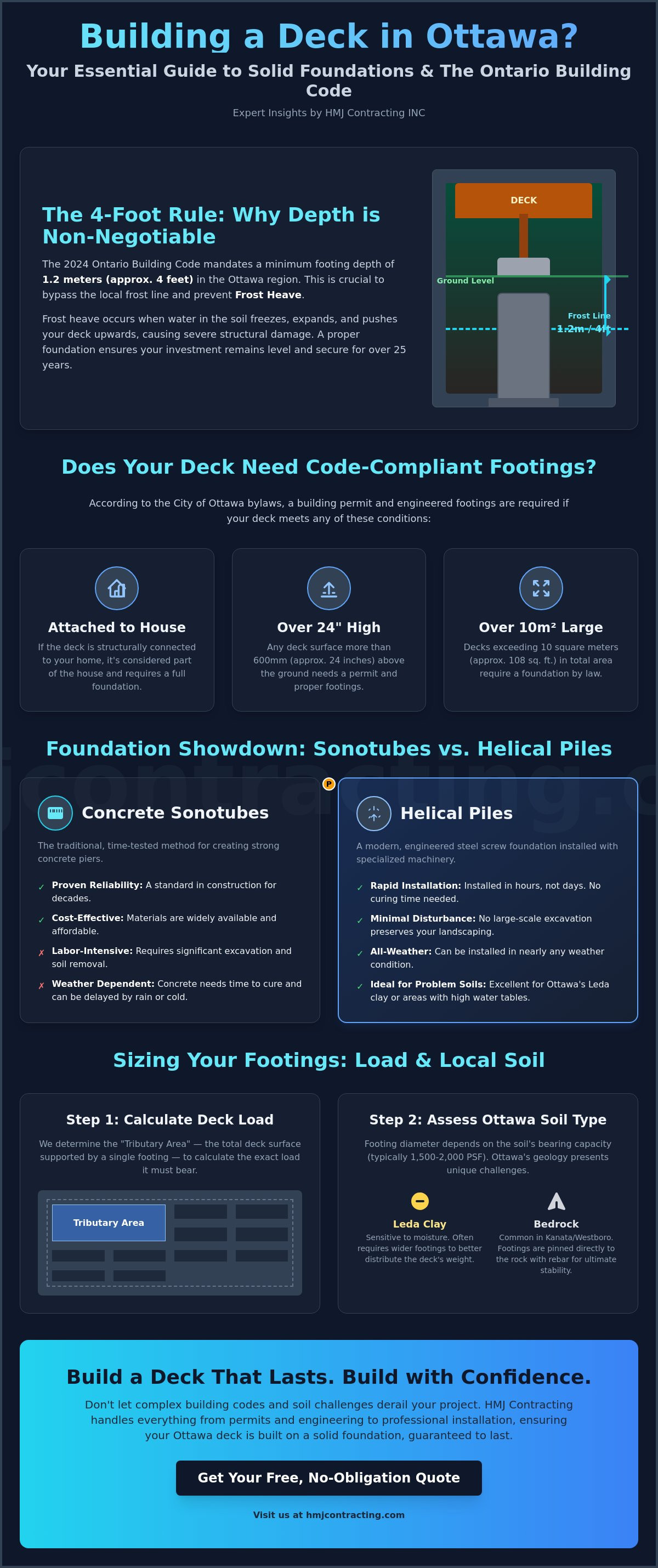
In Ottawa, the primary threat to any foundation is the relentless freeze-thaw cycle. The Ontario Building Code mandates a minimum footing depth of 1.2 meters, or roughly 4 feet, to reach below the local frost line. This depth is essential for Understanding Frost Heave, a process where water in the soil freezes and expands, physically lifting the structure. If a footing is too shallow, this upward pressure can easily rip a deck’s ledger board away from your home's siding, causing severe structural damage. While some small, non-attached structures might utilize floating deck blocks, these are rarely suitable for permanent additions intended to last for decades.
Legal Definitions: When a Footing Becomes Mandatory
Not every platform requires a deep foundation, but the law is clear on when permanent footings become a necessity. If your deck is attached to the house, higher than 600mm (24 inches) above the ground, or exceeds a total area of 10 square meters, a building permit and code-compliant footings are required. The distinction between an attached deck and a free-standing one is vital. Attached decks are considered part of the home's structural system and must be anchored below the frost line to prevent differential movement between the house and the deck.
Because of the unique clay and soil compositions found throughout the Ottawa Valley, HMJ Contracting recommends frost-protected footings for all permanent outdoor structures. Even when the code allows for minor exceptions, a deeper foundation provides the peace of mind that your investment will remain level and secure through every seasonal shift. By adhering to these rigorous standards, you protect your property value and ensure your deck remains a safe place for family gatherings for 25 years or more.
Sizing Your Footings: Soil Bearing Capacity and Load Distribution
Calculating the correct size for your foundation is a balance of physics and local geography. To determine how much weight each post carries, you must calculate the tributary area. This is the square footage of the deck surface that rests on a specific post. Typically, you calculate this by taking half the distance between posts and multiplying it by the joist span. Once you know the load, you can ensure your deck footing requirements Ontario are met by matching that weight to the diameter of your footing.
Engineering a foundation that is too small leads to sinking; however, building one that is excessively large creates unnecessary labor and material costs. Precision is key. By understanding the specific weight-bearing limits of your backyard, you can build with confidence while keeping your project efficient. When you are navigating the permit and inspection process, the City of Ottawa will require these calculations to be clearly documented on your site plans to prove the structure is safe for its intended use.
Ottawa Soil Profiles: Dealing with Clay and Bedrock
The ground in the Ottawa region presents unique challenges, specifically Leda clay. This "quick clay" is highly sensitive to moisture changes and can lose its structural integrity during heavy spring thaws. If your property sits on this type of soil, you may need to increase the diameter of your footings to spread the load over a wider area. In contrast, many Westboro or Kanata homeowners may hit solid bedrock well before reaching the 1.2-meter mark. In these cases, the code allows you to "pin" the footing directly to the rock using rebar, provided the rock is cleaned and inspected. Adding a base of crushed stone can also improve drainage, preventing water from pooling around the bottom of the concrete and compromising stability.
Calculating Footing Diameter Based on Deck Load
Soil bearing capacity is the maximum pressure, measured in pounds per square foot (PSF), that the earth can support without excessive settlement. Most residential soils in Ontario are rated between 1,500 and 2,000 PSF, though clay can be significantly lower. For a standard residential deck, you will likely choose between three common sonotube sizes:
- 8-inch tubes: Suitable for small, low-profile decks with short spans.
- 10-inch tubes: The versatile choice for most average-sized backyard renovations.
- 12-inch tubes: Necessary for heavy loads, such as decks supporting hot tubs or those built on softer soils.
If you find these technical calculations daunting, consulting a professional for an expert deck installation ensures your foundation is sized perfectly for your specific lot.
Footing Material Standards: Concrete vs. Helical Piles
Choosing the right material for your foundation is a pivotal decision that impacts both your project timeline and the long-term stability of your structure. While traditional concrete remains a staple, the 2024 Ontario Building Code and recent 2026 updates have fully embraced modern alternatives. Meeting the deck footing requirements Ontario mandates now involves weighing the benefits of site-mixed concrete against the precision of engineered steel. Each method offers distinct advantages depending on your specific lot, your budget, and your commitment to environmental sustainability.
The 2026 building landscape also places a higher premium on reducing the carbon footprint of residential renovations. Traditional concrete production is carbon-intensive; however, using bell-shaped footing forms like "Bigfoot" can optimize material use by providing a wider base with less total concrete volume. These forms are engineered to distribute weight over a larger surface area, which is vital in softer soils. Alternatively, helical piles offer a lower-impact solution by avoiding large-scale excavation and utilizing recyclable steel. Choosing the right path requires an understanding of how these materials behave in Ottawa’s diverse soil profiles.
The Traditional Sonotube Method
Poured-in-place concrete footings using sonotubes are the time-tested standard for most Ottawa decks. Success with this method depends on proper execution. We recommend using rebar for structural reinforcement, especially for larger footings or those supporting heavy loads. It's essential to mix concrete to the correct consistency to avoid air pockets that can weaken the pier. In our unpredictable climate, you must also account for curing times. Concrete typically requires several days to reach full strength before you can begin framing. If you’re building during a wet Ottawa spring, protecting the pour from excess moisture is critical for a high-quality finish.
Helical Piles: The Modern Ottawa Alternative
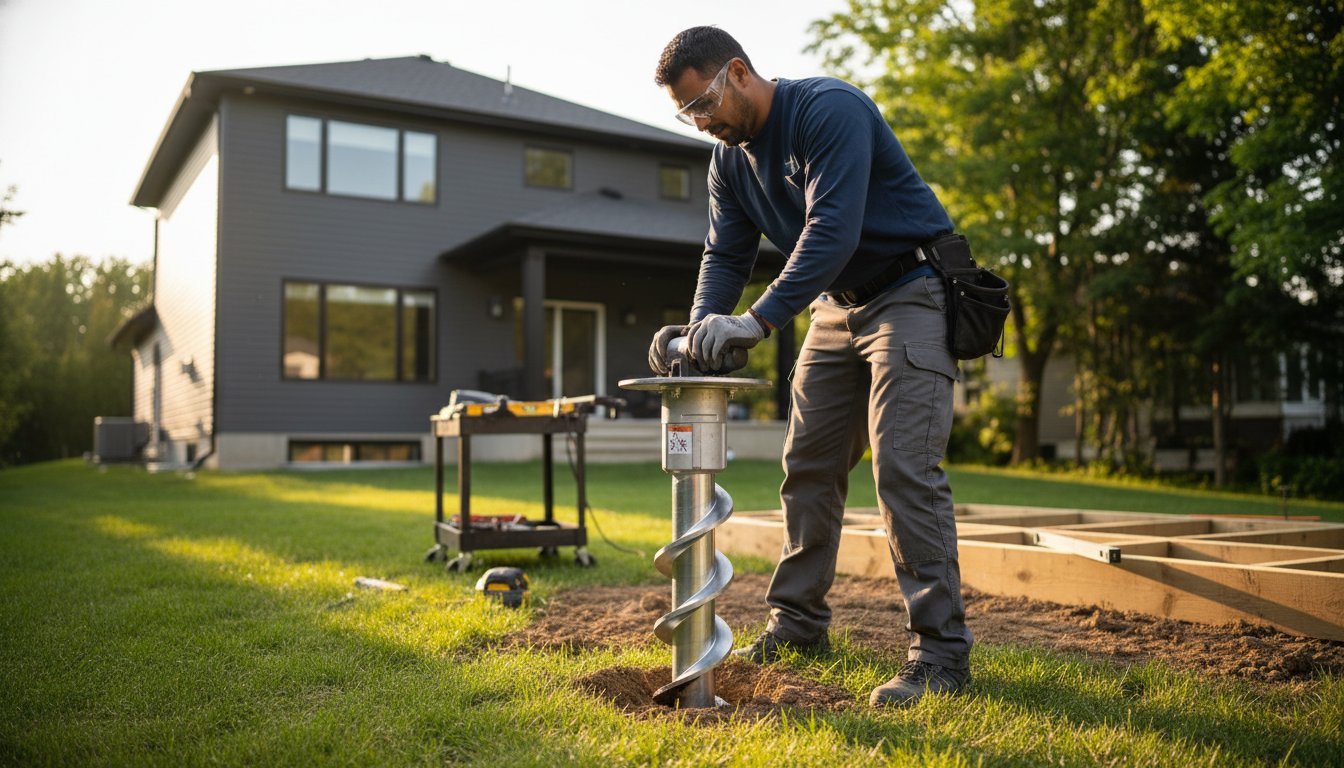
Helical piles, or screw piles, have become a preferred choice for homeowners looking for efficiency and minimal yard disruption. These steel shafts are mechanically screwed into the ground until they reach the required torque, indicating they've hit soil with sufficient bearing capacity. One of the greatest benefits is their immediate load-bearing capability. There's no waiting for concrete to dry; you can start building your deck the same day the piles are installed. They're ideal for tight spaces where a mini-excavator can't reach or for projects near established trees where you want to avoid damaging root systems. At HMJ Contracting, we often suggest this method for clients who want to fast-track their deck renovation without sacrificing structural integrity. Ensure your helical pile installer is certified and provides an engineering report to satisfy municipal inspectors.
Navigating the Permit and Inspection Process in Ottawa
Securing a building permit is the first step toward a legal and safe outdoor project. In Ottawa, you must obtain a permit for any deck that is attached to your home, sits more than 24 inches above grade, or exceeds 10 square meters in size. The application process requires submitting detailed structural plans that prove your design meets the deck footing requirements Ontario mandates for residential safety. This process ensures your investment is protected and that the structure won't pose a risk to future property owners.
The City of Ottawa typically requires a minimum permit fee of $117, though most deck projects range between $200 and $500 based on the assessed construction value. Once your application is approved, the most critical phase begins: the footing inspection. You must schedule this inspection after the holes are dug but before any concrete is poured. This allows the official to verify the depth and the quality of the soil. If you're building on Leda clay, the inspector will check that the base is stable and free of organic debris to prevent future shifting.
Preparing Your Technical Drawings
Your technical drawings must be clear and precise to pass the initial review. Inspectors look specifically for the post-to-footing connection details. You need to show how the wood posts will be secured to the concrete piers to resist uplift and lateral movement. We recommend specifying adjustable post saddles in your plans. These brackets allow for minor height corrections during the framing process, ensuring a perfectly level deck surface. For more insights on local zoning bylaws and setback rules, you can visit the HMJ Contracting blog.
The Day of Inspection: What to Expect
Preparation is the difference between a pass and a costly delay. Ensure your footing holes are completely clean of loose soil, debris, and standing water before the inspector arrives. They will use a measuring tape to confirm you've reached the mandatory 1.2-meter frost depth. A common strategy for efficiency is the "pour-on-inspection" approach. By having your concrete or mixer ready on-site, you can pour the footings immediately after the inspector gives the verbal go-ahead. This prevents the holes from collapsing or filling with water if an Ottawa rainstorm arrives. If you prefer to have a professional manage the technical details and municipal paperwork, hiring an expert for your deck renovation ensures the project stays on schedule and meets every code requirement.
Why Professional Installation is a Long-Term Investment
Investing in a professional foundation is a strategy for long-term risk mitigation. A deck that begins to sink or heave after just five years isn't just an aesthetic problem; it's a structural liability that can damage your home's exterior. The hidden costs of jacking up settled piers or repairing a ledger board often exceed the initial price of the build. Professional installers understand that deck footing requirements Ontario serves as the absolute minimum standard for safety. We proactively manage complex site issues like high water tables, which can turn a standard excavation into an unstable mess without specialized pumping equipment and soil stabilization techniques.
As you consider HMJ Contracting for your project, you're choosing a partner who prioritizes structural integrity. We act as a steady guide through the technical nuances of Ottawa renovations, ensuring your outdoor space is built on a foundation of quiet confidence and technical skill. This commitment to quality protects your financial investment and your family's peace of mind.
Precision Craftsmanship from the Ground Up
Our team utilizes laser leveling technology to ensure every footing is perfectly aligned within millimeters. This precision prevents uneven weight distribution, which is the leading cause of structural stress and wood fatigue over time. If your project involves removing an existing structure, we also handle the extraction of old footings. It's not uncommon for older foundations to contain contaminants or hazardous materials from previous construction eras. We provide the expertise needed for safe remediation, ensuring your property remains healthy. With 25 years of local construction experience, we've mastered the unique challenges of Ottawa’s geography, from the dense clays of Orleans to the rocky terrain of Kanata.
Next Steps for Your Ottawa Deck Project
Once your footings are inspected and cured, the focus shifts to framing and finishing. A perfectly level foundation makes the subsequent phases of construction significantly more efficient. Many homeowners choose to synchronize their deck build with larger home renovations, such as updating exterior doors or siding. Integrating these projects ensures a cohesive look and a simplified experience for the property owner. We invite you to request a professional consultation to discuss your vision. A well-managed project starts with a clear plan and ends with a structure that stands as a testament to unwavering quality.
Securing Your Outdoor Investment for the Decades Ahead
Building a lasting deck in the Ottawa Valley requires a deep understanding of local geography and strict adherence to the 2024 Ontario Building Code. By prioritizing the mandatory 1.2-meter frost depth and selecting the right foundation materials for your specific lot, you ensure your project remains stable for the long term. Navigating deck footing requirements Ontario doesn't have to be a source of stress when you have a clear roadmap for permits and soil management.
At HMJ Contracting, we bring over 25 years of local construction experience to every project. We are specialists in managing Ottawa-specific soil and climate challenges, providing certified installers and a structural warranty that protects your investment. Our team handles the technical complexities so you can focus on the creative vision for your outdoor living space. We take pride in building structures that stand the test of time and weather.
Build your dream deck with Ottawa's trusted experts at HMJ Contracting. We look forward to helping you create a safe, beautiful space where your family can gather for years to come.
Frequently Asked Questions
Do I need footings for a floating deck in Ontario?
Floating decks under 10 square meters (108 sq ft) that are not attached to a house and sit less than 600mm (24 inches) above grade often don't require permanent footings. In these specific cases, you can use deck blocks placed on a prepared gravel base. However, if your design includes a roof, a pergola, or is anchored to your home, the building code requires frost-protected foundations to ensure the structure remains safe and level.
How deep should deck footings be in Ottawa to avoid frost heave?
Deck footings in the Ottawa region must reach a minimum depth of 1.2 meters (4 feet) to bypass the frost line. This specific depth is a critical part of deck footing requirements Ontario because it prevents the ground from physically lifting the structure during the winter. Reaching this depth ensures your posts rest on stable, non-frozen soil, which protects your deck's ledger board and home siding from structural stress.
Can I use 8-inch sonotubes for a 12x12 deck?
Using 8-inch sonotubes for a 12x12 deck depends entirely on the number of posts and the soil bearing capacity of your lot. For a standard four-post layout, 8-inch tubes are often insufficient to support the combined weight of the structure, snow load, and occupants. Most professional builders in Ottawa utilize 10-inch or 12-inch tubes to provide a larger surface area, ensuring the weight is distributed safely across the clay or soil.
Are helical piles legal for decks in Ontario in 2026?
Helical piles are fully legal and are an increasingly popular OBC-approved alternative to concrete for 2026 residential projects. These steel screw piles are ideal for Ottawa's sensitive clay soils because they reach stable depths without extensive excavation. To pass inspection, you must ensure your installer provides a torque report or an engineering certificate that proves the piles have reached the required load-bearing capacity for your deck's design.
What happens if I pour my footings without an inspection?
Pouring concrete before a municipal official inspects your holes can lead to a mandatory order to excavate or remove the new footings. Inspectors must verify that the holes are clean of loose debris and reach the mandatory 1.2-meter depth before the foundation is poured. Skipping this stage can result in permit delays, fines, and the significant physical difficulty of re-digging the foundation to prove code compliance.
How do I calculate how much concrete I need for my deck footings?
You can calculate the required volume by using the formula for a cylinder: π x radius squared x height. For a 10-inch diameter sonotube that is 4 feet deep, you will need roughly 2.2 cubic feet of concrete. We recommend adding a 10% buffer to your total calculation to account for spillages or slight variations in the excavation diameter, ensuring you don't run short during the pour.
Can I build a deck on top of an existing concrete patio?
You cannot build a structural deck directly on a standard 4-inch concrete patio slab because these surfaces are not frost-protected. Most backyard patios are "floating" and will shift during the winter, which would cause your deck to become unlevel or pull away from your home. You must cut through the existing slab and install proper footings that reach 1.2 meters deep to provide a stable, code-compliant foundation.
What is the minimum diameter for a deck footing in Ontario?
The minimum diameter for a concrete pier is typically 8 inches, but the base of the footing often needs to be significantly wider to meet deck footing requirements Ontario. Depending on the load of the deck and the soil type, you may need a bell-shaped base or a plastic footing form that is 18 to 24 inches wide. This wider footprint is essential for distributing the weight so the pier doesn't sink into softer Ottawa soils over time.