Last Monday, an Ottawa homeowner discovered a fine layer of white drywall powder inside their sealed upstairs dresser drawers. It is a common and frustrating scenario. Effective dust control during home renovation is not just a cleaning task; it is a proactive engineering strategy that requires a precise blend of physical barriers and air pressure management. You already know that construction debris is more than a simple nuisance. It can ruin your electronics, clog your expensive HVAC system, and cause significant respiratory irritation for your family and pets.
We promise to show you exactly how to maintain a clean living space and safe air quality during your next project. At HMJ Contracting, we prioritize your peace of mind by using meticulous containment standards that go far beyond basic plastic sheets. This guide provides the ultimate 2026 checklist for Ottawa residents, including details on Ontario Regulation 278/05 compliance for asbestos testing and the specific HEPA standards required to keep your home breathable. We will explore how to manage air flow, protect your belongings, and minimize your post-renovation cleaning costs from the very first day of demolition.
Key Takeaways
- Understand how systematic containment prevents long-term respiratory issues caused by silica and gypsum particulates.
- Implement professional-grade dust control during home renovation by using 6 mil poly barriers and sealing HVAC vents to isolate the work zone.
- Learn how industrial air scrubbers and negative air pressure systems capture 99.97% of airborne particles before they leave the construction area.
- Maintain a clean living environment with daily buffer zone protocols, including tacky mats and HEPA-filtered vacuuming.
- Identify critical safety requirements for Ottawa homes built before 1990, including essential testing for asbestos and lead paint before any demolition begins.
Why Dust Control During Home Renovation is a Health Priority
Effective dust control during home renovation is not a simple cleanup task. It is the systematic containment of airborne particulates generated during demolition and construction. When you tear down a wall or sand a floor, you release a cocktail of fine silica dust and gypsum into your living environment. These materials are aggressive. They don't just sit on surfaces; they remain suspended in the air for hours or days. If you don't manage them, they can cause long-term respiratory issues for everyone in the house.
The most dangerous threat is often the one you cannot see. While a visible layer of powder on your coffee table is annoying, the microscopic particles are the real health hazard. While many homeowners focus on the aesthetic results of a project, the health risks of renovation dust are a primary concern for professional contractors. These tiny fibers bypass the body's natural filters. In historic Ottawa neighborhoods like The Glebe or Westboro, older homes often contain legacy building materials that require meticulous handling to prevent cross-contamination into non-work zones.
The Impact on Your Home’s Ecosystem
Dust is relentless. Fine particulates can infiltrate the delicate internal components of high-end electronics, causing premature failure or permanent damage to motherboards and cooling fans. Your HVAC system is particularly vulnerable. If dust enters the return vents, it coats the evaporator coils and settles deep within the ductwork. Proactive sealing is a financial necessity. The cost of a professional duct cleaning after a poorly managed project often far exceeds the price of high-quality containment materials. Beyond mechanical systems, fine dust can cause "ghosting" on textiles and upholstery, leaving behind stains that are nearly impossible to remove with standard cleaning methods.
Understanding Particulate Matter (PM)
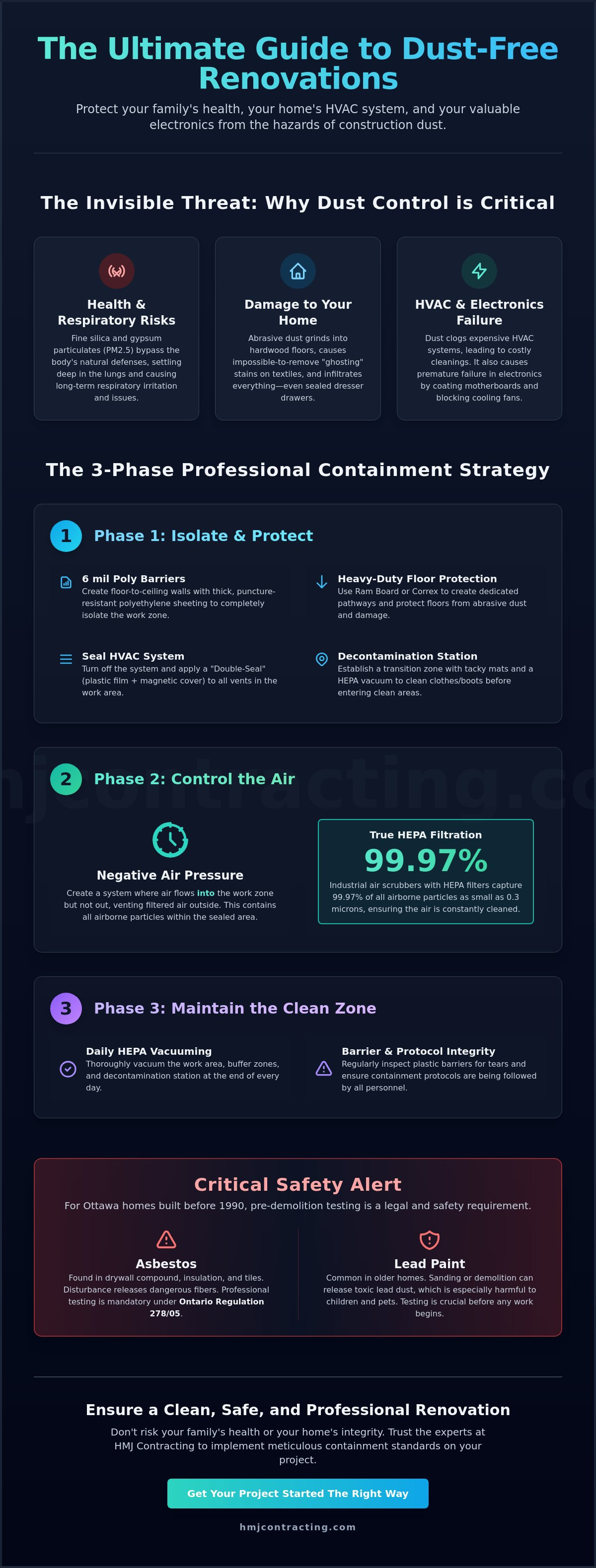
PM2.5 particles are less than 2.5 micrometers in diameter, allowing them to bypass the throat and nose to settle deep within the lungs or enter the bloodstream. Standard household vacuums are not designed for this level of filtration. In fact, using a regular vacuum often makes the problem worse by sucking up fine dust and exhausting it back into the room as a concentrated mist. This is why professional dust control during home renovation relies on HEPA filtration. True HEPA filters capture 99.97% of particles as small as 0.3 microns. At HMJ Contracting, we treat air quality as a core component of our craftsmanship, ensuring your home remains a healthy environment from start to finish.
The Pre-Construction Containment Checklist
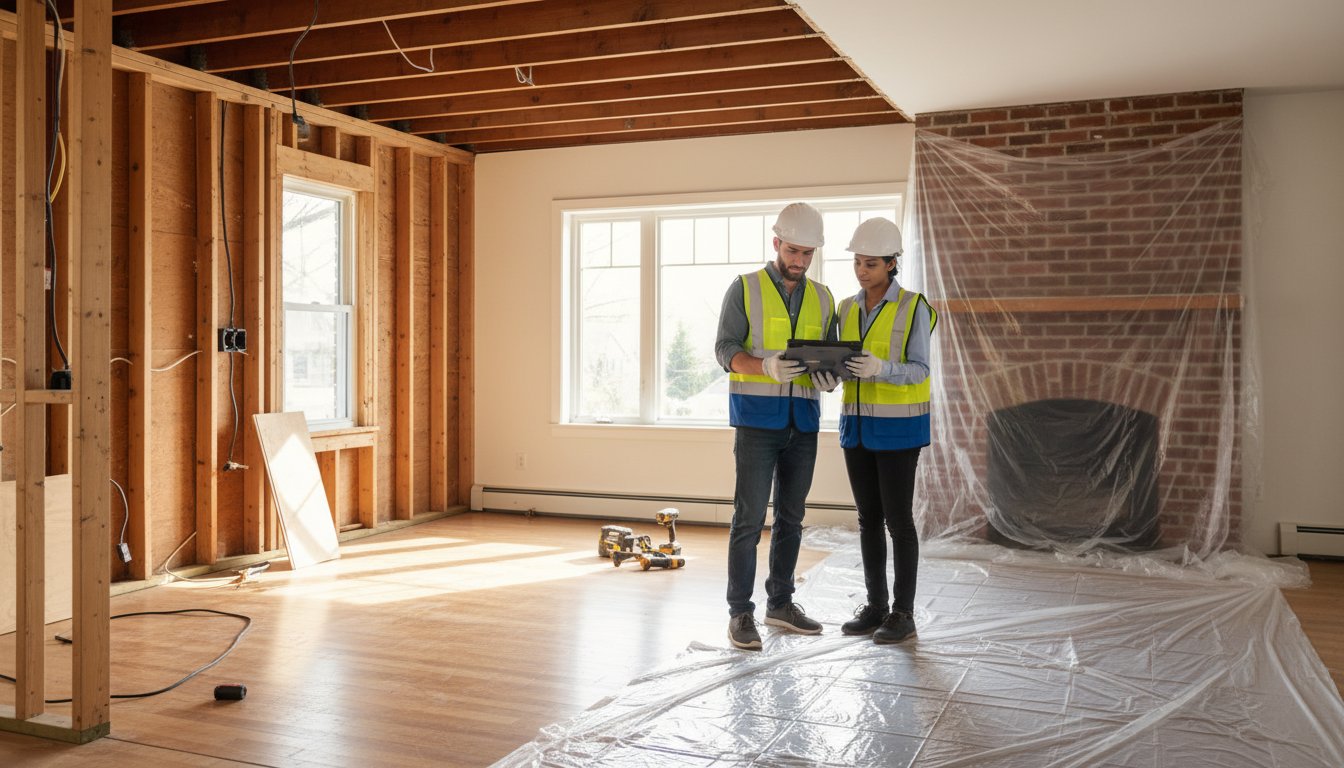
Before the first sledgehammer swings, you need a comprehensive defense plan. Proper dust control during home renovation starts with a chronological setup that prioritizes your home's integrity. Preparation is everything. First, isolate the work zone using 6 mil polyethylene sheeting for floor-to-ceiling barriers. This thickness provides the necessary durability to withstand air pressure shifts and accidental punctures. Next, install heavy-duty floor protection such as Ram Board or Correx boards. This prevents abrasive dust from grinding into your hardwood or tile surfaces. You should extend this protection from the main entry point directly to the renovation area to create a dedicated path for materials and debris.
Finally, establish a decontamination station at the entrance of the workspace. This is a designated transition zone where workers can use a HEPA vacuum on their clothing and remove boot covers before entering the clean areas of your home. Following EPA's best practices for dust control ensures that your living space remains pristine while the project moves forward. If you are planning a complex project in the Ottawa area, our team at HMJ Contracting can manage these technical containment details for you as part of our meticulous renovation process.
Sealing the HVAC System
Your HVAC system acts as a high-speed delivery service for particulates if left unprotected. You must turn off the furnace or air conditioning during high-dust activities like drywall sanding or floor grinding to prevent the blower from pulling dust into the ductwork. We utilize the "Double-Seal" method for maximum security. This involves applying a layer of plastic film over every supply and return vent within the work zone, followed by a magnetic cover for a secondary airtight seal. During an active remodel, check your furnace filter every 48 to 72 hours. A clogged filter restricts airflow and can lead to expensive blower motor repairs or system failure.
Creating Airtight Barriers
Building airtight walls doesn't require damaging your existing finishes. We use spring-loaded tension poles to secure 6 mil poly against the ceiling without nails or screws. Overlap all vertical seams by at least 30 centimeters and seal them with heavy-duty tape. On finished surfaces, always use "clean-release" painter's tape to avoid peeling away your existing paint when the project is complete. For high-traffic areas, construct a temporary airlock. This two-layer curtain system creates a vestibule that ensures air stays trapped even when people are moving in and out of the renovation zone. This proactive dust control during home renovation keeps fine particulates exactly where they belong.
Advanced Dust Suppression: Negative Pressure and Air Scrubbing
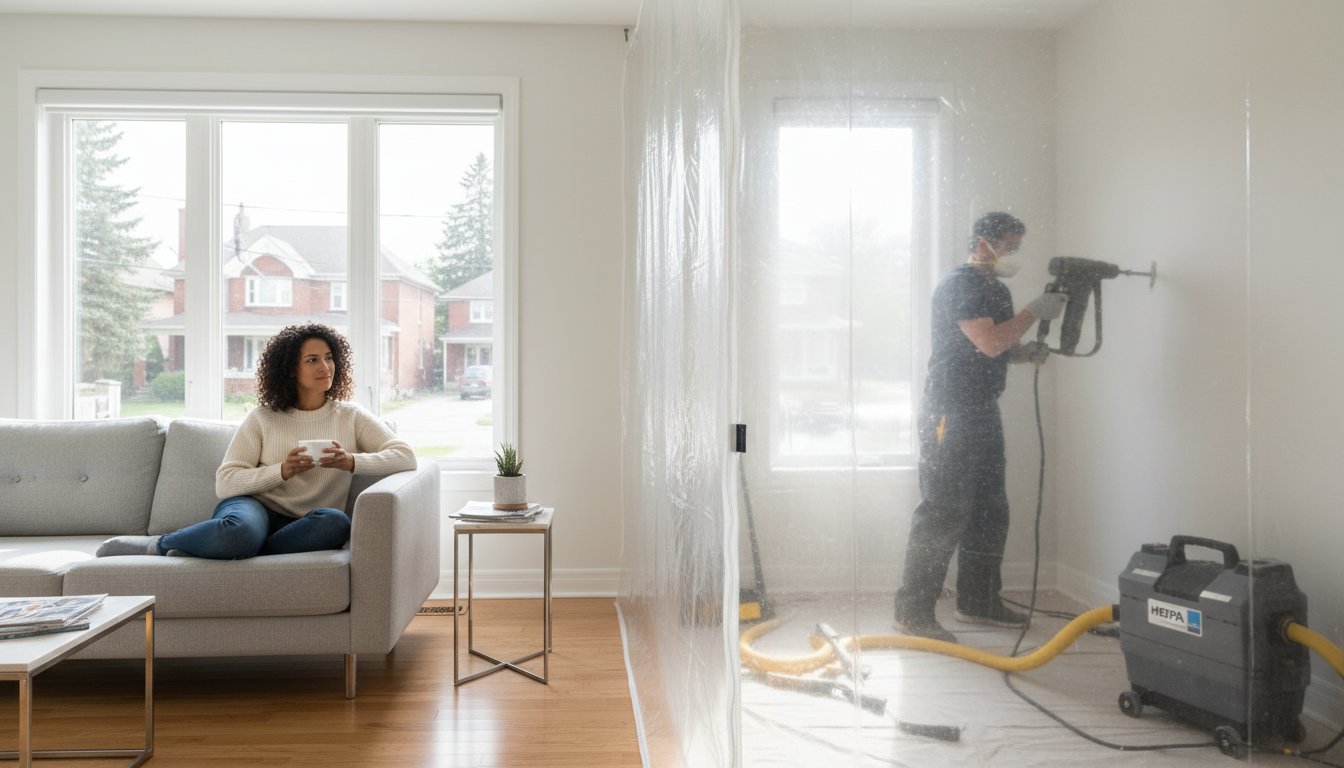
Physical barriers are only the first line of defense. To achieve professional-grade dust control during home renovation, you must manage the air itself. Negative air pressure is the gold standard in containment. By using mechanical fans to pull air out of the work zone, you create a vacuum effect. This ensures that air only flows into the renovation space from the rest of the house, never out. Even if a small gap exists in your plastic sheeting, the inward draft prevents microscopic particulates from escaping into your clean living areas.
Safety is paramount when manipulating air pressure. In many Ottawa homes, particularly those with natural draft gas-fired water heaters or older furnaces, excessive negative pressure can cause backdrafting. This dangerous condition pulls combustion gases, including carbon monoxide, back into the home instead of venting them up the chimney. We always monitor pressure levels to ensure the environment remains safe for both the crew and your family. If you're managing a DIY project, renting an industrial air scrubber in Ottawa typically costs between C$50 and C$75 per day, which is a small price for professional air quality.
Deploying HEPA Air Scrubbers
An air scrubber is a portable filtration system that continuously cleans the air within the work zone. To be effective, the unit must achieve between 6 and 12 Air Changes per Hour (ACH). You can calculate this by dividing the scrubber's Cubic Feet per Minute (CFM) rating by the total volume of the room. We position these units as close to the dust source as possible, such as next to a tile saw or drywall sanding station. It's also vital to distinguish between a standard shop-vac and a true HEPA-rated vacuum. A standard vacuum often lacks the seals required to prevent fine dust from blowing out of the exhaust, whereas a HEPA system captures 99.97% of particles as small as 0.3 microns.
Managing Airflow Direction
You can verify your setup is working by holding a single square of tissue paper near the bottom of your plastic barrier. If the tissue pulls toward the renovation zone, you have successfully established negative pressure. During Ottawa’s humid summers or freezing winters, managing this airflow requires a strategic approach. We often set up exhaust fans to vent filtered air directly outside through a window, while keeping the rest of the house sealed. This mechanical ventilation is far more effective than simply "cracking a window," which can be subject to wind shifts that push dust back into your home. Using these advanced strategies ensures your dust control during home renovation remains consistent regardless of the weather outside.
Maintaining a Livable Home: Daily Maintenance Protocols
The most advanced containment setup is only as effective as the discipline of the crew using it. Consistent dust control during home renovation requires a rigorous daily routine to prevent the slow migration of particulates into your clean living spaces. We enforce a strict "No Shoes" policy beyond the work zone or require the use of disposable boot covers. To catch fine grit that clings to footwear, place sticky "tacky mats" at every threshold. These adhesive sheets pull dust from the soles of shoes before they touch your finished floors. During active demolition phases, these mats can become saturated quickly. You should peel off the top layer to reveal a fresh adhesive sheet at least once a day, or more frequently during heavy traffic.
Vacuuming is a daily necessity, but it must be done correctly. We focus on the "buffer zone," which is the two to three meter area immediately outside the renovation barriers. Every evening, use a HEPA-rated vacuum to clear this space. When the vacuum canister is full, take the unit outside before emptying it. This simple step prevents a cloud of secondary contamination from releasing back into your home. For final surface cleaning, we utilize the "Wet-Wipe" method. Using damp microfiber cloths allows you to trap microscopic dust that vacuums might miss, ensuring that particulates are physically removed rather than just redistributed.
Threshold Management
Access points are the most common failure points in a containment system. We recommend using heavy-duty, adhesive-backed zippers on your plastic barriers. These allow for a tight seal when the workspace is not in use while providing easy entry for the team. Beyond the zipper, establish a dedicated "tool cleaning" station within the work zone. Wiping down power tools and saws before they leave the area prevents them from shedding gypsum or sawdust as they are moved. This level of meticulous home renovation planning includes daily site maintenance to protect both your health and your property's long-term value.
The Daily Cleanup Routine
A professional site should be "broom clean" at the end of every shift, but in a dust-controlled environment, actual sweeping is prohibited. Dry sweeping with a traditional broom launches fine particulates back into the air, where they can stay suspended for hours. Instead, we use HEPA vacuums and damp mopping. Prioritize high-touch surfaces in the living zone, such as doorknobs, light switches, and kitchen countertops, as these are the areas where fine dust is most likely to be transferred by hand. If you want a renovation partner who treats your home with this level of respect, contact HMJ Contracting today for a professional consultation and a cleaner construction experience.
Handling Hazardous Dust in Ottawa: Asbestos and Lead
In many historic Ottawa neighborhoods, "dust" is more than just a cleaning inconvenience. While gypsum and sawdust are considered nuisance dust, materials like asbestos, lead, and mold represent hazardous dust that requires specialized handling. Under Ontario Regulation 278/05, homeowners are legally required to test for asbestos in any building constructed before 1990 before starting renovations that might disturb the structure. Materials containing more than 0.5% asbestos are classified as Asbestos Containing Materials (ACMs). Because DIY removal of these substances is illegal in Ontario, dust control during home renovation becomes a matter of legal compliance and public health.
At HMJ Contracting, we integrate hazardous material remediation directly into our project management. We don't treat these hazards as an afterthought. We treat them as the foundation of a safe site. Whether you're dealing with lead-based paint from a 1970s build or vermiculite insulation, our team ensures that every particulate is contained according to provincial standards. This proactive approach prevents toxic fibers from migrating into your ductwork or settling into carpets in non-renovated rooms.
When to Stop and Test
Certain materials should trigger an immediate pause in your project. Popcorn ceilings, older vinyl floor tiles, and pipe insulation are common culprits in Ottawa homes. Following a "Safe-Start" approach means performing professional testing before the first sledgehammer swings. You can refer to our guide on asbestos removal in Ottawa for specific testing protocols. In 2026, a professional asbestos inspection in Ottawa typically costs an average of C$483. This is a small but vital investment in your family's safety before demolition begins.
Professional Remediation vs. Standard Contracting
Standard dust control during home renovation, such as basic plastic sheeting or a shop vacuum, is entirely insufficient for hazardous particulates. Asbestos fibers are so small they can remain airborne for days and pass through standard filters. Professional remediation requires specialized equipment and Level 1, 2, or 3 containment protocols depending on the risk level. This is also true for mold remediation, where spores can easily spread if not managed by a professional. As a Reliable Expert, we ensure your vision for a beautiful home is achieved without compromising the air you breathe. We handle the technical complexities so you can focus on the transformation of your space.
Build with Confidence and Clarity
Transforming your living space shouldn't compromise your family's health or your home's mechanical systems. By following a structured strategy of isolation, filtration, and daily maintenance, you maintain a breathable environment throughout the construction process. Effective dust control during home renovation is the hallmark of a professional project that prioritizes long-term value over short-term shortcuts. It protects your HVAC system from expensive repairs and ensures your belongings remain pristine.
HMJ Contracting brings over 25 years of local Ottawa experience to your doorstep. We are certified asbestos and mold remediation specialists who understand the unique structural requirements of Ontario homes. Our commitment to meticulous craftsmanship ensures that your job site remains clean and your belongings stay protected. We manage the technical complexities of containment so you can enjoy a stress-free transformation with total peace of mind.
Your home is in safe hands with a team that values integrity and local pride. We look forward to bringing your vision to life while keeping your living environment safe and clean.
Frequently Asked Questions
Does a standard shop-vac work for renovation dust?
A standard shop-vac is generally insufficient because its filters cannot trap microscopic particulates. Most basic models will suck up large debris while exhausting fine drywall powder back into the room through the rear port. You need a vacuum certified to HEPA standards, which removes 99.97% of particles as small as 0.3 micrometers. Using the wrong equipment often spreads contamination further into your home than the renovation itself.
How do I stop dust from getting into my kitchen cabinets during a remodel?
The best way to protect your kitchen cabinets is to empty them completely before work begins. If that isn't possible, seal the doors and drawers with low-tack painter's tape and a layer of 6 mil plastic sheeting. Fine dust is opportunistic; it will find even the smallest gaps in cabinet joinery. Sealing the entire bank of cabinets as a single unit provides a much more effective barrier than individual door seals.
Is it safe to live in my house during a major renovation?
It's possible to remain in your home if your contractor implements professional-grade dust control during home renovation. This requires total isolation of the work zone and the use of air scrubbers to maintain safe indoor air quality. However, if hazardous materials like asbestos or lead are being removed, you may need to vacate specific areas during the abatement process to ensure family safety and regulatory compliance.
How much does professional dust containment add to a renovation budget?
Professional dust containment typically accounts for a small fraction of a total project budget. While we don't provide fixed estimates without a site visit, investing in high-quality barriers and air scrubbers significantly reduces your post-renovation cleaning costs. Effective containment prevents the need for professional duct cleaning, which can be an unexpected and expensive requirement if particulates infiltrate your ventilation system during construction.
Can renovation dust damage my HVAC system permanently?
Renovation dust can permanently damage your HVAC system by coating the evaporator coils and causing abrasive grit to wear down the blower motor bearings. If fine particulates settle deep within the heat exchanger, they can reduce system efficiency and lead to premature mechanical failure. This is why we insist on sealing all supply and return vents within the work zone before any demolition or sanding activities commence.
What is the best tape to use for dust barriers that won’t peel my paint?
Use a high-quality "clean-release" painter's tape, often identified by its blue or green colour. These adhesives are designed to create a strong seal on walls and ceilings without stripping the finish when removed. For long-term projects lasting several weeks, ensure the tape is rated for that specific duration. Standard masking tape or duct tape should never be used on finished surfaces as they leave a stubborn, permanent residue.
How do I know if the dust in my Ottawa home contains asbestos?
You cannot identify asbestos by sight; professional laboratory testing is the only definitive method. In Ottawa, homes built before 1990 have a high probability of containing asbestos in drywall compounds, floor tiles, or insulation. If your property falls into this age category, Ontario Regulation 278/05 requires a designated substance survey before you disturb any potential materials. Professional testing for a small area typically averages around C$483 in the local market.
Should I leave my windows open or closed during a renovation?
You should keep windows in the clean living areas closed to maintain a controlled environment. Within the work zone, a window may be opened only if it is being used as a dedicated exhaust point for a filtered air scrubber. Simply opening windows can create unpredictable drafts that push particulates into other rooms. Strategic dust control during home renovation relies on mechanical ventilation rather than natural airflow to ensure contaminants are moved directly outside.