
Renovation finishing quality refers to the standard of final surface treatments, detail work, and material selection applied throughout a property, and it directly determines aesthetics, durability, and market value. Most homeowners focus on structural work and overlook the finishes, yet finishes act as signals of a property's entire maintenance history. Buyers, tenants, and inspectors read trim lines, tile alignment, and paint consistency as evidence of how well a building has been cared for. The role of renovation finishing quality reaches far beyond appearance. It shapes long-term performance, reduces repair costs, and protects your investment for years.
How does finishing quality affect property value and buyer perception?
Finishing quality is the first thing a buyer notices and the last thing they forget. Clean trim lines, consistent paint, and level tile communicate that a property has been maintained with care. Buyers associate quality finishes with well-maintained structures, which directly raises their confidence and willingness to pay.
The financial stakes are real. Interior painting alone can add between 60% to 120% to a home's perceived value, making it one of the highest-return finishing investments available. That return depends heavily on execution quality, not just the paint itself.
Poor finishes do the opposite. Buyers who spot uneven grout, gaps in trim, or patchy walls immediately start calculating future repair costs. That mental arithmetic lowers their offer price, sometimes by more than the cost of fixing the problem in the first place.
Consider what buyers look for during a walkthrough:
- Trim and millwork: Gaps, rough cuts, or misaligned corners signal rushed work.
- Paint consistency: Lap marks, missed edges, and uneven sheen suggest low-grade labour.
- Tile and flooring: Lippage, cracked grout, and uneven spacing raise durability concerns.
- Fixtures and hardware: Scratched finishes or loose fittings suggest the renovation was done cheaply.
"The quality of a finish communicates the quality of everything behind the walls. Buyers may not be able to inspect the plumbing, but they can see whether the baseboards are straight. They draw conclusions accordingly."
Speed of sale also connects to finishing quality. Properties with polished, consistent finishes spend less time on the market. A well-finished renovation reduces the perceived risk a buyer takes on, which shortens negotiation cycles and supports asking price.
What standards and techniques define high-quality finishes?
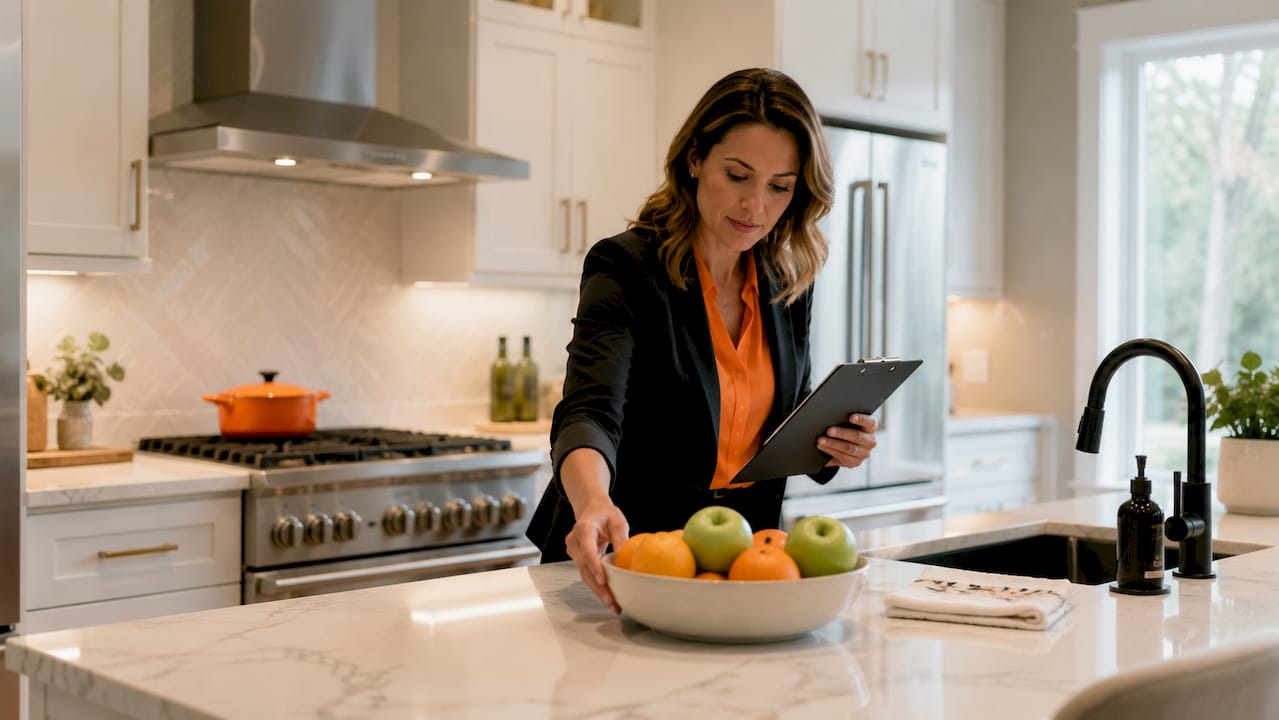
High-quality finishing is defined by precise execution, not by expensive materials alone. Execution details like scribed trim and full tile bonding mark the difference between a professional result and a cosmetic one. These details are often invisible once complete, but their absence shows immediately.
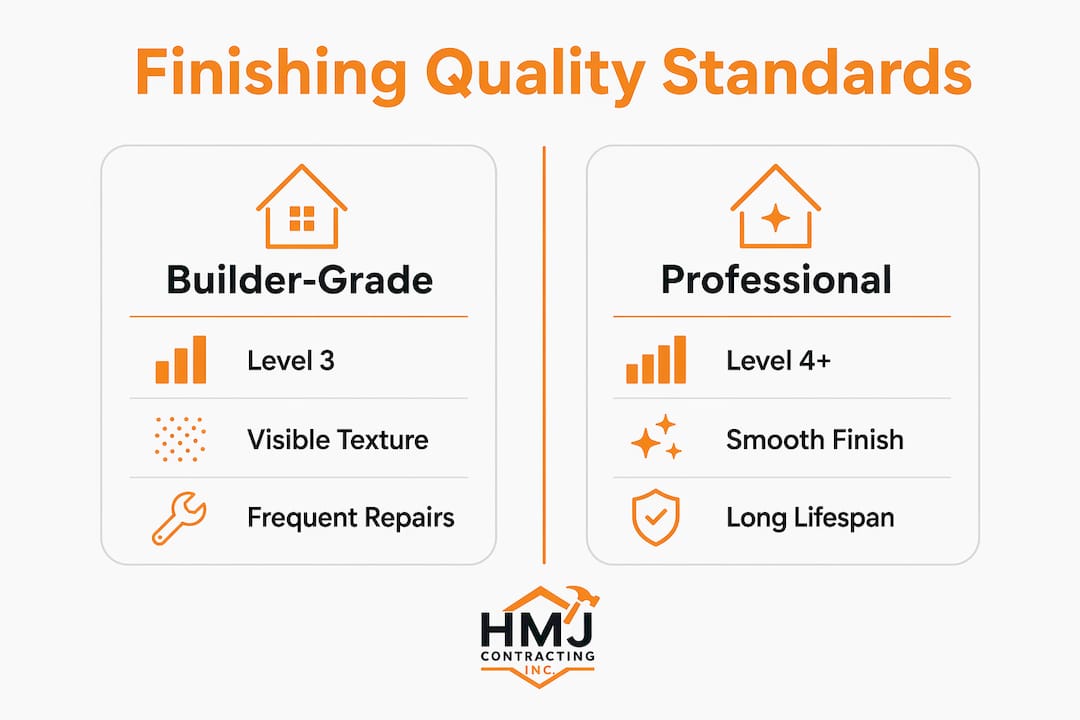
Renovation contracts now need to specify finishing standards explicitly. Contracts should define drywall finishing levels, tile lippage tolerances, and drying times to prevent disputes and protect both parties. Without these benchmarks written into the agreement, "finished" means something different to every contractor.
The table below shows how finishing standards differ across quality tiers:
| Finish element | Builder-grade standard | Professional standard |
|---|---|---|
| Drywall | Level 3 (texture only) | Level 4 or 5 (smooth, paint-ready) |
| Tile lippage | Up to 3mm variation | Under 1mm variation |
| Paint coats | 1 coat over primer | 2 full coats, sanded between |
| Wood filler drying | Applied and sanded same day | Dried 2–4 hours before sanding |
| Trim joints | Butt-joined, caulked | Mitre-cut, scribed to wall |
Each of these differences is small on its own. Together, they determine whether a finished room looks polished or provisional.
Material selection matters too, but it comes second to workmanship. A mid-range tile installed with full adhesive coverage and consistent grout joints outperforms a premium tile installed carelessly. The importance of renovation quality shows up most clearly in how long a finish holds up under daily use, not just how it looks on day one.
Pro Tip: Ask your contractor to specify the drywall finishing level in writing before work begins. Level 4 is the minimum for any painted surface. Level 5 is required under critical lighting conditions, such as near windows or under recessed lights.
How does finishing quality affect durability, maintenance, and comfort?
Finishing quality is a component of interior engineering, not just decoration. Properly selected and installed wall finishes can last 10–20 years or more with minimal maintenance. Poorly executed finishes often fail within two years, triggering repair cycles that cost far more than the original work.
The table below shows the real cost difference between quality tiers over time:
| Finish quality | Typical lifespan | Maintenance frequency | Estimated repair cost |
|---|---|---|---|
| Professional grade | 10–20+ years | Low | Minimal touch-ups |
| Builder grade | 2–5 years | High | Frequent replacement |
| DIY or rushed work | Under 2 years | Very high | Full redo likely |
Finishing decisions also affect comfort in ways most homeowners do not expect. Wall finishes influence acoustics, indoor air quality, and thermal performance. A properly sealed and finished wall system reduces drafts, dampens sound transfer between rooms, and prevents moisture from penetrating the surface layer.
Indoor air quality is a particular concern in older Ottawa properties. Finishes that crack or delaminate can expose underlying materials, some of which may contain hazardous substances. Maintaining a sound finish layer is one of the simplest ways to keep those materials contained and your living environment safe.
Pro Tip: When budgeting a renovation, allocate at least 15–20% of your total budget to finishing work. Cosmetic corrections after the fact can range from $20,000 to $60,000, while combined system repairs can exceed $140,000. Getting it right the first time is always cheaper.
What are the most common finishing mistakes homeowners make?
The most damaging misconception in renovation finishing is that builder-grade materials save money. Builder-grade finishes cost less upfront but generate replacement cycles that exceed the cost of premium components within a decade. The savings are real on day one and gone within a few years.
Common finishing mistakes that homeowners and property managers repeat include:
- Skipping drying times: Applying paint or filler before the previous coat dries causes peeling, bubbling, and adhesion failure. Wood filler requires 2–4 hours of drying time before sanding.
- Using caulk to hide poor joints: Caulk is a sealant, not a finishing tool. Thick caulk beads over gaps in trim or tile signal poor workmanship and shrink over time.
- Choosing finishes for appearance only: A high-gloss paint in a high-traffic hallway shows every scuff. Choosing the wrong sheen for the location creates a maintenance problem.
- Ignoring substrate preparation: Paint applied over unprepared drywall, dirty surfaces, or unsanded filler will fail regardless of paint quality.
- Confusing visual completion with occupancy readiness: A finished appearance does not equal permit compliance. Occupancy requires functioning technical systems and formal approvals, not just surfaces that look complete.
The highest-wear, most visible areas of a property deserve the most investment. Kitchens, bathrooms, entryways, and main living areas are where finishes take the most abuse and where buyers look first. Cutting costs in these areas produces the worst return and the fastest deterioration.
For first-time renovators, understanding where to prioritise spending before work begins prevents the most expensive mistakes.
Key takeaways
Renovation finishing quality determines property value, durability, and occupant comfort more than any other single factor in a renovation project.
| Point | Details |
|---|---|
| Finishes signal property care | Buyers read trim lines and paint consistency as evidence of overall maintenance history. |
| Execution beats material cost | Scribed trim and full tile bonding matter more than premium materials applied carelessly. |
| Poor finishes cost more long-term | Builder-grade materials trigger replacement cycles that exceed premium install costs within a decade. |
| Specify standards in writing | Contracts must define drywall levels, tile lippage, and drying times to prevent disputes. |
| Finishes affect comfort, not just looks | Wall finish quality influences acoustics, indoor air quality, and thermal performance directly. |
What I have learned after years of watching renovations succeed and fail
The projects that hold up over time share one thing: the finishing was treated as seriously as the structure. I have seen beautifully framed rooms ruined by rushed paint and misaligned tile. I have also seen modest materials perform for decades because the tradesperson took the time to do the details properly.
The biggest mistake I see homeowners make is treating finishing as the part of the project where they can recover budget. By the time you reach the finishing stage, the structural and mechanical work is done. Cutting corners at that point does not save the project. It undermines everything that came before it.
Execution quality is what separates a renovation that adds value from one that creates liability. Details like how scope of work is defined at the start of a project determine whether the finishing stage goes smoothly or becomes a dispute. Homeowners who invest in clear contracts, qualified tradespeople, and proper materials consistently get better results, better resale value, and fewer headaches.
My honest advice: spend more time vetting your finishing contractor than you spend choosing your tile. The tile is just material. The contractor is the difference between a finish that lasts twenty years and one that needs redoing in three.
— Jason
Renovation finishing done right with Hmjcontracting
Hmjcontracting brings the same standard of care to finishing work that it applies to every stage of a renovation project in Ottawa. Whether you are updating a residential property or managing a commercial space, the team delivers full renovation services with a focus on durable, properly executed finishes that hold up over time.
Hmjcontracting's approach includes detailed, itemised quotes so you know exactly what finishing standards are being applied before work begins. With a perfect 5.0-star Google rating and hundreds of completed projects across Ottawa, the team has the experience to get the details right. If your property also involves hazardous materials like asbestos or mould, Hmjcontracting's certified abatement services handle that safely before finishing work begins. Contact Hmjcontracting to discuss your renovation and get a clear plan for quality finishes that last.
FAQ
What does renovation finishing quality actually mean?
Renovation finishing quality refers to the standard of final surface treatments, detail work, and material selection applied to a property. It covers everything from drywall smoothness and paint consistency to tile alignment and trim precision.
How does finishing quality affect resale value?
Quality finishes signal property care to buyers and raise their confidence in the overall condition of a building. Interior painting alone can add between 60% to 120% to a home's perceived value when executed professionally.
What finishing standards should be in a renovation contract?
Contracts should specify drywall finishing levels (Level 4 minimum for painted surfaces), tile lippage tolerances, paint coat counts, and required drying times. Without these benchmarks in writing, disputes over workmanship are difficult to resolve.
Why do builder-grade finishes cost more in the long run?
Builder-grade materials generate frequent replacement cycles that exceed the cost of premium installs within a decade. High-wear areas like kitchens and bathrooms deteriorate fastest with low-grade finishes, compounding the long-term cost.
Does a visually finished renovation mean it is ready for occupancy?
No. A finished appearance does not equal occupancy readiness. Legal occupancy requires functioning technical systems and formal permit approvals, not just surfaces that look complete.