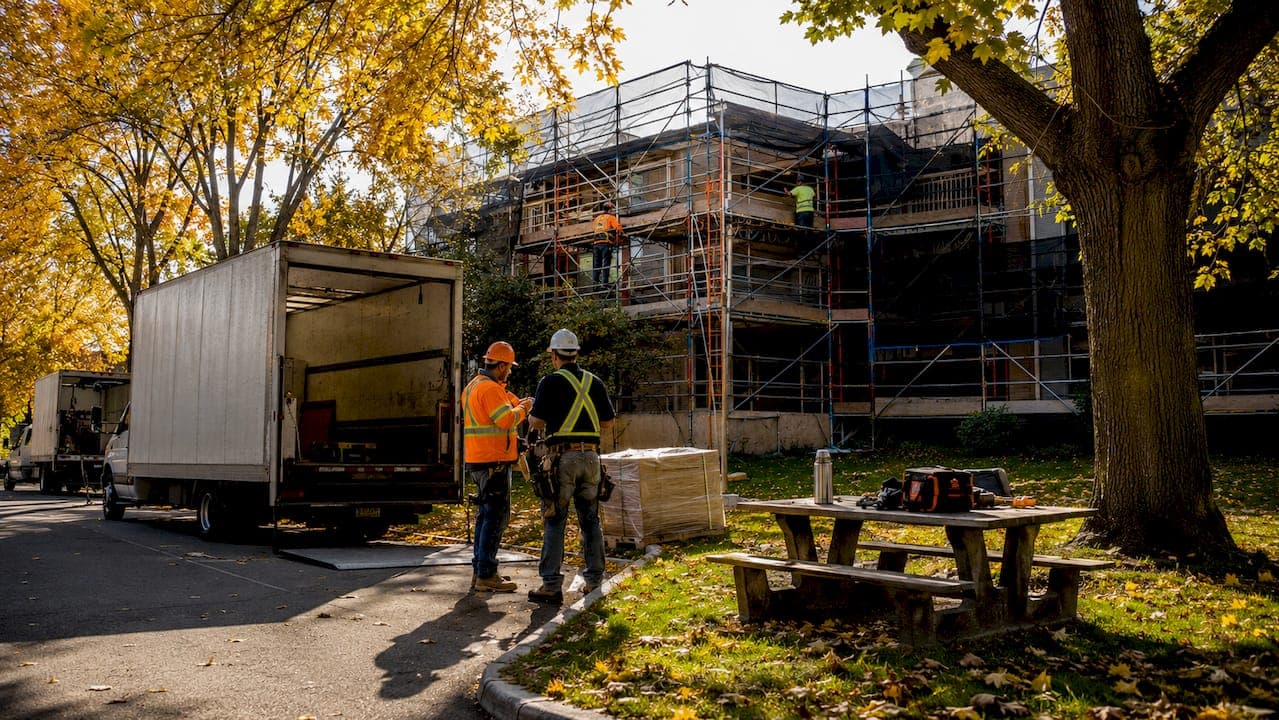
Renovation is defined as any structural, mechanical, or cosmetic work that changes a building's condition, and it directly affects occupancy by displacing tenants, triggering legal obligations, and reshaping the tenant experience. Property owners and managers must understand how renovation affects building occupancy before a single wall comes down. Under Ontario's Residential Tenancies Act, 2026 updates require landlords to give 120 days' notice using an N13 form when major renovations require tenant vacancy. Getting this wrong costs you occupancy, time, and money.
What are the legal requirements affecting occupancy during renovation?
Residential renovation law in Ontario sets clear boundaries on how and when landlords can ask tenants to vacate. The Ontario Residential Tenancies Act requires 120-day N13 form notice for any major renovation that necessitates vacancy. That notice period exists to protect tenants from sudden displacement and to give landlords a defined legal process to follow.
As of September 21, 2026, the Act also requires landlords to provide written updates on estimated completion timelines. This obligation goes beyond the initial notice. Tenants have a Right of First Refusal, meaning they can return to their unit once renovations are complete. Tracking these obligations requires diligent administrative records and consistent communication well beyond the standard notice period.
Non-compliance carries real consequences. A landlord who fails to issue proper notice or honour a tenant's right to return faces tribunal proceedings, financial penalties, and reputational damage that makes future leasing harder. The occupancy impact of a legal dispute can far exceed the disruption of the renovation itself.
Key legal obligations for residential property owners include:
- Issue the N13 form at least 120 days before the planned vacancy date.
- Provide written updates on the estimated completion date throughout the renovation.
- Honour the tenant's Right of First Refusal to return to the unit post-renovation.
- Maintain records of all notices, updates, and tenant responses for tribunal purposes.
- Confirm that the renovation genuinely requires vacancy before issuing an N13.
Pro Tip: Before filing an N13, consult the renovation permit application process to confirm your project scope meets the legal threshold for required vacancy. Filing unnecessarily creates liability.
How do different renovation strategies affect occupancy in commercial buildings?
Commercial buildings face a different set of occupancy pressures during renovation. Unlike residential properties, commercial leases rarely include statutory notice protections, so the occupancy impact depends almost entirely on how well the renovation is planned and executed.

Phased construction is the most effective tool for maintaining occupancy in occupied commercial buildings. Phased renovation allows sections of the building to remain fully operational while work proceeds in isolated zones. This approach limits downtime and keeps tenants productive, which directly reduces the risk of early lease termination.
The evidence from Toronto's office market is clear. One property saw its vacancy rate drop from 50–60% to 14.4% after high-quality renovations with modern amenities and plug-and-play suites. That result did not come from cosmetic updates alone. It came from a deliberate strategy of making spaces move-in-ready and operationally attractive.
"Tenants now lease an experience, not just space. Amenities and quality upgrades in renovations are what attract occupancy today." — Brendan Sullivan, CBRE Canada
A structured approach to commercial renovation follows a clear sequence:
- Audit existing tenant leases to identify termination clauses, renovation rights, and notice requirements before planning begins.
- Map the phasing plan to isolate construction zones from occupied areas, with clear timelines for each phase.
- Invest in tenant improvements that reduce the capital tenants need to spend at move-in, making the space immediately attractive.
- Upgrade common areas alongside suite renovations to signal overall building quality to prospective and existing tenants.
- Schedule infrastructure work such as HVAC, plumbing, and electrical during off-hours to limit disruption to active tenants.
Invisible infrastructure components like HVAC, plumbing, and electrical systems often cause more friction and cost than visible finishes. Understanding the role of plumbers in renovations and other trades early in the planning process prevents costly scheduling conflicts that push work into peak business hours.
What practical steps minimize occupancy loss during renovations?
Occupancy loss during renovation is rarely caused by the construction itself. It is caused by poor communication, unpredictable scheduling, and tenants who feel ignored. Property managers who treat communication as a core project deliverable consistently outperform those who treat it as an afterthought.
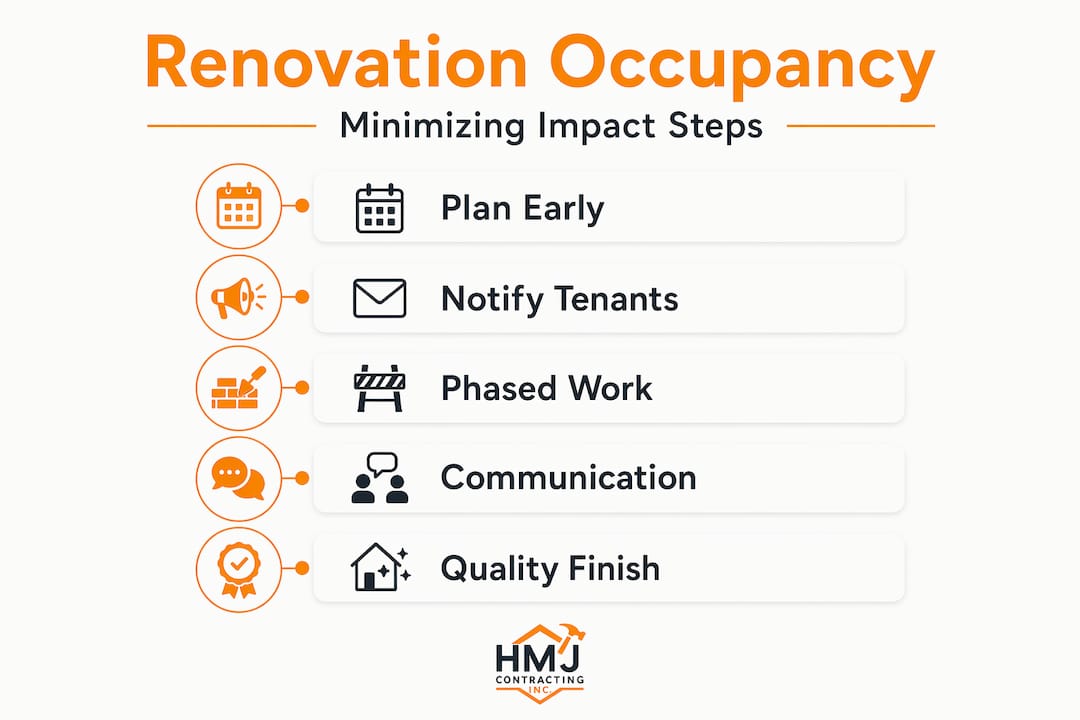
Effective communication including weekly updates and a dedicated point of contact significantly prevents tenant churn during occupied renovations. That single practice, applied consistently, does more to protect occupancy than almost any other tactic. Tenants tolerate disruption when they feel informed and respected.
Practical steps that protect occupancy during active construction include:
- Send weekly written updates covering completed work, upcoming tasks, and any schedule changes.
- Assign one named contact person for all tenant renovation inquiries and respond within 24 hours.
- Post construction schedules in common areas so tenants can plan around disruption.
- Schedule noisy tasks outside peak hours, even when this increases labour costs.
- Provide advance notice of any work that affects shared systems like elevators, parking, or utilities.
- Conduct a brief walkthrough with affected tenants before each new phase begins.
Pro Tip: Noise and dust are the two complaints that most often trigger early lease termination during renovations. Address both with physical barriers and off-hours scheduling before tenants raise them. Reactive fixes cost more than proactive planning.
Construction quality also affects occupancy after the project ends. Tenants who experience a well-managed renovation are more likely to renew their leases. Those who experience chaos, broken promises, and unresolved complaints start looking for alternatives before the project finishes. The abatement process before renovation is one area where cutting corners creates both health risks and compliance failures that directly threaten occupancy.
How do renovation quality and finishes influence long-term tenant retention?
Renovation quality is a direct signal of building management quality. Tenants read finishes, common areas, and infrastructure condition as evidence of how well the property is managed. A poorly finished renovation tells prospective tenants that the landlord cuts corners. A well-finished one tells them the building is worth staying in.
Tenant improvements with high-quality finishes reduce the capital tenants need at move-in and support lease renewals, which stabilises occupancy over time. Move-in-ready suites with quality millwork and finishes remove a major barrier to lease signing. Tenants who do not need to spend on fit-out are more likely to commit quickly and renew when the term ends.
Investing in common area finishes improves tenant perception of building quality without requiring full suite renovations. Lobbies, corridors, washrooms, and amenity spaces shape first impressions for both existing tenants and prospects. These upgrades cost less than full suite renovations and deliver outsized returns in tenant satisfaction.
| Renovation investment | Short-term occupancy impact | Long-term retention benefit |
|---|---|---|
| Suite fit-out with quality finishes | Faster lease-up of vacant units | Higher renewal rates, lower tenant improvement costs |
| Common area upgrades | Improved building perception for prospects | Stronger tenant satisfaction scores |
| Infrastructure (HVAC, electrical) | Minimal visible impact during construction | Fewer complaints, lower maintenance disruption |
| Phased construction approach | Reduced vacancy during active work | Tenants stay through renovation, renew after |
Strategic tenant improvements simplify renewal negotiations and reduce upfront tenant costs, which lowers vacancy risk after the renovation is complete. The connection between finish quality and occupancy stability is direct and measurable.
Key takeaways
Renovation affects building occupancy through legal compliance obligations, construction phasing, communication quality, and finish standards, and managing all four is what separates a successful project from a costly vacancy event.
| Point | Details |
|---|---|
| Legal notice is non-negotiable | Ontario's N13 form requires 120 days' notice before vacancy for major residential renovations. |
| Phased construction protects occupancy | Isolating work zones keeps commercial tenants operational and reduces early termination risk. |
| Communication prevents tenant churn | Weekly updates and a dedicated contact person are the most effective tools for retaining tenants during construction. |
| Finish quality drives long-term retention | High-quality suite and common area finishes reduce move-in costs and support lease renewals. |
| Non-compliance costs more than compliance | Legal disputes from improper notice or ignored Right of First Refusal cause greater occupancy loss than the renovation itself. |
What I've learned about renovation and occupancy the hard way
Property owners consistently underestimate how much occupancy depends on process, not just product. The renovation itself matters less than how it is managed from the first notice to the final walkthrough.
The biggest mistake I see is treating tenant communication as optional. Owners focus on the construction schedule and assume tenants will tolerate disruption because they have a lease. That assumption is wrong. Tenants who feel uninformed start looking for alternatives, and by the time they tell you they are leaving, they have already signed somewhere else.
The 2026 updates to Ontario's Residential Tenancies Act are a good example of regulation catching up to what good operators already do. Landlords who were already sending written updates and honouring return rights did not need to change anything. Those who were not are now legally required to. Compliance is not a burden for operators who treat tenants as partners in the renovation process.
The other insight that took me time to fully appreciate is that renovation quality is a long-term occupancy strategy. A well-finished building attracts better tenants, commands higher rents, and retains occupants through market downturns. The first-time renovator's guide covers this well for owners who are new to managing occupied renovations. Spend on quality where tenants see it, and spend on scheduling discipline where they feel it.
— Jason
Hmjcontracting's renovation and abatement services for Ottawa property owners
Property owners managing occupied renovations need a contractor who understands both the construction and the compliance side of the work.

Hmjcontracting provides certified abatement, residential and commercial renovation, demolition, and junk removal services across Ottawa. Their team handles hazardous materials including asbestos, lead, and mould before renovation begins, which protects tenants and keeps projects compliant with Ontario safety regulations. Every project comes with detailed, itemised quotes and a transparent process that property managers can communicate directly to their tenants. Hmjcontracting holds a perfect 5.0-star Google rating across hundreds of completed projects. Contact Hmjcontracting to discuss your abatement and renovation needs or review their full range of services for occupied building projects.
FAQ
What notice is required before renovating a residential rental unit in Ontario?
Ontario's Residential Tenancies Act requires landlords to give at least 120 days' notice using an N13 form when major renovations require tenant vacancy. As of September 21, 2026, landlords must also provide written updates on the estimated completion date.
How does phased construction help maintain occupancy during renovation?
Phased construction isolates work zones so that other sections of the building remain fully operational. This limits disruption to active tenants and reduces the risk of early lease termination during the renovation period.
What is the Right of First Refusal in Ontario renovation law?
The Right of First Refusal gives residential tenants the legal right to return to their unit once a major renovation is complete. Landlords must honour this right and maintain records of all related notices and tenant responses.
How do renovation finishes affect occupancy after construction ends?
High-quality suite and common area finishes reduce the capital tenants need at move-in and make lease renewals easier to negotiate. Buildings with strong finish quality consistently show lower vacancy rates after renovation is complete.
What is the single most effective way to retain tenants during a renovation?
Transparent, consistent communication is the most effective retention tool. Weekly written updates and a dedicated point of contact prevent the uncertainty that drives tenants to look for alternative space during construction.