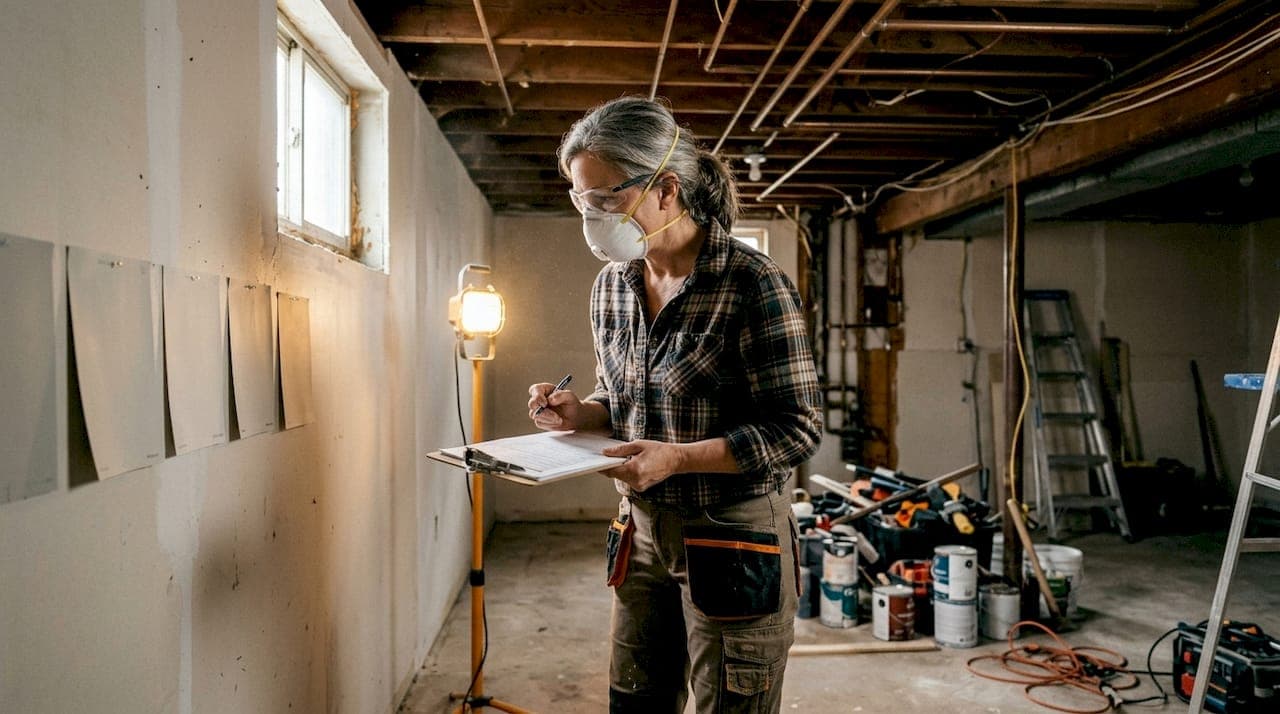
Asbestos is defined as a group of naturally occurring fibrous minerals that become a direct health and legal hazard the moment renovation work disturbs them. Homes built or renovated between 1930 and 1990 are considered asbestos risk zones in Canada, which covers a large portion of Ottawa's housing stock. Understanding how asbestos affects renovation plans means accepting that testing, abatement, and clearance are not optional extras. They are mandatory steps that shape your timeline, budget, and legal obligations before a single wall comes down.
Why is asbestos testing critical before starting home renovations?
Asbestos fibres are harmless when sealed inside undisturbed materials. The legal obligation and the health risk both begin the moment renovation work breaks, cuts, or sands those materials. Inhaled asbestos fibres cause mesothelioma, lung cancer, and other severe respiratory diseases, with symptoms that may not appear for decades. That long latency period is exactly why regulators treat pre-renovation identification as non-negotiable.
Provincial regulations make this explicit. Ontario Regulation 278/05 and the Alberta OHS Code both require building owners to identify asbestos-containing materials before any work that could disturb them. Liability rests with the property owner, not the contractor. Skipping this step exposes you to work stoppages, regulatory fines, and personal legal responsibility if workers or occupants are harmed.
Testing also protects your renovation schedule. A project halted mid-demolition for emergency asbestos identification costs far more in time and money than a planned pre-renovation assessment. Knowing what you have before work begins lets you plan your renovation timeline around abatement rather than scrambling to respond to it.
- Asbestos is commonly found in popcorn ceilings, floor tiles, pipe insulation, drywall compound, and roofing materials in older homes.
- Any renovation involving drilling, cutting, or demolition of pre-1991 materials triggers the legal duty to test.
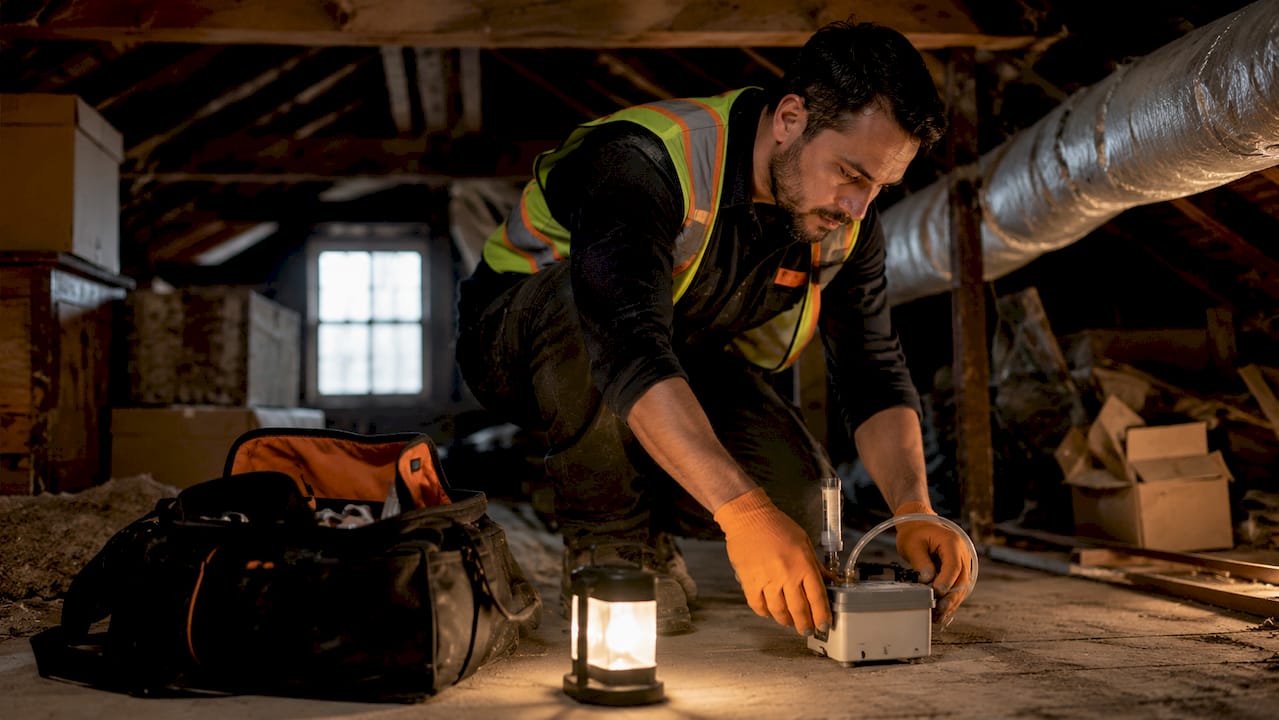
- Certified inspectors collect bulk samples for laboratory analysis, which confirms the presence and type of asbestos.
- Results inform the risk category assigned to the material, which determines the abatement method required.
- Contractors are legally entitled to refuse work until a certified assessment is complete.
Pro Tip: Book your asbestos assessment at the same time you get renovation quotes. This keeps your project timeline intact and gives every contractor the documentation they need before they set foot on site.
How does asbestos affect renovation budgets and scheduling?
Asbestos testing and abatement add real costs to a renovation, but those costs are predictable when you plan for them early. Professional asbestos assessments cost $500–$950, with individual lab samples running $35–$80 each. A typical assessment involves 3–10 samples depending on the size and complexity of the property. That is a defined, manageable expense when it sits in your original budget.
The abatement phase is where costs vary most. Risk categories in abatement range from low to high, and each level dictates a different removal method, containment requirement, and cost structure. Low-risk work, such as minor drilling near intact materials, requires basic precautions. High-risk removals, such as stripping spray-applied fireproofing or heavily damaged insulation, require full enclosures, negative air pressure systems, and licensed abatement crews. The gap between those two scenarios in both cost and schedule is significant.
Air clearance testing adds another step after abatement is complete. Clearance testing confirms fibre levels below 0.01 fibres per cubic centimetre before the containment area can be dismantled and renovation work resumes. Lab results for clearance samples typically take 24–48 hours. That window must be built into your schedule, or it becomes an unplanned delay.
| Cost item | Typical range | Schedule impact |
|---|---|---|
| Professional assessment | $500–$950 | 1–3 days for results |
| Lab samples (per sample) | $35–$80 each | Included in assessment timeline |
| Abatement (low risk) | Varies by scope | Days to one week |
| Abatement (high risk) | Varies by scope | One to several weeks |
| Air clearance testing | Varies by area | 24–48 hour lab delay |
Pro Tip: Treat asbestos testing as a standard renovation expense, the same way you budget for permits. Homeowners who skip it often face emergency abatement costs that dwarf the original testing fee.
What steps should homeowners take to handle asbestos in renovation plans?
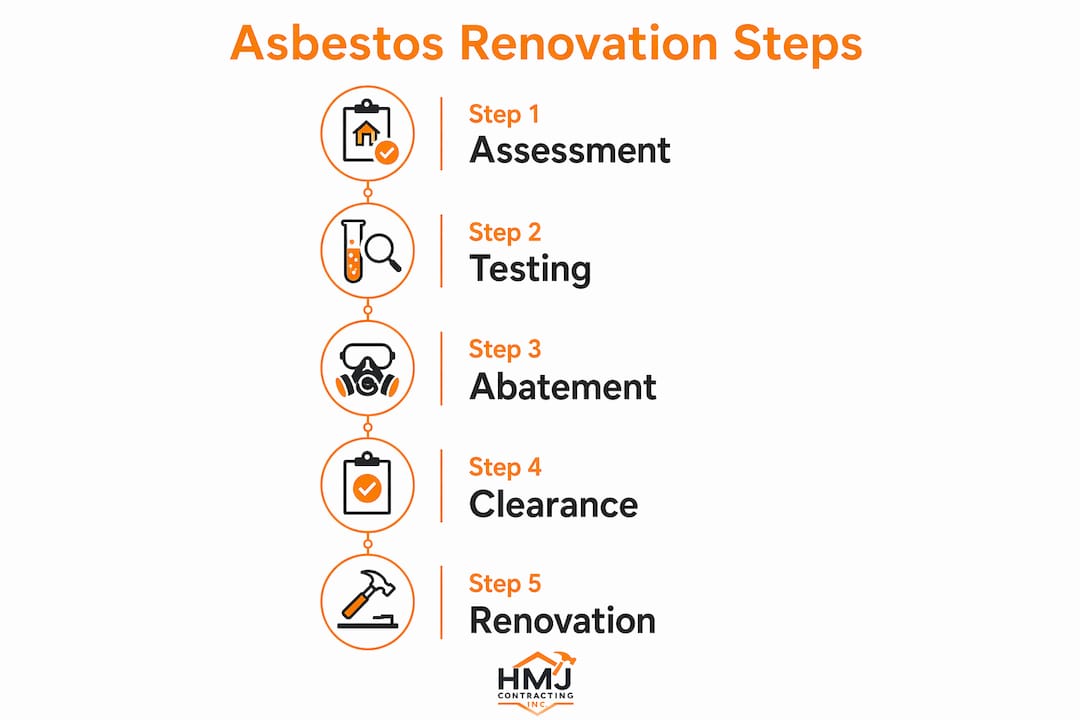
A clear process prevents the most common and costly mistakes. These steps apply whether you are renovating a single bathroom or gutting an entire floor of a pre-1991 home.
-
Hire a certified asbestos inspector before any demolition. A qualified inspector conducts a formal asbestos survey, collects bulk samples, and submits them to an accredited laboratory. This is the only starting point that produces a legally valid result.
-
Receive and review the formal assessment report. The report identifies which materials contain asbestos, their condition, and their risk category. This document is the foundation for every decision that follows.
-
Obtain a Designated Substance Survey (DSS) if required. A Designated Substance Survey is a mandatory disclosure document in Ontario and other provinces. It carries legal accountability during renovations and must be provided to contractors before work begins.
-
Engage a licensed abatement contractor for any disturbed materials. Abatement must match the risk category identified in the report. Low-risk work follows different protocols than high-risk enclosure and removal. Confirm that your abatement contractor holds the appropriate provincial licence.
-
Schedule air clearance testing after abatement. A third-party inspector, separate from the abatement crew, conducts clearance testing to confirm the area is safe. Work cannot resume until clearance is confirmed in writing.
-
Keep all documentation on file. Assessment reports, abatement records, and clearance certificates are legal documents. They protect you during contractor disputes, insurance claims, and property sales.
-
Disclose asbestos presence during property sales. Sellers in most Canadian provinces are required to disclose known hazardous materials. Failing to do so creates significant legal exposure after the sale closes.
Checking for signs you may need asbestos removal before booking your renovation is a practical first step that many Ottawa homeowners overlook until it is too late.
How does asbestos management affect contractor interaction and legal responsibilities?
Contractors carry their own occupational health obligations, and those obligations directly affect your renovation. A licensed contractor cannot legally begin work in an area where asbestos-containing materials may be disturbed without a formal assessment on file. This is not a preference. It is a condition of their provincial licence and their liability insurance.
Failure to provide asbestos reports to contractors shifts full legal and financial responsibility to the property owner. Work stoppages and fines can reach thousands of dollars, and the liability for any resulting health harm rests with the building owner. Providing the DSS or equivalent report to your contractor before work begins transfers a portion of that responsibility and keeps the project moving.
The documentation requirement also affects your insurance position. Insurers reviewing claims related to asbestos exposure will ask for evidence that proper identification and abatement procedures were followed. A complete paper trail is your protection.
- Contractors may walk off a job site if asbestos is discovered mid-renovation without prior documentation.
- The DSS report must be provided to every contractor working in the affected area, not just the general contractor.
- Proper disclosure during property sales prevents buyer disputes and legal claims after closing.
- Insurance claims related to asbestos incidents are far stronger when supported by certified assessment and abatement records.
- Abatement before renovation is a legal requirement in most Canadian provinces, not a recommendation.
What are the most common misconceptions about asbestos during renovations?
The most damaging misconception is that asbestos is only a problem if you can see it or if it looks damaged. Asbestos-containing materials that appear intact can still release fibres when cut, drilled, or sanded. The legal obligation to test applies to the act of disturbance, not the visible condition of the material.
DIY sampling is another costly mistake. DIY sampling often produces invalid results that contractors and regulators will not accept. Homeowners who attempt their own sampling typically end up paying for a professional assessment anyway, doubling the cost and delaying the project. Certified inspectors follow chain-of-custody protocols that make their results legally defensible.
Underbudgeting for asbestos is the third major pitfall. Homeowners who treat testing as an optional line item often face emergency abatement mid-project. Emergency abatement is unplanned, unscheduled, and significantly more expensive than work arranged in advance. Skipping testing leads to emergency abatement, legal fines, health risk, and disrupted renovation timelines.
- Assuming age alone determines risk: asbestos was used in renovation materials well into the 1980s, so a home renovated in 1985 may contain it even if originally built earlier.
- Misplacing or failing to retain asbestos reports can create problems during property sales and insurance claims.
- Believing that a small renovation does not require testing: even minor work like replacing a light fixture in a textured ceiling can disturb asbestos-containing material.
Pro Tip: Mould and asbestos often appear together in older homes. If your assessment uncovers one, ask your inspector about the other. Addressing both at the same time reduces total project disruption. Homeowners managing multiple hazards can also benefit from guidance on reducing remediation costs through coordinated professional services.
Key takeaways
Asbestos testing before renovation is a legal requirement in Canada, and skipping it creates health risks, project delays, and financial liability that far exceed the cost of a proper assessment.
| Point | Details |
|---|---|
| Testing is legally required | Ontario Reg 278/05 and the Alberta OHS Code mandate asbestos identification before disturbing any materials. |
| Budget for it upfront | Professional assessments cost $500–$950; treating this as a standard expense prevents costly emergency stops. |
| Documentation protects you | A Designated Substance Survey is a legal document required by contractors, insurers, and property buyers. |
| Risk category drives scope | Low, moderate, and high-risk abatement require different methods, costs, and timelines. |
| DIY testing is not accepted | Certified professional sampling is the only result contractors and regulators will accept as valid. |
Asbestos testing is worth doing right the first time
After working with Ottawa homeowners on renovations involving asbestos, the pattern I see most often is not negligence. It is optimism. Homeowners look at a 1970s ceiling or a tiled floor and decide it probably does not contain asbestos, or that it will be fine as long as they are careful. That reasoning costs them.
What I have found is that the homeowners who come out of an asbestos situation with the least stress are the ones who treated testing as the first line item in their renovation budget, not an afterthought. They booked a certified inspector before they called a contractor. They had the DSS in hand before anyone picked up a tool. Their projects ran on schedule because abatement was planned, not reactive.
The other thing worth saying plainly: the documentation you collect during this process has real value beyond the renovation itself. Assessment reports and clearance certificates become part of your property record. They support insurance claims, satisfy buyer disclosure requirements, and demonstrate that you managed the property responsibly. That is not just compliance. It is an asset.
Choosing an experienced abatement partner matters more than most homeowners realise until they are mid-project. A certified team that communicates clearly, provides itemised quotes, and coordinates directly with your renovation contractor removes the single biggest source of delay in asbestos-affected projects.
— Jason
Certified asbestos services for Ottawa renovation projects
Planning a renovation in an older Ottawa home means asbestos is a real possibility, not a remote one. Hmjcontracting provides certified asbestos testing, abatement, and clearance services that keep your project compliant and on schedule.

Hmjcontracting's team holds the provincial licences required for all risk categories, from minor disturbances to full enclosure removals. Every project includes detailed, itemised quotes and direct coordination with your renovation contractors. With a 5.0-star Google rating built on hundreds of completed projects, Hmjcontracting delivers the documentation and clearance certificates your project needs to move forward without interruption. Learn more about certified abatement services or review the full range of renovation and abatement services available in Ottawa.
FAQ
Does asbestos testing delay a renovation?
Testing itself takes 1–3 days for results. If asbestos is found and abatement is required, the delay depends on the risk category, ranging from a few days for low-risk work to several weeks for high-risk removals, plus a 24–48 hour air clearance window.
Is asbestos testing legally required in Ontario?
Ontario Regulation 278/05 requires building owners to identify asbestos-containing materials before any renovation or demolition work that could disturb them. Failure to comply can result in work stoppages and fines.
Can I test for asbestos myself?
DIY sampling produces results that contractors and regulators will not accept as valid. Professional certified sampling follows chain-of-custody protocols that make results legally defensible, and is the only option accepted on regulated job sites.
What is a Designated Substance Survey?
A Designated Substance Survey (DSS) is a formal asbestos assessment report required under Ontario law. It must be provided to all contractors before work begins and disclosed to buyers during property sales.
How much does asbestos abatement cost in Canada?
Abatement costs vary by risk category and project scope. Professional assessments run $500–$950, with lab samples at $35–$80 each. Full abatement costs depend on the volume of material, access conditions, and the risk level assigned by the certified inspector.