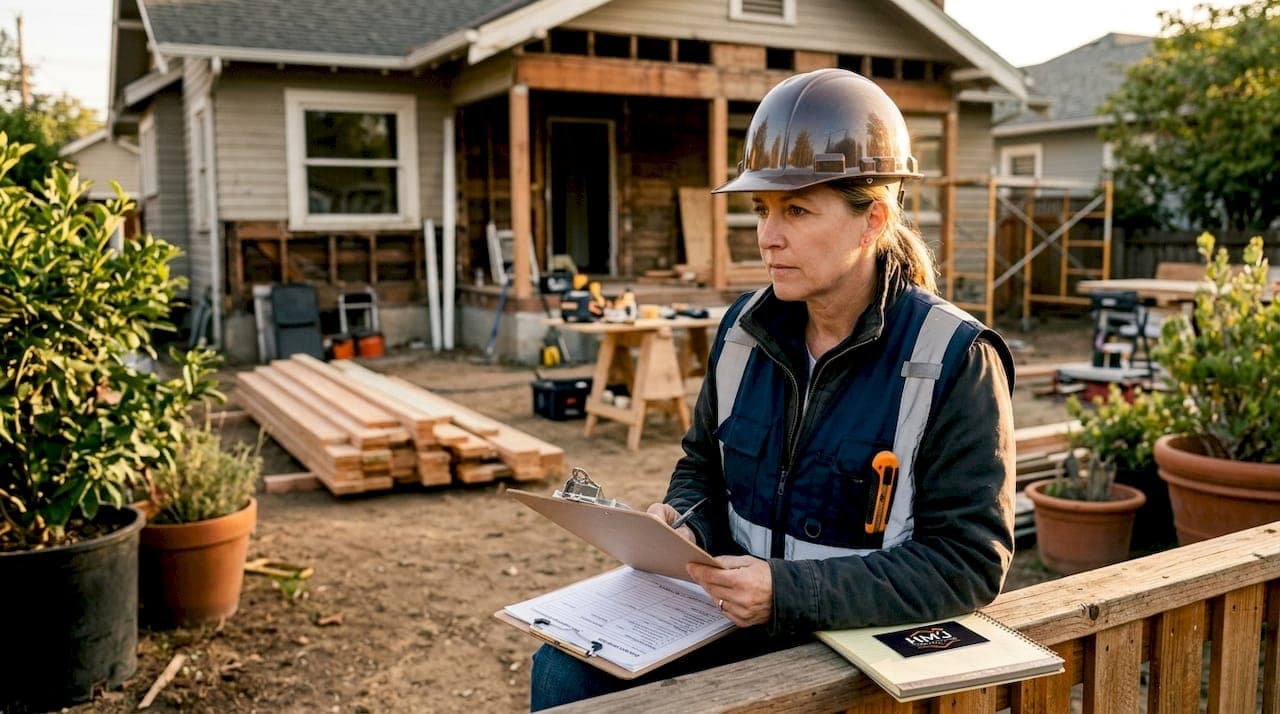
Renovation is the most direct method homeowners have to reduce hidden health risks and bring a property up to current life-safety standards. For Canadian homeowners with pre-1980 properties, the stakes are especially high. Asbestos, lead paint, radon, and mould are common in older construction, and they stay dormant until a renovation disturbs them. Understanding how renovation increases home safety means recognising that the work itself is not just cosmetic. Done correctly, it eliminates hazards, closes compliance gaps, and makes a home measurably safer to live in.
What hazardous materials does renovation commonly uncover?
Older Canadian homes carry risks that are invisible until walls open. Renovation is the point at which those risks become both visible and addressable, which is why professional testing before any demolition is non-negotiable.
The four hazards that appear most often in pre-1990 Canadian homes are:
- Asbestos. Used widely in insulation, floor tiles, drywall compound, and roofing until the late 1980s, asbestos fibres are stable when left undisturbed. Sanding, cutting, or demolition releases toxic particles into the air. Visual inspection alone cannot identify asbestos. Lab testing of physical samples is the only reliable method.
- Lead paint. Homes built before 1990 frequently have lead paint on walls, trim, and window frames. Sanding or stripping this paint without certified containment creates fine dust that is absorbed through the lungs and skin, particularly dangerous for children.
- Radon. This odourless, radioactive gas seeps from the ground into basements and lower floors. Approximately 1 in 5 Canadian residential buildings contain high radon levels, and the gas is responsible for an estimated 3,200 deaths every year in Canada. Health Canada sets the guideline at 200 Bq/m³, and testing should run for 3–12 months for accurate results.
- Mould. Mould is a symptom, not the root problem. Moisture intrusion through a leaking roof, failed vapour barrier, or inadequate ventilation causes mould growth. Removing mould without fixing the moisture source guarantees it returns.
Professional hazardous material surveys bundle mould, radon, asbestos, and lead paint testing into a single assessment, which reduces disruption and gives homeowners a complete risk profile matched to their home's construction era.
Pro Tip: Never dry-sweep or vacuum suspected asbestos or lead dust. Professional sampling uses wetting techniques and targeted collection methods to avoid cross-contamination and preserve the accuracy of lab results.
How does code compliance during renovation improve structural safety?
Bringing a home up to current building codes is one of the clearest benefits of renovation, yet it is the step homeowners most often skip or underestimate. Incomplete due diligence that ignores life-safety systems is the most common renovation failure, and it leaves real gaps in fire protection, structural integrity, and accessibility.
A permitted renovation creates a mandatory checkpoint. Here is what that process typically addresses:
- Means of egress. Building codes specify minimum window sizes, staircase dimensions, and door widths for emergency exit. Older homes frequently fall short. Opening walls during renovation is the practical moment to correct these deficiencies.
- Fire separation and smoke barriers. Renovations that touch shared walls, ceilings, or mechanical chases trigger requirements for updated fire-rated assemblies. This is especially relevant in homes that have had informal additions or converted spaces.
- Electrical and mechanical systems. Knob-and-tube wiring and outdated panel boards are common in pre-1960 homes. A permitted renovation requires an electrical inspection, which catches hazards that cause house fires.
- Ventilation and indoor air quality. Tightening a building envelope for energy efficiency without upgrading ventilation worsens indoor air quality. Current codes require balanced air exchange rates, which protect occupants from accumulated pollutants.
- Barrier-free access. Renovations that affect doorways, bathrooms, or entrances may trigger accessibility requirements. Wider doorways and grab bar blocking installed during renovation cost far less than retrofitting later.
Selling a home with unpermitted work can result in financial penalties, forced demolition of non-compliant work, or buyers demanding significant price reductions. Pulling permits is not bureaucratic overhead. It is legal and financial protection.
Practical upgrades that make a renovated home safer to live in
Renovation creates a window to address safety features that are difficult or expensive to add after construction is complete. The most effective upgrades combine security, indoor environmental quality, and moisture management.
Reinforcing entry points
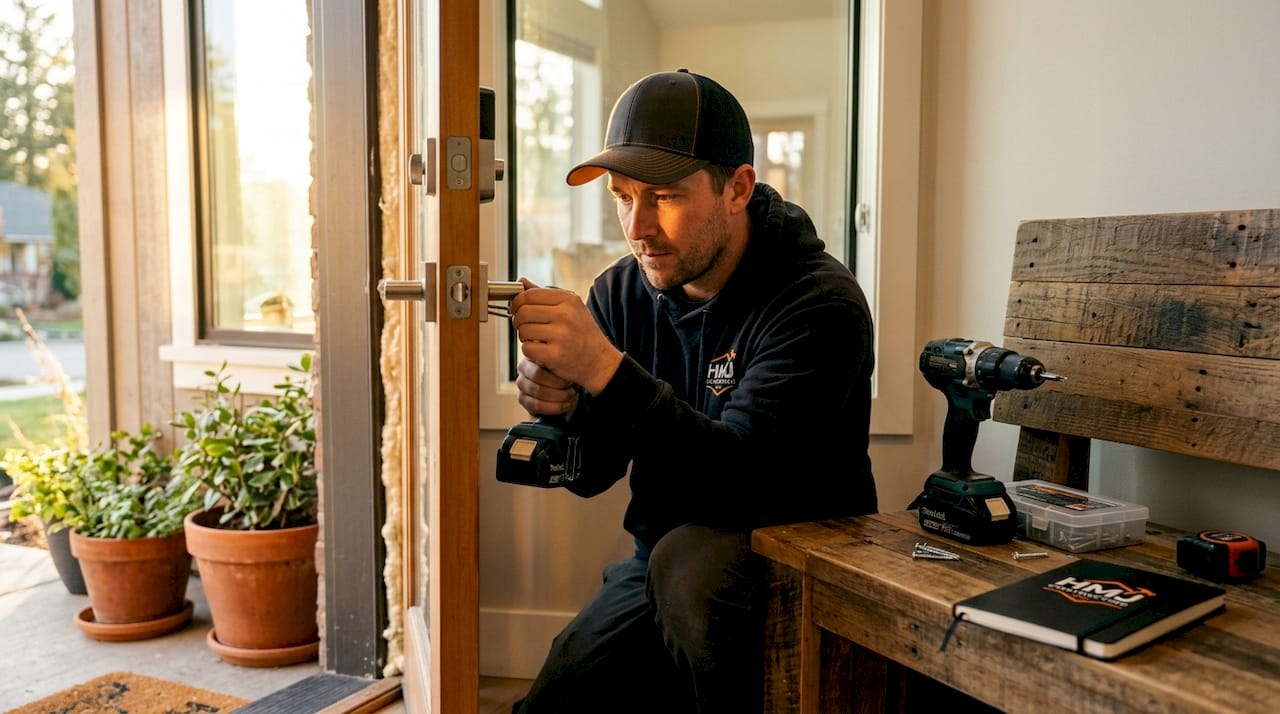
Doors and windows are the primary vulnerability in most homes. Renovation is the right time to install solid-core exterior doors, multi-point locking systems, and reinforced door frames. Security upgrades to windows during renovation, such as laminated glass and window locks, complement energy efficiency improvements without adding significant cost when the work is already underway.
Ventilation and indoor air quality
A mechanical ventilation system, such as a heat recovery ventilator (HRV), maintains fresh air exchange in a well-sealed home. Without one, a tightly insulated renovation creates a closed environment where volatile organic compounds (VOCs) from new materials, cooking fumes, and moisture accumulate. Installing an HRV during renovation is straightforward because walls and ceilings are already open.
Moisture management
Moisture is the single most common cause of long-term structural damage and mould growth in Canadian homes. Renovation provides access to vapour barriers, subfloor drainage, and exterior waterproofing that are impossible to address without opening the structure. Fixing these systems during renovation prevents the recurring mould remediation costs that follow inadequate moisture control.
Pro Tip: When renovating a basement, install a radon rough-in pipe during the concrete work. Adding a sub-slab depressurisation system later requires breaking the floor. The rough-in costs almost nothing when poured with the slab.
| Upgrade | Primary safety benefit |
|---|---|
| Solid-core exterior doors with multi-point locks | Reduces forced-entry risk |
| Laminated or tempered window glass | Reduces intrusion and injury risk |
| Heat recovery ventilator (HRV) | Maintains air quality in sealed homes |
| Sub-slab radon depressurisation | Reduces radon concentration below 200 Bq/m³ |
| Vapour barrier and exterior waterproofing | Prevents mould and structural moisture damage |
What homeowners must do to renovate safely
Safe renovation is not only about what gets built. It is equally about how the project is managed before, during, and after construction.
- Hire certified professionals for hazardous material work. Asbestos abatement and lead paint removal require licensed contractors who follow containment protocols. DIY attempts at asbestos removal spread fibres through HVAC systems and adjacent rooms, creating a larger contamination problem than the original one.
- Treat testing as a phased process, not a one-time task. Testing is a phased risk management strategy. Assume hazardous materials are present in older homes until lab results confirm otherwise. As demolition proceeds and new areas open, additional sampling may be required.
- Require proper containment during abatement. Certified abatement uses HEPA filtration and negative air pressure to prevent contaminated particles from migrating to clean areas of the home. Containment failure during abatement is the most common cause of secondary contamination.
- Do not skip clearance testing. Post-abatement third-party clearance testing confirms that hazardous material removal was successful and the home is safe to re-enter. Skipping this step leaves homeowners with no evidence that the work was effective, and no legal protection if problems arise later.
- Keep documentation. Permits, lab reports, abatement certificates, and clearance test results form a paper trail that protects homeowners during resale and in any future dispute about the condition of the property.
Homeowners who treat renovation as a risk management process, rather than a purely cosmetic exercise, consistently achieve better outcomes. The permit application process is a practical starting point for understanding what compliance looks like for a specific project.
Key takeaways
Renovation increases home safety most effectively when hazardous material abatement, code compliance, and structural upgrades are planned together from the start.
| Point | Details |
|---|---|
| Test before demolition | Assume asbestos, lead, radon, and mould are present in pre-1990 homes until lab results confirm otherwise. |
| Pull permits for every major renovation | Permits trigger inspections that catch electrical, fire, and structural hazards before they become liabilities. |
| Fix moisture at the source | Removing mould without correcting the moisture cause guarantees recurrence and ongoing structural damage. |
| Require clearance testing after abatement | Third-party clearance testing is the only way to confirm hazardous materials were fully removed. |
| Combine security and efficiency upgrades | Reinforced windows and doors, plus HRV installation, deliver safety and energy benefits at the same time. |
What I've learned from watching homeowners get renovation safety wrong
The most consistent mistake I see is homeowners treating hazardous material testing as a formality rather than a genuine decision point. They book a test, receive results showing asbestos in the floor tile, and then ask whether they can just "work around it." The answer is almost always no, and the attempt to work around it almost always makes things worse.
The second mistake is phasing renovation in a way that separates demolition from abatement. When a homeowner strips a bathroom themselves before the abatement contractor arrives, the contamination is already spread. The abatement scope doubles, the cost increases, and clearance testing becomes more complicated.
What actually works is treating the first phase of any renovation in a pre-1980 home as an environmental assessment phase. No demolition, no sanding, no cutting until the lab results are back and the abatement plan is in place. This adds time upfront, but it eliminates the expensive surprises that derail projects mid-construction.
Radon is the hazard I find most underestimated. Homeowners accept asbestos as a known risk because it has been in the news for decades. Radon feels abstract because you cannot see or smell it. But 1 in 5 Canadian homes exceeds Health Canada's guideline, and the mitigation cost during a basement renovation is a fraction of what it costs to install a system after the fact. The measuring cost is small. The health risk of not measuring is not.
The renovation projects that achieve the best safety outcomes are the ones where the homeowner, the abatement contractor, and the general contractor are coordinating from the beginning, not discovering each other's work after the fact.
— Jason
Safe renovation support from Hmjcontracting
Homeowners in Ottawa dealing with older properties have a reliable option for certified abatement and renovation work.

Hmjcontracting provides licensed abatement services covering asbestos, lead paint, mould, and radon mitigation, with detailed itemised quotes and a transparent process from assessment through clearance testing. Their team coordinates directly with renovation contractors to sequence abatement correctly before demolition begins. Every project is backed by Hmjcontracting's 5.0-star Google rating and hundreds of completed projects across the Ottawa region. For homeowners ready to address hazardous materials before renovation work starts, Hmjcontracting's abatement services are the practical first step. You can also review the full range of services to find the right fit for your project.
FAQ
What hazardous materials are most common in pre-1980 Canadian homes?
Asbestos, lead paint, radon, and mould are the four most common hazards in pre-1980 Canadian homes. Professional environmental surveys test for all four simultaneously to provide a complete risk profile before renovation begins.
Does renovation affect home insurance?
Renovation can affect home insurance in two ways. Unpermitted work may void coverage for related claims, while permitted upgrades to electrical, plumbing, and fire safety systems can reduce premiums by lowering the insurer's assessed risk.
How long does radon testing take before a renovation?
Health Canada recommends radon testing for 3–12 months for accurate results. A short-term test of 48–96 hours can indicate whether a problem exists, but long-term testing is required to confirm average exposure levels before mitigation decisions are made.
Is DIY asbestos removal legal in Canada?
Regulations vary by province, but certified abatement contractors are required for most asbestos removal work in occupied or commercial buildings. DIY attempts risk spreading fibres through the home and create legal liability during resale. Hiring a licensed abatement contractor is the standard practice.
What is clearance testing and why is it required after abatement?
Clearance testing is a third-party air quality assessment conducted after abatement work is complete. It confirms that hazardous material concentrations have returned to safe levels and that the home is safe for re-entry and continued renovation.