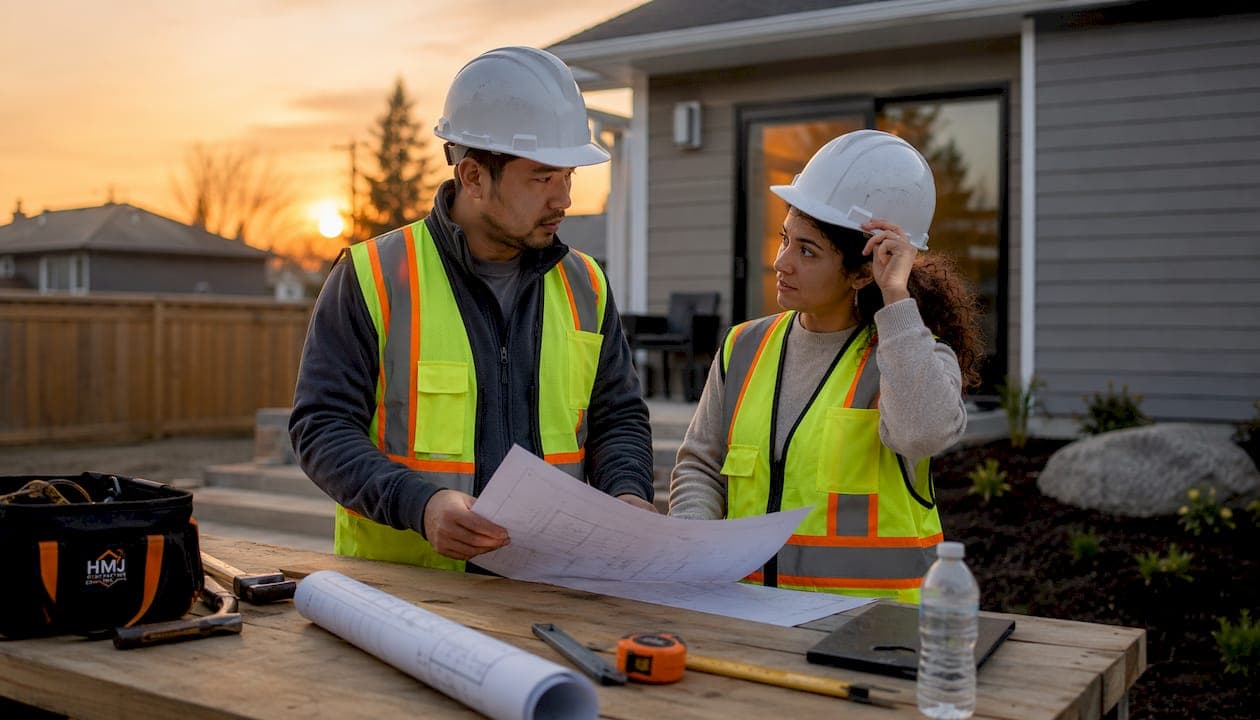
Why communication is the foundation of every successful renovation
Poor communication is the single most common reason renovation projects go wrong. Delays, budget overruns, and disputes almost always trace back to a breakdown in the exchange of information between homeowners, contractors, designers, and trades. When everyone involved understands the plan, the timeline, and their responsibilities, projects run far more smoothly and finish closer to budget.
The consequences of getting this wrong are real and costly. Research on Quebec construction disputes found that lack of communication was one of the leading causes of conflicts escalating to binding dispute resolution. Poor communication in renovation projects can result in damages reaching hundreds of thousands of dollars, according to Canadian cost overrun analysis.
Clear, consistent dialogue between all parties delivers measurable benefits:
- Alignment on scope and expectations from the first consultation through to final walkthrough
- Fewer errors and less rework, because everyone is working from the same understanding
- Budget control, since changes and surprises get flagged early rather than discovered late
- Trust between homeowners and contractors, which keeps the working relationship productive
- Faster decisions when unexpected issues arise on site
- Reduced risk of disputes escalating to formal or legal channels
Every one of these outcomes depends on one thing: people talking to each other clearly and consistently throughout the project.

How communication supports every person involved in your renovation
The Royal Architectural Institute of Canada (RAIC) states plainly that communication sits at the centre of architecture and construction practice. Even a gifted designer cannot deliver a successful project without the ability to communicate ideas clearly to trades, suppliers, and clients. Construction requires active collaboration among many people, and that collaboration only works when information flows reliably in every direction.
"Construction projects are complex and risky, requiring the active participation of all contributors. Co-operation and co-ordination of activities through interpersonal and group communication are essential in ensuring the project is completed successfully." — M.E.L. Hoezen, The Problem of Communication in Construction, as cited by the RAIC
The Greater Ottawa Home Builders' Association (GOHBA) makes an important point that homeowners sometimes overlook: communication is a shared responsibility. Contractors and site supervisors must keep information flowing between trades, designers, and suppliers. But homeowners must also clearly state what they want, be available to answer questions, and respond to requests for decisions without delay. A project stalls just as easily when a homeowner goes quiet as when a contractor fails to update.
Beyond the homeowner and general contractor, effective communication in construction extends to the full project team. Subcontractors need accurate instructions from the site supervisor. Suppliers need confirmed specifications before they ship materials. Designers need timely feedback to finalise drawings. When any one of these channels breaks down, the effects ripple outward. A well-defined scope of work reduces ambiguity for every party involved, which is why getting the written details right at the start matters so much.
What poor communication actually costs you in time, money, and quality
The impact of communication on budget, schedule, and quality is not abstract. The Project Management Institute's research, cited in capital project studies, found that ineffective communication puts 7.5% of project budgets at risk, and acts as the primary contributor to project failure one-third of the time.
7.5% of every project budget is at risk from ineffective communication — that translates to $75,000 on a $1 million renovation.
When communication breaks down mid-project, the sequence of problems is predictable. Misunderstood instructions lead to rework. Rework causes schedule slippage. Schedule slippage drives up labour costs. By the time the problem surfaces, the fix is far more expensive than a clarifying conversation would have been at the start.
Quality suffers in a specific way too. When the working relationship between a homeowner and contractor deteriorates because of poor communication, the contractor's focus shifts from doing excellent work to finishing quickly and moving on. Errors go unaddressed. Safety considerations get deprioritised. The homeowner ends up with a result that does not match their expectations, and potentially faces further costs to correct it. A clear renovation timeline agreed upon at the outset gives both parties a shared reference point that prevents many of these situations from developing.
Common communication challenges in renovations and how to fix them
Most communication problems in renovation projects come from a handful of recurring sources. Recognising them early makes them much easier to address.
Terminology confusion is more common than most homeowners expect. Construction trades, designers, and suppliers often use the same words to mean different things, or different words to mean the same thing. A project-specific glossary resolves this by giving every party a single reference point for key terms, reducing the chance that a misread specification triggers an expensive mistake.
Other frequent barriers include:
- Delayed responses via email. A survey of Alberta's construction industry found that email has an importance index of 65% as a communication tool, yet delays in information sharing via email were widely reported as a drag on project momentum and decision-making.
- Unclear roles and responsibilities. When no one is certain who approves a change or who contacts the supplier, decisions stall.
- Lack of proactive updates. Homeowners left without news for days assume the worst. Silence breeds anxiety and erodes trust faster than almost anything else.
- Verbal-only agreements. Conversations that never get written down create conflicting memories of what was decided.
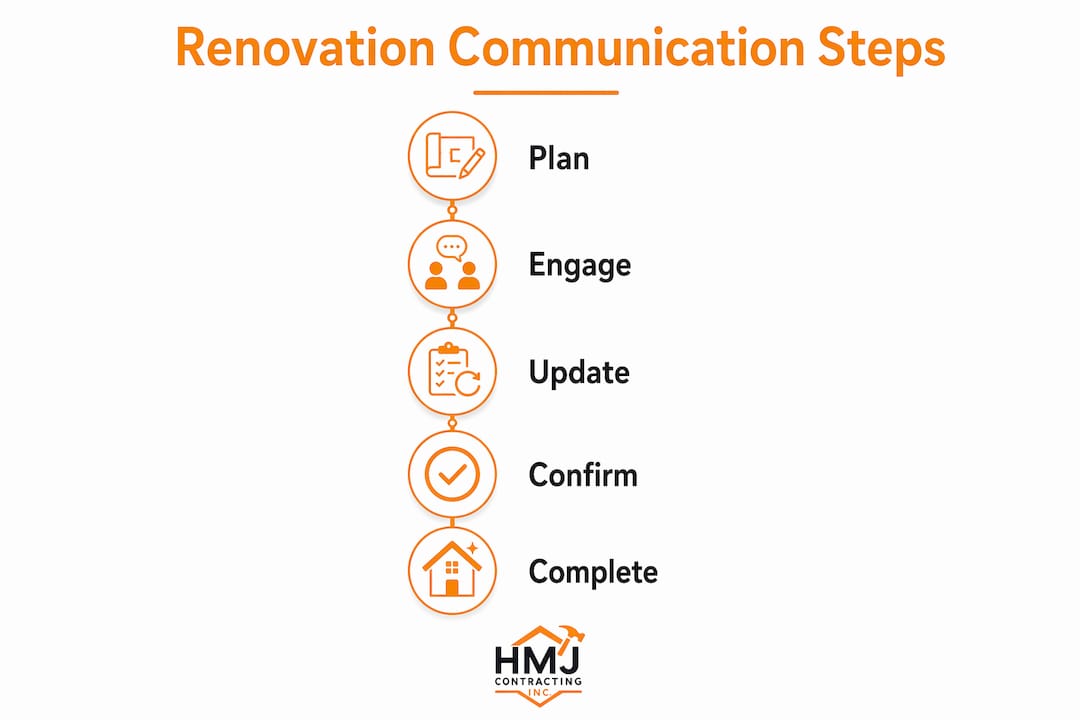
The fix for most of these is straightforward: agree on a communication protocol at the project kickoff. Decide which channel handles which type of message, who is responsible for weekly updates, and how changes to scope or budget get documented and approved.
Pro Tip: Ask your site supervisor to send live photos from the job site at regular intervals. The GOHBA notes that the best supervisors do this as a matter of course. It gives you a real-time view of progress, lets you catch anything you want to question early, and keeps the feedback loop open without requiring you to be on site every day.
Practical tools and habits that keep communication on track throughout a renovation
Good communication during a renovation does not happen by accident. It requires a few deliberate habits and the right tools to support them.
Establish a regular check-in schedule. Weekly progress meetings, even brief ones by phone or video call, give both parties a structured opportunity to review what was completed, what is coming next, and whether any decisions are needed. This prevents small issues from sitting unresolved for days.

Put everything in writing. Verbal conversations are useful for quick decisions, but anything that affects scope, cost, or timeline should be confirmed in writing immediately after. Email works for this purpose. So do the built-in messaging features of project management platforms designed for construction.
Use digital tools where they add speed. The Alberta construction survey found that the industry still relies heavily on email, meetings, and phone calls, yet these tools create delays in information sharing. Purpose-built project management platforms allow documents, photos, change orders, and approvals to be stored in one place, accessible to everyone on the team. This reduces the chance of a critical piece of information staying at the individual level rather than being shared with the full team.
Recommended practices for homeowners specifically:
- Be available. Respond to contractor questions within a few hours, not a few days.
- Confirm your preferences in writing before work begins on any significant element.
- Ask for itemised cost updates whenever a change is proposed, not after the fact.
- Review progress photos and flag concerns immediately rather than waiting for the next site visit.
For first-time homeowners, guidance on navigating the renovation process can help you understand what to expect at each stage and how to stay engaged without overstepping.
What Canadian industry research says about communication in renovations
The evidence from Canadian construction research is consistent and clear: communication failures drive project failures, and the organisations closest to the industry have been saying so for years.
The Quebec construction dispute study, drawing on interviews with nine construction experts and survey data from 94 participants, identified lack of communication as one of the five most common causes of disputes escalating to binding dispute resolution. The other four causes, including unforeseen changes and ambiguities in contract documents, are themselves often rooted in inadequate communication at earlier project stages.
The RAIC's published guidance reinforces this at the professional level, noting that architects must "say what you mean and put it in writing" as a foundational rule of practice. The GOHBA, representing builders and renovators in the Ottawa region, frames communication as a two-way obligation: contractors must manage information flow across the full project team, while homeowners must be clear about their expectations and genuinely available when decisions are needed.
"No matter how badly you want your renovation to go smoothly, and no matter how great the skills of your renovator or design professional, if there's no communication, the project could be rocky." — Greater Ottawa Home Builders' Association
| Communication failure | Typical impact |
|---|---|
| Lack of communication between parties | Disputes escalating to binding resolution |
| Ineffective information flow via email | Delays in decisions and project momentum |
| Terminology confusion across trades | Rework, incorrect materials, cost overruns |
| Absent homeowner feedback | Stalled decisions, missed corrections |
| No written documentation of changes | Conflicting accounts, unresolved disputes |
Hmjcontracting's approach to renovation project management reflects these principles directly. With over 25 years of experience in Ottawa, Hmjcontracting provides detailed, itemised quotes from the outset, maintains transparent communication throughout every project, and holds a 5.0-star Google rating built on hundreds of completed projects. That track record comes from treating clear communication not as a courtesy but as a core part of how the work gets done.
Key takeaways
Clear communication prevents the majority of renovation failures, from budget overruns and schedule delays to disputes and quality shortfalls, making it the single most important factor in project success.
| Point | Details |
|---|---|
| Communication prevents disputes | Lack of communication is a leading cause of construction disputes requiring binding resolution in Canada. |
| Budget risk is real | Ineffective communication puts 7.5% of project budgets at risk, per Project Management Institute research. |
| Shared responsibility | Both homeowners and contractors must communicate actively; silence from either side stalls the project. |
| Written records protect everyone | Confirming scope, cost, and change decisions in writing prevents conflicting accounts later. |
| Digital tools reduce delays | Email alone creates information delays; project management platforms improve speed and shared access. |
Hmjcontracting keeps communication at the centre of every project

Hmjcontracting has been delivering renovation, demolition, and certified abatement projects across Ottawa for over 25 years. Every project starts with a detailed, itemised quote so you know exactly what is planned and what it costs. From first consultation to final walkthrough, the team maintains clear, consistent communication with homeowners at every stage.
If you are planning a renovation and want a contractor who treats transparency as standard practice, contact Hmjcontracting for a free quote today.