
The most common property manager renovation mistakes are predictable, and each one has a clear first action. Before any work begins on an Ottawa property, confirm these eight points or stop until you can.
- No asbestos survey before tendering. Under O. Reg. 278/05, an owner must determine whether materials likely to be disturbed are asbestos-containing before arranging any demolition, alteration, or repair work. First action: order an asbestos examination and provide the written report to all bidders.
- Choosing the lowest bid without scrutiny. A low number often means missing scope, absent WSIB coverage, or no allowance for hazardous-material controls. First action: request an itemised, line-by-line quote and verify WSIB clearance before signing.
- No written contract. Ontario law requires a written contract for any renovation work over $50. First action: refuse to allow work to start without a signed contract that names sub-trades and includes a change-order clause.
- No contingency budget. Older Ottawa properties regularly conceal hidden defects. First action: set aside a 10–20% contingency before the project starts.
- Reactive inspections only. Waiting for problems to surface costs more than scheduled checks. First action: build a proactive inspection schedule into the project plan from day one.
- Poor change-order control. Verbal approvals let costs spiral. First action: require written, signed change orders for every scope addition.
- No tenant notice plan. Occupants need advance written notice of timelines, safety steps, and a contact for concerns. First action: issue a formal notice before work begins.
- Missing post-job documentation. Air-clearance certificates, disposal manifests, and permits protect you legally. First action: make final payment conditional on receiving all close-out documents.
The Canadian Centre for Occupational Health and Safety (CCOHS) and Hmjcontracting both flag these failures as the most frequent causes of cost overruns and regulatory exposure on Ottawa renovation projects.
Table of Contents
- 1. Under-scoped hazardous-material work
- 2. Relying solely on the lowest upfront price
- 3. Missing or incomplete written contracts
- 4. Insufficient contingency funding
- 5. Reactive inspections and no proactive schedule
- 6. Poor change-order control
- 7. Inadequate tenant notices and communication
- 8. Missing permits and unclear sub-trade scope
- 9. No post-job documentation package
- Hazardous-material compliance failures you cannot afford to miss
- Procurement and budgeting mistakes that cost you later
- Communication, tenant safety, and record-keeping failures
- How to vet abatement and renovation contractors
- What to do when you spot these mistakes
- What a qualified Ottawa abatement contractor does differently
- Pre-renovation checklist and on-site stop-work triggers
- Clear signs that project management is failing
- Timeline and cost signals: reasonable delays vs. red flags
- Questions to ask contractors about hazardous-material abatement
- Hiring a licensed abatement contractor in Ottawa and Ontario
- How renovation mistakes play out: two Ottawa scenarios
- Legal liabilities and risk management for hazardous-material mishandling
- Key takeaways
- The one habit that prevents most renovation failures
- Hmjcontracting handles the compliance work so you don't have to
- Authoritative references and useful sources
1. Under-scoped hazardous-material work
Skipping or minimising the hazardous-material scope is the single most expensive mistake in property management renovation. When asbestos, lead, or mould is discovered mid-project, work stops, costs spike, and tenants may be displaced. The fix is a pre-tender examination that covers all materials likely to be disturbed, with a written report provided to every bidder so abatement costs are priced into bids from the start.
2. Relying solely on the lowest upfront price
Life-cycle cost analysis is the right lens for evaluating bids. A contractor who prices low on materials often recovers margin through change orders, inferior products that fail early, or skipped controls that generate remediation costs later. Ask every bidder to break out labour, materials, disposal, permits, and abatement separately so you can compare apples to apples.
Pro Tip: If a bid is more than 20% below the others with no clear explanation, treat it as a red flag, not a bargain. Ask the contractor to walk you through every line item.
3. Missing or incomplete written contracts
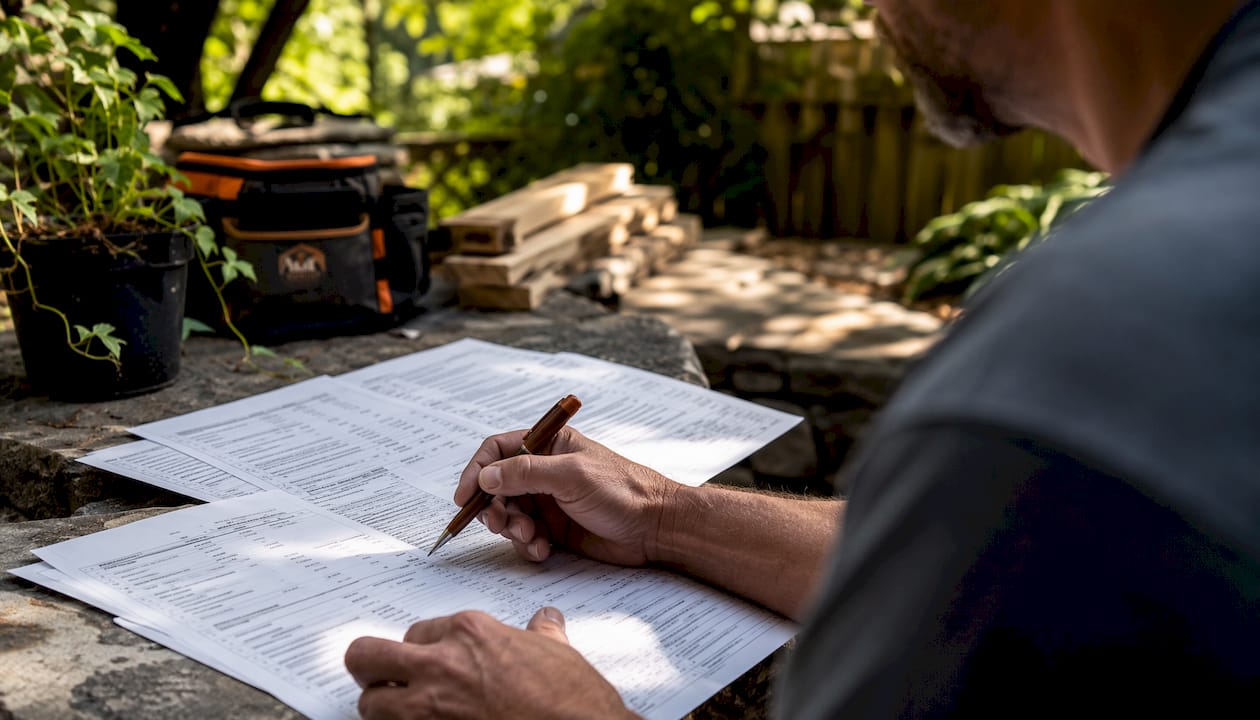
Ontario's Consumer Protection Act requires written contracts for renovation work over $50, and the contract must include the contractor's contact information, a detailed project description, payment terms, a work schedule, and all sub-trades. A vague contract is an open invitation for disputes. Keep the deposit to no more than 10% and never pay the full amount before work is complete.
4. Insufficient contingency funding
Older Ottawa properties built before 1990 frequently contain hidden structural or hazardous defects that only appear after demolition begins. Setting aside a 10–20% contingency is standard practice for this reason. Budget it before the project starts, not after the first surprise appears.
5. Reactive inspections and no proactive schedule
A reactive approach to inspections is one of the most consistent causes of costly overruns and tenant dissatisfaction. Scheduled proactive inspections with documented logs catch deficiencies while they are still cheap to fix. Build weekly site-visit checkpoints into the project plan and require the contractor to sign off on each milestone before the next phase begins.
6. Poor change-order control
Every verbal scope change is a liability. Under Ontario's Consumer Protection Act, a contractor cannot charge more than 10% above the original estimate unless you have agreed to new work in writing. Require a signed change order for every addition, with a revised cost and timeline attached. This single habit prevents most budget overruns.
7. Inadequate tenant notices and communication
Tenants have a right to advance notice before renovation work affects their unit or common areas. A proper notice covers the work timeline, the safety measures in place, any temporary service interruptions, and a named contact for concerns. Poor communication is one of the top drivers of tenant complaints and, in some cases, formal disputes. For detailed guidance on structuring tenant communications, the renovation communication guide covers notice templates and weekly reporting formats.
8. Missing permits and unclear sub-trade scope
Permits are the owner's responsibility unless the contract explicitly assigns them to the contractor. Work done without a permit can void insurance, trigger stop-work orders, and create problems at resale. Confirm permit responsibility in writing before work starts, and require the contractor to name every sub-trade in the contract.
9. No post-job documentation package
Accepting a project as complete without the full documentation package is a common renovation error that creates legal exposure later. The close-out package must include air-clearance certificates, disposal manifests for hazardous materials, copies of all permits, and signed inspection records. Make final payment conditional on receiving every document.
Hazardous-material compliance failures you cannot afford to miss
O. Reg. 278/05 places clear duties on property owners before any demolition, alteration, or repair work proceeds. The owner must have an examination to determine whether materials likely to be disturbed are asbestos-containing, prepare a written report, and provide that report to every potential constructor and contractor before tendering. Skipping this step is not just a compliance failure; it exposes you to liability if a worker is harmed.
Owner duty under O. Reg. 278/05: Before requesting tenders or arranging work, an owner must determine if any friable or non-friable material likely to be disturbed meets the definition of asbestos-containing material, or treat it as if it does. A written report must be prepared and provided to all potential constructors and contractors.
Lead is also a designated substance under Ontario's OHSA, with an occupational exposure limit of 0.05 mg/m³ as a time-weighted average. Owners must inform bidders if lead is present so that controls and costs are included in bids from the start.
Red-flag checklist for hazardous-material compliance:
- No asbestos survey or lab report provided to bidders
- Contractor cannot name a licensed abatement worker or supervisor
- No chain-of-custody documentation for removed materials
- No air-clearance certificate planned or issued after abatement
- Contractor refuses to provide written work procedures
- Mould remediation proceeding without moisture-source identification
CCOHS provides guidance on recognising and managing designated substances on construction projects and is a reliable reference for occupational health and safety obligations in Canada.
Procurement and budgeting mistakes that cost you later
Choosing a contractor on upfront price alone is one of the most documented property renovation pitfalls. Life-cycle cost thinking asks a different question: what will this material or contractor choice cost over its full service life, including maintenance, early replacement, and any remediation?
Procurement checklist:
- Require itemised, line-by-line quotes from at least three contractors.
- Verify WSIB clearance and commercial general liability insurance before signing.
- Confirm permit responsibility is assigned in the contract.
- Budget a 10–20% contingency before the project starts.
- Evaluate bids on total cost of ownership, not lowest line-item price.
Life-cycle cost checklist items to review:
- Expected service life of materials specified
- Maintenance frequency and annual cost
- Disposal or remediation cost at end of life
- Warranty terms and the contractor's track record honouring them
- Energy or operating cost implications of the specified product
Communication, tenant safety, and record-keeping failures
Missing documentation is the most common way a well-run project becomes a legal problem after the fact. Keep a complete project file that includes:
- Asbestos and lead examination reports
- Air-clearance certificates (post-abatement)
- Disposal manifests for all hazardous waste
- Copies of all permits
- Daily or weekly progress logs signed by the site supervisor
- All signed change orders with revised cost and timeline
Pro Tip: Assign one person, whether an in-house manager or a hired project manager, to own the project file. Every document goes to that person before any payment is released. This single habit closes most documentation gaps.
A tenant notice should include: the nature of the work, the start and estimated completion date, any areas that will be inaccessible, safety measures in place (especially for abatement work), and a direct contact name and phone number for questions.
How to vet abatement and renovation contractors
Delegation does not remove accountability. The owner or board remains responsible for oversight even when a contractor is hired. Diligent vetting is the primary protection against liability under Ontario's occupancy and liability rules.
Credentials to verify before signing:
- Licensed abatement certification (Type 2 or Type 3 as required by O. Reg. 278/05)
- Current WSIB clearance certificate
- Commercial general liability insurance certificate
- Evidence of air-monitoring capability or a named air-monitoring firm
- Disposal chain documentation from previous projects
Five questions to ask every abatement contractor:
- Can you provide the name and licence number of your abatement supervisor?
- What type of operation (Type 1, 2, or 3) does this work qualify as under O. Reg. 278/05?
- Who will conduct air monitoring, and when will clearance certificates be issued?
- How do you handle a discovery of suspect material not in the original report?
- Can you provide three references from similar Ottawa projects in the past two years?
Red flags that should disqualify a bidder:
- Cash-only payment requests
- Refuses to name sub-trades or provide WSIB clearance
- Vague or lump-sum itemisation with no breakdown
- No written procedures for abatement work
- Cannot produce references from comparable projects
What to do when you spot these mistakes
Act immediately. Waiting to see if a problem resolves itself almost always makes it worse.
- Stop work on the affected area as soon as a compliance gap is identified.
- Document the current state with photos, written notes, and dated entries in the project log.
- Order independent testing if suspect materials have been disturbed without a prior report.
- Notify stakeholders including tenants, the building owner, and your insurer.
- Engage a licensed abatement contractor to assess the situation and prepare a remediation plan.
- Update the project schedule and budget to reflect the revised scope before restarting work.
For prevention, adopt these policies on every future project:
- Mandatory pre-tender hazardous-material examination on all properties built before 1990
- Minimum 10–20% contingency funding approved before contracts are signed
- Formal written change-order approvals required for any scope addition
- Scheduled proactive inspections at defined project milestones
- Professional project oversight for any project above a defined dollar threshold
When a compliance failure involves worker exposure to a designated substance, consult a health-and-safety professional or legal counsel before restarting work.
What a qualified Ottawa abatement contractor does differently
Consider a typical scenario: a property manager in Ottawa hires a general contractor for a bathroom renovation in a 1970s building. No asbestos survey is ordered. Demolition begins, and the contractor disturbs pipe insulation that turns out to be asbestos-containing material. Work stops, the Ministry of Labour is notified, and the remediation cost exceeds the original renovation budget.
When Hmjcontracting is engaged at the outset, the process looks different. The team conducts an asbestos and lead examination before any work is tendered, prepares a written report for the project file, and provides it to all bidders. Licensed abatement proceeds under the correct operation type, air monitoring is conducted throughout, and a clearance certificate is issued before the renovation contractor re-enters the space. Permits are managed, disposal manifests are filed, and the close-out package is delivered before final payment.
What to expect from a qualified abatement contractor: written asbestos and lead reports before tendering, permit handling, air-clearance certificates after abatement, disposal manifests for all hazardous waste, an itemised quote, and a milestone schedule with signed sign-offs at each phase.
Hmjcontracting holds a 5.0-star Google rating and has completed hundreds of licensed abatement and renovation projects across Ottawa. Services include asbestos, lead, and mould abatement, air quality testing, permit coordination, interior demolition, and full-service residential and commercial renovations.
Pre-renovation checklist and on-site stop-work triggers
Pre-renovation quick checklist:
- Hazardous-material survey completed and report provided to all bidders
- Itemised written contract signed, with sub-trades named
- WSIB clearance and insurance certificates on file
- Permit plan confirmed and responsibility assigned in contract
- 10–20% contingency fund approved
- Tenant notice issued with timeline, safety steps, and contact information
On-site stop-work triggers:
- Unlabelled dusty debris that may be asbestos-containing material
- Contractor cannot produce a current air-clearance certificate after abatement
- Undocumented demolition of suspect pipe insulation, ceiling tiles, or floor tiles
- Worker performing abatement without visible respiratory protection
- Discovery of material not referenced in the owner's asbestos report
The project manager or designated owner representative keeps the checklist, signs off at each milestone, and escalates to a licensed abatement specialist whenever a stop-work trigger is met. Do not allow work to resume until the trigger condition is resolved in writing.
Clear signs that project management is failing
Repetitive delays, absent contractor follow-up, missing project logs, and frequent tenant or owner complaints are the clearest indicators that a renovation project lacks a structured management process. When a contractor misses two consecutive scheduled check-ins without explanation, that pattern rarely self-corrects. When tenants are filing complaints about dust, noise outside agreed hours, or unannounced work stoppages, the communication structure has broken down.
Missing maintenance and project logs are a particular risk in property management. Without dated, signed records, it becomes impossible to establish what was done, when, and by whom. This gap creates liability exposure and makes it harder to enforce warranty claims. A structured project management approach with defined reporting intervals closes this gap before it becomes a problem.
Timeline and cost signals: reasonable delays vs. red flags
A one-to-three day delay caused by a material delivery or a permit inspection is normal. A week-long stoppage with no written explanation from the contractor is a red flag. Cost escalation of up to 10% above the original estimate is within the range Ontario's Consumer Protection Act permits without a signed change order. Anything beyond that requires written approval.
Watch for these specific signals:
- Red flag: Contractor requests a large additional payment before completing the current phase.
- Normal: A change order for an unexpected hidden defect, priced and signed before work continues.
- Red flag: No progress update for more than five business days.
- Normal: A brief delay while waiting for a permit inspection sign-off, communicated in writing.
- Red flag: Sub-trades arriving on site who were not named in the contract.
Questions to ask contractors about hazardous-material abatement
These questions apply specifically to abatement scope and should be asked before any contract is signed:
- What type of asbestos operation (Type 1, 2, or 3) does this project require, and why?
- Who is your licensed abatement supervisor, and can you provide their certification number?
- How will the work area be contained, and what decontamination procedures will be used?
- Who conducts air monitoring, and at what points during and after abatement?
- How will removed materials be packaged, labelled, and transported to a licensed disposal facility?
- What happens if additional suspect material is discovered during demolition?
- Will you provide a written work plan before abatement begins?
- When will the air-clearance certificate be issued, and who signs it?
Hiring a licensed abatement contractor in Ottawa and Ontario
In Ontario, workers and supervisors performing Type 3 asbestos operations must complete the Asbestos Abatement Worker Training Program or the Asbestos Abatement Supervisor Program approved by the Ministry of Colleges, Universities, Research Excellence and Security. Type 2 operations require training delivered by a competent person as defined under the Occupational Health and Safety Act.
When hiring in Ottawa, verify the following credentials specific to Ontario:
- Asbestos Abatement Worker or Supervisor certification for the operation type required
- WSIB clearance certificate (current, not expired)
- Commercial general liability insurance with adequate coverage for the project value
- Demonstrated experience with the specific material type (pipe insulation, floor tiles, spray-applied fireproofing, etc.)
- Familiarity with City of Ottawa permit requirements for abatement and demolition work
Ask for references from Ottawa-area projects of similar scope and age of building. A contractor who has worked extensively in pre-1990 Ottawa properties will have encountered the range of materials common to the region, including vermiculite insulation, asbestos-containing floor adhesives, and lead-based paint on structural components.
How renovation mistakes play out: two Ottawa scenarios
Scenario 1: The missed survey. A property manager arranges a kitchen renovation in a 1965 Ottawa apartment building without ordering an asbestos examination. The general contractor removes vinyl floor tiles and disturbs the adhesive beneath, which contains chrysotile asbestos. Work stops under a Ministry of Labour order. The cost of emergency abatement, air monitoring, and project delay exceeds $40,000. The original renovation budget was $25,000. The owner also faces potential liability for worker exposure.
The resolution: Hmjcontracting is brought in to conduct the abatement under a Type 2 operation, issue air-clearance certificates, and file disposal manifests. The renovation resumes six weeks later than planned.
Scenario 2: The low-bid trap. A condo board selects the lowest bidder for a common-area renovation without verifying WSIB coverage or reviewing the itemised scope. Mid-project, the contractor requests a 35% cost increase, citing "unforeseen conditions" not covered in the vague original quote. The board has no signed change-order process in place and no leverage to dispute the increase. The project finishes three months late with significant tenant complaints.
The resolution: A proactive inspection schedule and a properly itemised contract with a defined change-order process would have prevented both the cost overrun and the delay.
Legal liabilities and risk management for hazardous-material mishandling
A landlord remains legally responsible for property maintenance under Ontario law even when work is delegated to a contractor. Under Ontario's Occupiers' Liability Act, an owner owes a duty of care to anyone on the property, including workers. If a worker is exposed to asbestos or lead because the owner failed to conduct a pre-tender examination or failed to provide the required report to contractors, the owner faces potential liability under both the OHSA and civil law.
Practical risk management steps:
- Verify contractor credentials before signing, not after a problem occurs
- Keep a complete project file with all reports, certificates, and signed documents
- Never allow work to proceed on suspect materials without a written determination
- Carry adequate property and liability insurance and confirm it covers renovation work
- Consult a health-and-safety professional or legal counsel before restarting work after a compliance incident
This article provides general information for property managers and homeowners in Ontario. Confirm current regulatory requirements with the Ministry of Labour, Training and Skills Development or a qualified professional for your specific situation.
Key takeaways
Skipping a pre-tender asbestos examination is a costly renovation mistake Ottawa property managers make, and every other failure on this list compounds it.
| Point | Details |
|---|---|
| Pre-tender hazmat survey | O. Reg. 278/05 requires an asbestos examination before tendering; provide the written report to all bidders. |
| Contingency funding | Budget a 10–20% contingency fund before signing any contract on a pre-1990 Ottawa property. |
| Written contracts and change orders | Ontario law requires written contracts for renovation work above a specified small amount; all scope changes need signed change orders before work continues. |
| Post-job documentation | Make final payment conditional on receiving air-clearance certificates, disposal manifests, and all permits. |
| Hmjcontracting for Ottawa abatement | Hmjcontracting provides licensed asbestos, lead, and mould abatement with itemised quotes, air testing, and full close-out documentation. |
The one habit that prevents most renovation failures
Most of the project failures described in this article share a root cause: decisions made verbally, informally, or without documentation. The property managers who avoid these problems consistently do one thing differently. They treat the project file as a live document, not an afterthought. Every report, every certificate, every signed change order goes into that file before the next phase begins.
Volunteer oversight without professional support is a false economy. Assigning renovation management to someone without construction or abatement experience means critical compliance steps get missed, often at the worst possible moment. Hiring a licensed contractor who manages permits, documentation, and sub-trade coordination from the start costs less than recovering from a single compliance failure.
The habit is simple: nothing proceeds without paper. No abatement without a written report. No scope change without a signed order. No final payment without a complete close-out package. That discipline, applied consistently, prevents the vast majority of the mistakes in this list.
Hmjcontracting handles the compliance work so you don't have to
Ottawa property managers and homeowners who need licensed abatement done right the first time have a straightforward option. Hmjcontracting provides certified asbestos, lead, and mould abatement, air quality testing, permit coordination, disposal manifests, and full-service renovations across Ottawa, with a 5.0-star Google rating and over 25 years of local experience.

Every project starts with a free estimate that includes a hazard assessment, an itemised quote, and a permit checklist. There are no vague lump sums and no surprise change orders. The close-out package, including air-clearance certificates and disposal manifests, is delivered before final payment is requested.
For licensed asbestos and hazardous-material abatement in Ottawa, or to book a free estimate for your next renovation project, contact Hmjcontracting directly through hmjcontracting.com/services.
Authoritative references and useful sources
- O. Reg. 278/05 — Designated Substance: Asbestos on Construction Projects: The primary Ontario regulation governing asbestos work on construction and repair projects. Defines owner duties, operation types, and reporting requirements.
- Guide to O. Reg. 278/05 | ontario.ca: Plain-language explanation of owner and constructor obligations, examination requirements, and notification duties.
- Lead on Construction Projects — Legal Requirements | ontario.ca: Covers the designated substance obligations for lead, including disclosure to bidders and occupational exposure limits.
- Your rights when starting home renovations | ontario.ca: Consumer guidance on written contracts, deposits, change orders, and contractor vetting under Ontario law.
- Guide for home renovation and roofing businesses | ontario.ca: Outlines mandatory contract elements and Consumer Protection Act requirements for renovation contracts over $50.
- Canadian Centre for Occupational Health and Safety (CCOHS): National authority on occupational health and safety guidance, including designated substances and construction hazards.
- Property maintenance and delegating landlord services | Byfield Legal: Ontario legal guidance on landlord accountability and the limits of delegation under occupancy and liability law.