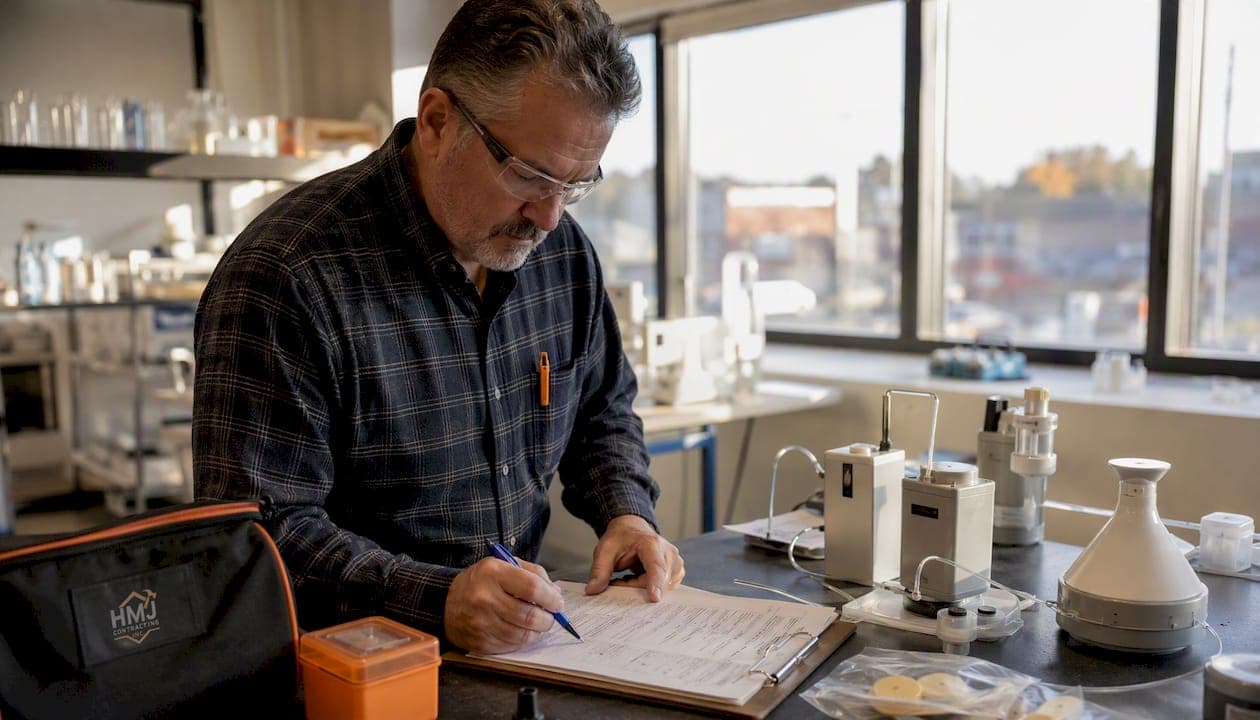
Tenants may return to a commercial space only after an independent, third-party certified hygienist has completed clearance testing and issued a written clearance report confirming results fall below regulatory thresholds. That report is your legal and operational green light. Before you allow anyone back in, your single most important action is to hire an independent industrial hygienist to conduct visual inspection and aggressive air sampling, then obtain the written clearance report with full chain-of-custody documentation.
Key steps before re-occupancy:
- Confirm the abatement contractor has completed all removal and gross cleaning work
- Engage an independent hygienist (not the abatement contractor) for clearance testing
- Verify the testing laboratory holds ISO/IEC 17025 accreditation or equivalent
- Receive and review the written clearance report before unlocking any doors
- Retain all documentation for insurance, regulatory, and future transaction purposes
Table of Contents
- What does clearance actually mean, and who issues it?
- What are the exact criteria for safe re-occupancy?
- What happens after removal, and how long does clearance take?
- What must the clearance report contain before you approve occupancy?
- How do you prepare tenants and operations for phased return?
- What red flags should you watch for before allowing re-entry?
- What drives cost and timing for post-abatement clearance?
- Key takeaways
- What Ottawa building owners often get wrong about clearance timing
- Hmjcontracting handles abatement and clearance coordination in Ottawa
- Useful sources and further reading
What does clearance actually mean, and who issues it?
Clearance is not a contractor's verbal sign-off. It is a formal, documented conclusion reached by an independent party after specific tests confirm hazardous material concentrations are below regulatory thresholds.
The three roles involved:
| Role | Who fills it | What they do |
|---|---|---|
| Independent hygienist / inspector | Certified industrial hygienist (CIH or provincially certified) | Conducts visual inspection, collects air and surface samples, interprets results |
| Accredited laboratory | ISO/IEC 17025-certified lab | Analyses samples using PCM, TEM, or wipe protocols; issues signed lab report |
| Abatement contractor | Licensed abatement firm (e.g., Hmjcontracting) | Performs removal, cleaning, and containment — does NOT conduct clearance testing |
The separation of duties between contractor and tester is a non-negotiable industry standard. Allowing the removal contractor to test their own work removes the independence that makes clearance credible to insurers, regulators, and future buyers. Third-party oversight reduces liability and is standard practice on any high-risk project.
Trust signals to verify in the clearance report: the hygienist's credentials and licence number, the lab's ISO/IEC 17025 accreditation statement, chain-of-custody forms with matching sample IDs, and photographic records of containment before and after removal.
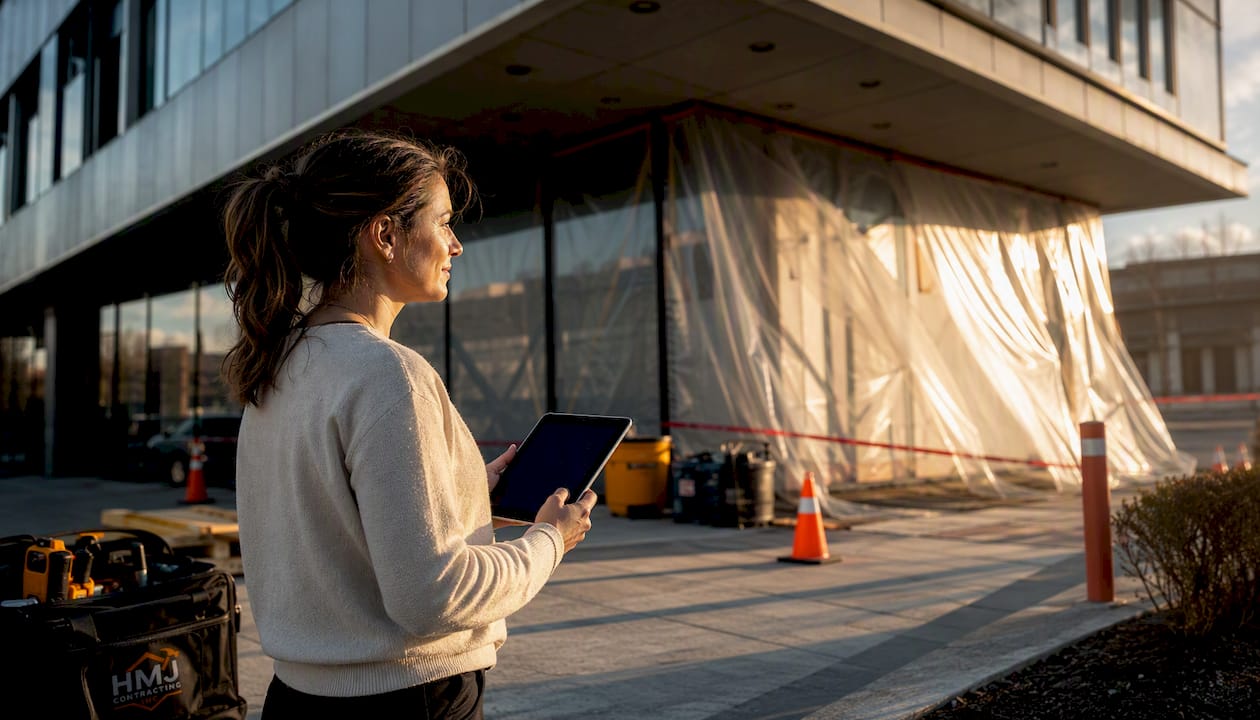
Pro Tip: For Type 2 and Type 3 asbestos work, containment must remain sealed and fully functional until final clearance testing is complete and formal sign-off is issued. Removing containment early voids the clearance process.
What are the exact criteria for safe re-occupancy?
Pass/fail criteria differ by hazard type. Confirm each of the following before approving post-abatement occupancy.
Asbestos
- Aggressive (forced-air) air sampling results must be below 0.01 fibres/cc, analysed by phase contrast microscopy (PCM), in accordance with Ontario practice and O. Reg. 278/05.
- Visual inspection confirms no visible residue or debris within the containment zone
- Containment integrity verified intact throughout the sampling period
- Independent clearance report issued with numeric results and a clear release statement
Lead
- Surface wipe sampling at or below clearance levels per provincial guidance
- Dust-control measures confirmed intact and documented
- Chain-of-custody forms accompany all lab results
Mould
- Visual confirmation that all affected materials have been removed or treated
- Moisture source identified and permanently repaired before reconstruction begins
- Materials confirmed adequately dried prior to any reconstruction
- Post-remediation verification (visual inspection plus air or surface testing where warranted) completed and documented
HVAC and adjacent spaces
- Negative pressure isolation confirmed functional during abatement
- HEPA filtration verified where required
- Any HVAC system serving the work area cleaned or verified clean before re-entry
What happens after removal, and how long does clearance take?
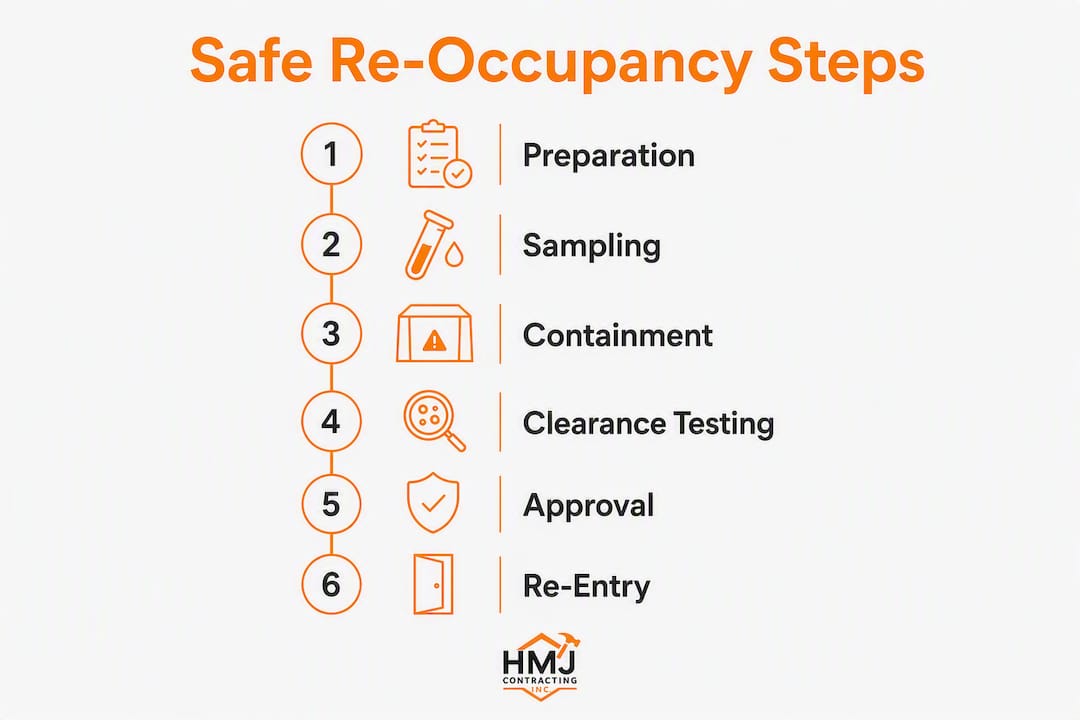
The post-abatement process follows a fixed sequence. Skipping or reordering steps is the most common cause of failed clearances and delayed re-occupancy.
- Contractor completes removal and gross cleaning inside the sealed containment zone
- Independent hygienist conducts visual inspection to confirm no visible debris or residue remains
- Aggressive air sampling and/or surface sampling collected by the hygienist
- Samples delivered to an accredited laboratory for PCM, TEM, or wipe analysis
- Lab turnaround produces quantitative results, typically within 24–72 hours for standard analysis (rush options available at higher cost)
- Hygienist issues written clearance report with numeric results, pass/fail interpretation, and a formal release statement
- Containment removed only after clearance is confirmed in writing
- Phased tenant re-entry begins, starting with lower-risk areas
Realistic timelines vary by project scale. Small jobs can move from sampling to clearance report in a few days. Medium projects, including lab turnaround and any follow-up sampling, generally take about one to two weeks. Large or complex asbestos projects with staged containment zones may take longer, especially if additional remediation is needed after initial testing.
Delays most often come from lab backlogs, incomplete containment, unresolved moisture sources, or HVAC cleaning requirements. Detailed planning and phased execution keep disruption manageable while keeping containment protocols absolute until independent validation occurs.
Pro Tip: Book your independent hygienist before abatement begins, not after. Scheduling conflicts with certified testers are a leading cause of unnecessary delays between project completion and re-occupancy.
What must the clearance report contain before you approve occupancy?
A clearance report that is missing key elements is not a valid clearance. Check every item on this list before signing off on commercial space occupancy.
- Full name, credentials, and licence number of the independent inspector or hygienist
- Sampling methods used (PCM, TEM, bulk, wipe) and exact sample locations
- Date and time of each sample collection
- Laboratory name and ISO/IEC 17025 accreditation statement
- Quantitative results for every sample, with the applicable regulatory threshold stated
- Clear pass/fail interpretation tied to numeric results — not vague language like "appears satisfactory"
- Chain-of-custody forms with sample IDs that match the lab report exactly
- Analyst signature on the lab report
- Photographs of containment before and after removal
- An explicit written statement releasing the space for re-occupancy
Independent clearance testing is the single definitive milestone that protects owners from liability and supports insurance claims and future property transactions. A report missing chain-of-custody documentation or numeric results is not acceptable for regulatory or insurance purposes.
How do you prepare tenants and operations for phased return?
Communication before re-entry reduces complaints and protects you from liability if a tenant raises a health concern after returning.
- Notify all tenants in writing of the clearance process, expected timeline, and who to contact with health concerns
- Share the clearance report (or a summary) with tenant representatives before re-entry begins
- Identify which areas are cleared first and restrict access to zones still pending verification
- Stagger re-entry to allow final HVAC checks and post-clearance cleaning of common touch points
- Run and verify HVAC filters or cleaning before the first occupants return
- Document who re-enters and when, and keep that log with the clearance file
For renovation disruption reduction during abatement, clear written communication with tenants from day one sets realistic expectations and reduces friction at every stage, including re-entry.
Retain all clearance documentation permanently. Insurers and future buyers will request it, and provincial regulators may audit compliance with O. Reg. 278/05 reporting requirements.
What red flags should you watch for before allowing re-entry?
These situations require you to stop, withhold re-entry, and seek a second independent opinion.
- Clearance testing was performed by the abatement contractor, not an independent party
- Chain-of-custody forms are missing or sample IDs do not match the lab report
- The laboratory is not ISO/IEC 17025 accredited
- Aggressive air sampling was not performed for Type 2 or Type 3 asbestos work
- Containment was removed before a written clearance pass was issued
- The mould moisture source was not repaired before remediation was declared complete
- The report uses only qualitative language with no numeric results
If you encounter any of these, withhold re-entry immediately. Commission a second independent inspection, retain all existing documents, and notify your insurer. Reviewing common property manager renovation mistakes before a project starts can help you avoid the most frequent compliance gaps.
What drives cost and timing for post-abatement clearance?
Budget and schedule both depend on factors specific to your project. The main variables:
- Hazard type and work classification: Type 3 asbestos projects require more extensive sampling than Type 1; mould projects add moisture verification costs
- Number and type of samples: More containment zones mean more samples; TEM analysis costs more than PCM but is required when PCM results are borderline
- Independent hygienist fees: Vary by project complexity, travel, and report preparation time
- Lab turnaround: Standard turnaround is 24–72 hours; rush analysis is available but adds cost
- Repeat testing: A failed first clearance requires additional remediation and a second round of sampling
Build a contingency into both your schedule and budget for at least one additional round of sampling. Failed first clearances are not rare, particularly on mould projects where the moisture source was not fully resolved. For guidance on keeping costs predictable, avoiding renovation cost overruns covers contingency planning in detail.
Key takeaways
Tenants may only return to a commercial space after an independent hygienist issues a written clearance report with numeric results, verified chain-of-custody documentation, and an explicit release statement.
| Point | Details |
|---|---|
| Independent clearance is mandatory | Only a third-party certified hygienist, not the abatement contractor, can issue a valid clearance. |
| Numeric results required | The clearance report must state quantitative results (e.g., below 0.01 fibres/cc for asbestos) against the regulatory threshold. |
| Moisture source must be fixed | For mould, remediation is incomplete until the moisture source is permanently repaired and materials are confirmed dry. |
| Documentation protects you | Retain the clearance report, chain-of-custody forms, and photos for insurance, regulatory audits, and future property transactions. |
| Hmjcontracting coordinates clearance | Hmjcontracting manages licensed abatement and coordinates independent hygienist and lab services so Ottawa building owners have a single point of contact. |
What Ottawa building owners often get wrong about clearance timing
The most persistent misconception is that clearance is a formality — something the abatement contractor handles on the way out. It is not. Clearance is a separate, independent process that requires its own scheduling, its own credentialled professional, and its own lab relationship. When building owners treat it as an afterthought, they end up waiting days or weeks for a hygienist who is already booked, while the containment sits sealed and the space sits empty.
The second issue is moisture. Mould projects fail re-occupancy checks more often than asbestos projects, and almost always for the same reason: the water source was not fixed before remediation began. Painting over mould or removing affected drywall without addressing the leak or humidity problem means the mould returns, the clearance fails, and the timeline doubles. Follow-up verification at three to six months post-remediation is a practical step that institutional owners use to confirm long-term success before committing to reconstruction.
The owners who move fastest through clearance are the ones who book the hygienist before abatement starts, confirm the lab's accreditation in advance, and treat the clearance report as a project deliverable with its own deadline, not a box to check at the end.
Hmjcontracting handles abatement and clearance coordination in Ottawa
When your commercial property needs licensed abatement and a clear path back to occupancy, Hmjcontracting gives you both under one accountable team. Rather than managing a separate abatement contractor, an independent hygienist, and an accredited lab on your own, Hmjcontracting coordinates the full sequence, from licensed removal through to clearance documentation, so nothing falls through the gaps.
Hmjcontracting's abatement services cover asbestos, lead, and mould removal with transparent, itemised quotes and a 5.0-star Google rating earned across hundreds of completed Ottawa projects. For mould-specific work, the mould remediation service includes post-remediation verification coordination. Every project includes photographic records, chain-of-custody documentation, and coordination with independent third-party testers to keep the clearance process conflict-free. Contact Hmjcontracting today for a free estimate and to schedule clearance testing for your commercial property.
Useful sources and further reading
Regulatory and technical references for Ontario and Canada:
- O. Reg. 278/05 — Designated substance: asbestos (Ontario) — The primary Ontario regulation governing asbestos work classification, reporting duties, sampling minimums, and worker registers. Start here for compliance requirements.
- Canada Occupational Health and Safety Regulations — Asbestos provisions — Federal-level requirements for asbestos exposure control plans and work activities involving friable asbestos-containing materials.
Contact your provincial regulator (Ontario Ministry of Labour, Immigration, Training and Skills Development) or your insurer directly for case-specific documentation requirements or to confirm current thresholds applicable to your project type.